
Pate de verre entry shortlisted for John Ruskin Prize
A pestle and mortar created from pate de verre glass and made by CGS member Keith Dymond has been shortlisted for the 8th John Ruskin Prize. Keith’s vibrant piece is among 93 selected from over 4,000 entries, which are set to be exhibited at the prestigious Trinity Buoy Wharf in the Docklands area of London, from 29 January to 21 February 2026.
The John Ruskin Prize is open to multiple disciplines of art and craft from around the world. With the values of the radical polymath John Ruskin at its core, the Prize has a growing reputation for supporting and promoting artists, designers and makers whose work defies easy categorisation.
The John Ruskin Prize was founded by The Guild of St. George in 2012, under the administrative umbrella of The Big Draw supported by the Trinity Buoy Wharf Trust. Over the years it has honoured painters, printmakers, designers, sculptors, photographers and a wide range of craftspeople.
In his lifetime, Ruskin was primarily famed not as an artist but as a writer, critic, outspoken social commentator and inspiring public lecturer. For him, “The greatest thing a human soul ever does in this world is to see something and say what it saw in a plain way.”
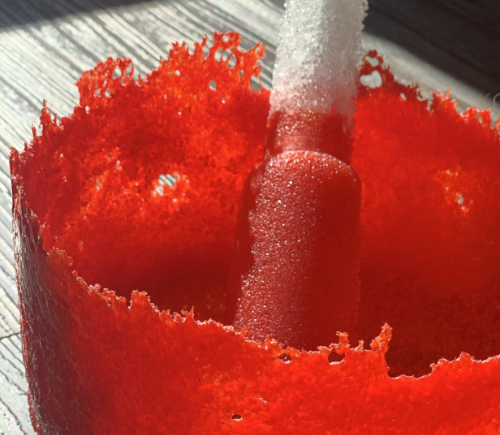
Speaking about his entry to the Prize, Crushed and Boiled, Keith stated, “Crushed and Boiled explores the intersection of function and fragility, reimagining the familiar form of a mortar and pestle through the transformative lens of pate de verre glass. The organic rim and textured surface evoke both the energy of creation and the inherent vulnerability in the act of making. The graduated pestle, resting within, suggests a dialogue between strength and delicacy, utility and ornament.”
When considering this year’s theme, ‘Patience in Looking – Truth in making’, Keith felt his approach, both pre fusing and post fusing, resonated with Ruskin’s philosophy.
He explained, “The pre-fusing stage required PATIENCE, as pate de verre demands long, hand-driven, repetitive labour to create. TRUTH is maintained through the multiple processes of mould making, loading, casting, and cold working that can all introduce errors or flaws that remains visible with no place to cover or hide.”
Post fusing, he believes there is a TRUTH in the material qualities, fragility, translucency and delicacy and the tension created, along with PATIENCE in the observation of inter-bound layers which occur by NATURAL intent.
“By elevating a humble kitchen tool into the realm of sculpture, I invite viewers to reconsider the rituals of daily life and the objects that shape our experiences. The tactile surface and luminous colour are intended to provoke curiosity and invite touch, while the apparent fragility of the piece challenges our assumptions about durability and value. In this work, I seek to honour the beauty found in imperfection and the quiet drama of transformation.”
Trinity Buoy Wharf is at 64 Orchard Place, E14 0JW, London. Entry to the exhibition is free and it is open Wednesdays to Sundays. See the website here for more details.
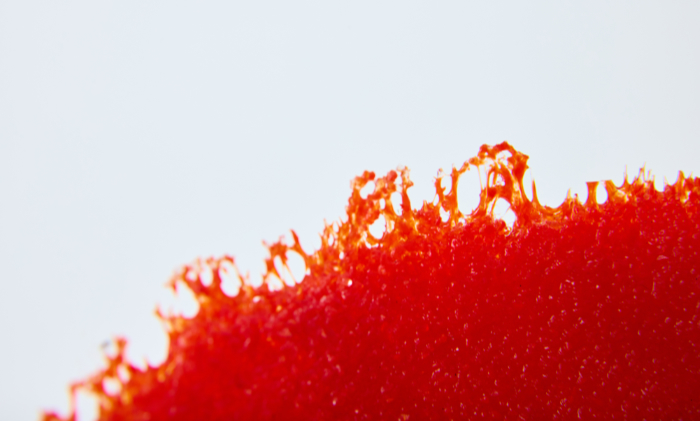
Main image: Detail of ‘Crushed and Boiled’ by Keith Dymond.
Related Articles
23-01-2026
Mixing it up
10-01-2026