Meet Emma Woffenden
This renowned mixed-media sculptor describes her long and varied experience in creating her expressive art, based on a sound education in glass techniques in the UK and farther afield. Now one Contemporary Glass Society (CGS) member will have the opportunity to tap into this rich knowledge through a mentoring programme provided as the 2026 CGS Amanda Moriarty Prize. Find out more below.
Recently I’ve been appreciating the extraordinary education I had in the early years of the British studio glass movement. I arrived in Farnham, Surrey, in the early 1980s and was one of the first cohort to graduate specifically in glass. We were taught a style of glass blowing brought over from Sweden, and glass cutting techniques beginning with ‘setting’ and ‘trimming’ stone wheels on the lathes. Inspired by the cast glass of František Vízner I was encouraged to pursue lost wax casting a large discus, using an old Steuben Glass recipe. The large glass disc did not work, the dense mould being a mix of mushed up fibre blanket, china clay, plaster, crushed kiln bricks and soaked, shredded paper that I rolled around the department floor, was lacking airholes and resistant to flowing glass. Failure was an affordable educational tool.
During these three years I was impacted by glass experiences in two other countries, first visiting the Czech Republic still under communism, and, second, taking a longer exchange to Tyler School of Art and Architecture in the USA. The former placed its emphasis on thorough and deep understanding of form, through painting, model making and life drawing. This, combined with industrial processes, led to stunning examples of glass in architecture, design and sculpture. The latter’s liberal arts approach, where your study module in literature was equal in value to your module in glass blowing, led to all activities combining into an expansive world of experimentation – available 24/7. Here I appreciated my grounding in traditional skills and, returning with a newfound freedom, I graduated with large cast and float glass windows set in wood and concrete, and sculptures combining blown and sandcast elements.
This beginning in 1984 set a way of working across technique, material and area that I continued, and the people I encountered all formed a part of me. I went to work for Colin Reid and learnt that an investment mould could be just two materials added to water. I also worked for Rainy Cooper, an architectural glass partnership, and learnt that drinking at lunchtimes was vital to creativity. These things I discovered, amongst many others.
Years later I became artistic director at North Lands Creative and, sitting at a bar in Lybster (as many a story begins), Ray Flavell, who had interviewed me for my degree course, reminded me that in that moment it had been hard to get me to speak or even say my name. This ineloquence had strengthened my need to speak in the language of making art.
Beginning involved finding ways of working, surviving and security in a housing co-op in a part of London where people didn’t care how much money you earnt – it was the 1980s. I had my degree, but I still didn’t know how to communicate; my language wasn’t clearly developed. I went to evening classes in poetry, life drawing and glass engraving. I met a glass engraver, Jacqueline Allwood, and set up a studio and shop in Gabriel’s Wharf with a changing group including glass artist Angela Thwaites. E & M Glass (Ed and Margy) blew glassware I designed and sold, I took commissions for engraving windows, film awards, goblets, I sold drawings made after clubbing all night. The drawings were crucial – a gateway to accessing the unconscious, unburdening and processing thought. Towards the end of the decade, I was ready to transfer these thoughts into new forms and applied to the Royal College of Art to study an MA.
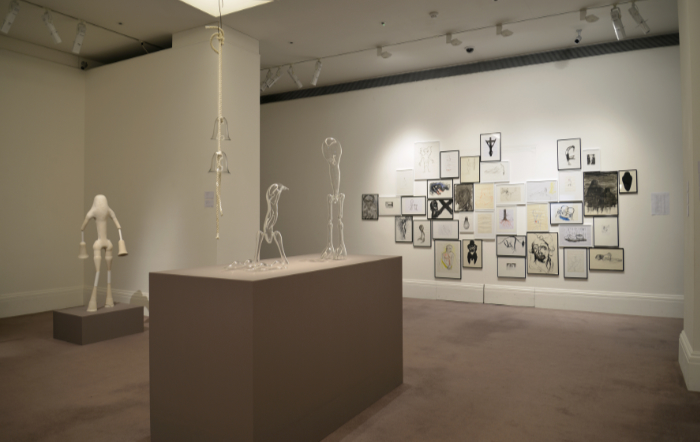
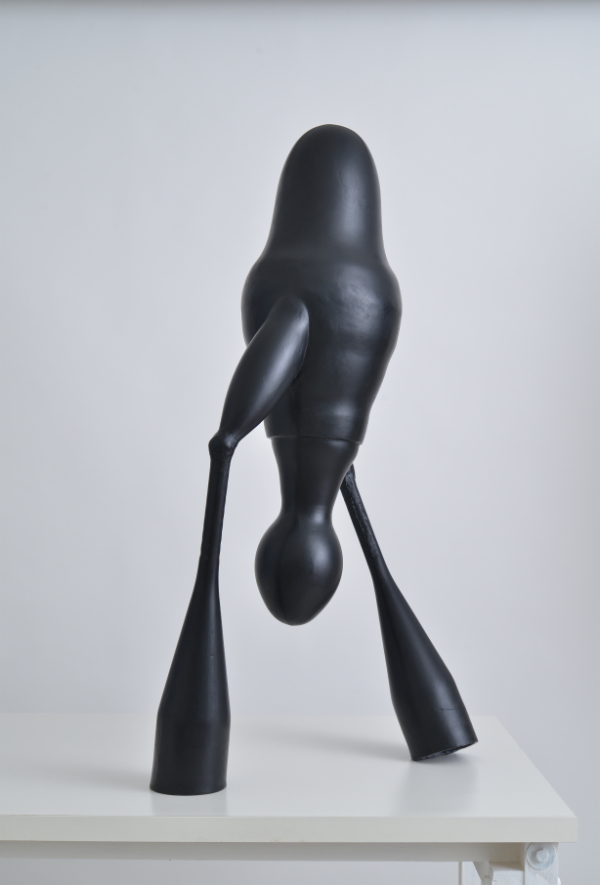
Today, I’m known for the work I produced there and from then on. Only a few undigitised images of the first formative ten years exist. My new, studied, colourless works made an impact. These visceral, stripped back forms referencing the body, its emotion and movement, I described as having a loaded simplicity. Later, I talked about emptiness and excitement coming together, the stripped back heart of the work; its containment, combined with humour or turmoil, is still evident.
During my MA I met Tord Boontje who was studying product design. We became partners collaborating in life and work, most successfully with an upcycling project using bottles, launched in 1997. Our daughter Yves Woffenden is also an artist.
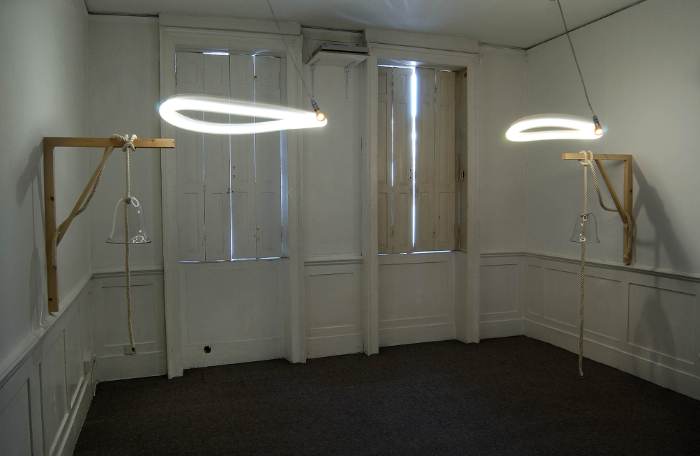
On graduating, I worked towards setting up a glass workshop – the second of ten – and decided to scale up my work by casting glass and developing a technique of slumping and constructing float glass combined with found objects, which developed into installations. Supported cross-disciplinary collaborations enabled me to diversify. The first project, titled ‘No Horizon’ (2001-2003) was a site-specific exhibition across three UK galleries. Installations that re-formed across three different architectures enabled me to develop works with mechanisms for swinging lights and metal objects. Working in glass factories, during symposiums in the Czech Republic, Slovakia and Sweden, progressed my interest in free-blown and industrially produced glass shapes, which I adapt, re-model into parts for larger sculpture and sometimes transfer into other materials through a series of mould-making processes.
My relationship with Marsden Woo gallery in London, and its 20 years of support through solo and group shows, was key to a continuing freedom to develop and exhibit. Further relationships with institutions and the people in them, such as the National Glass Centre (my first solo show in 1999), the collecting individuals, writers, and the people building glass networks, were all crucial.
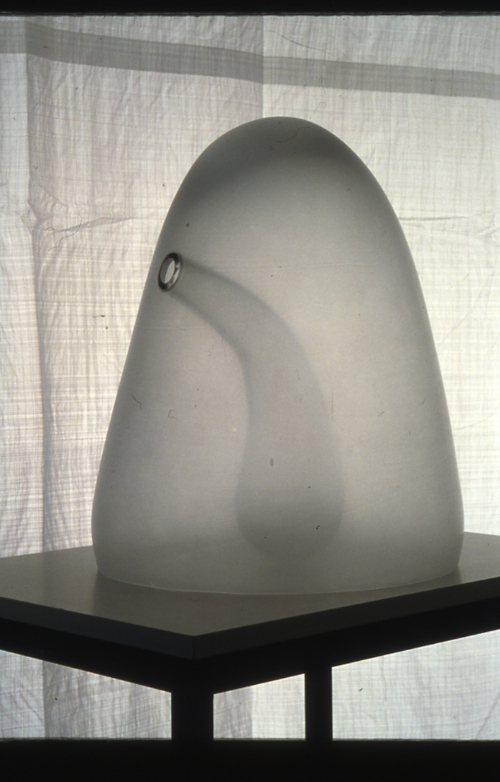
My work is in many glass collections globally, but also in design and art collections, including photography and bronze works in the Ingram Collection, ceramic and Jesmonite in York City Museum, glass and mixed media work in the V&A Museum, plus design in MOMA New York and The Corning Museum of Glass, to name a few.
Currently I’m preparing for an artist residency at Pilchuck Glass School in the USA, where I taught in 2012, as well as a group show with The Ernsting Foundation at Glasmuseum Lette in Germany, where I last exhibited in 2000. Recently, feeling the shrinking world of opportunity to learn about glass, I began working locally at Adult Learning Lewisham, teaching glass engraving and kiln forming to the amazing individuals who walk through the door. Despite this immense accumulation of knowledge and lengthy journey, I hear myself saying in answer to questions: ‘I don’t know, let’s try’. This glass conundrum, the ‘what if…?’, has an endless momentum.
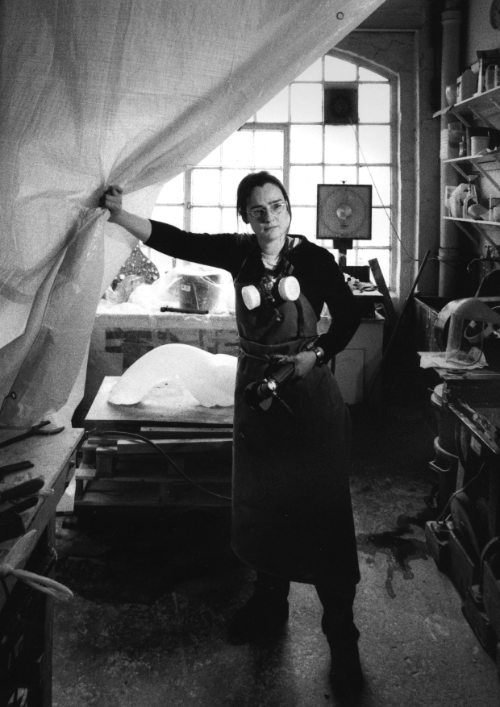
Find out more about Emma Woffenden and her work via her website.
Amanda Moriarty Prize 2026
In 2017, Amanda Moriarty, a long serving Board member and Honorary Treasurer of CGS, passed away. To celebrate her enthusiasm and encouragement of glassmaking, CGS offer an annual glass training prize in her memory.
In 2026 this will be the opportunity for one CGS member to develop a project with invaluable guidance from Emma Woffenden.
The deadline is 17 July 2026. More details and information on how to apply available here.
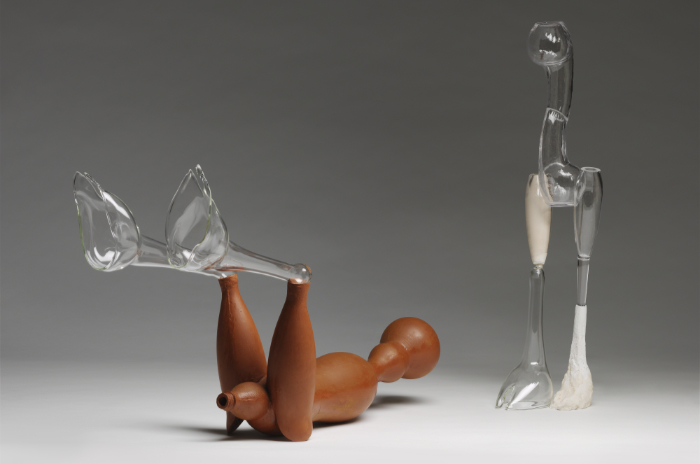
Main feature image: ‘Midwife’ (2016), features two figures made from mould-blown and flame-worked glass and acrylic gypsum fibre glass. Photo: ©Victoria and Albert museum, London.
Related Articles
09-07-2026
Renaissance man
06-05-2026