
Chelsea Flower Show garden featuring glass awarded Gold Medal
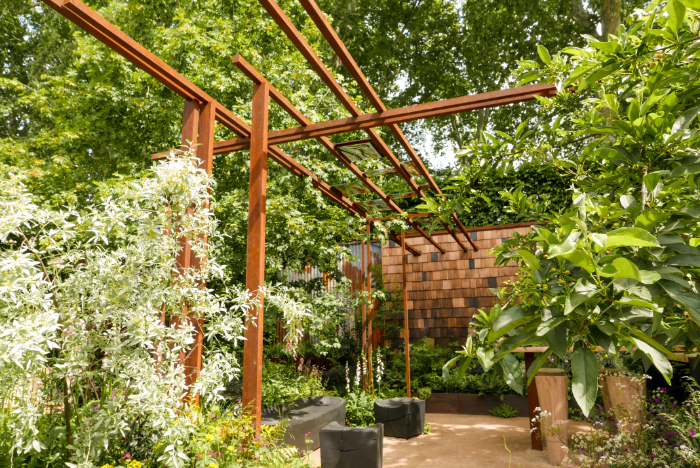
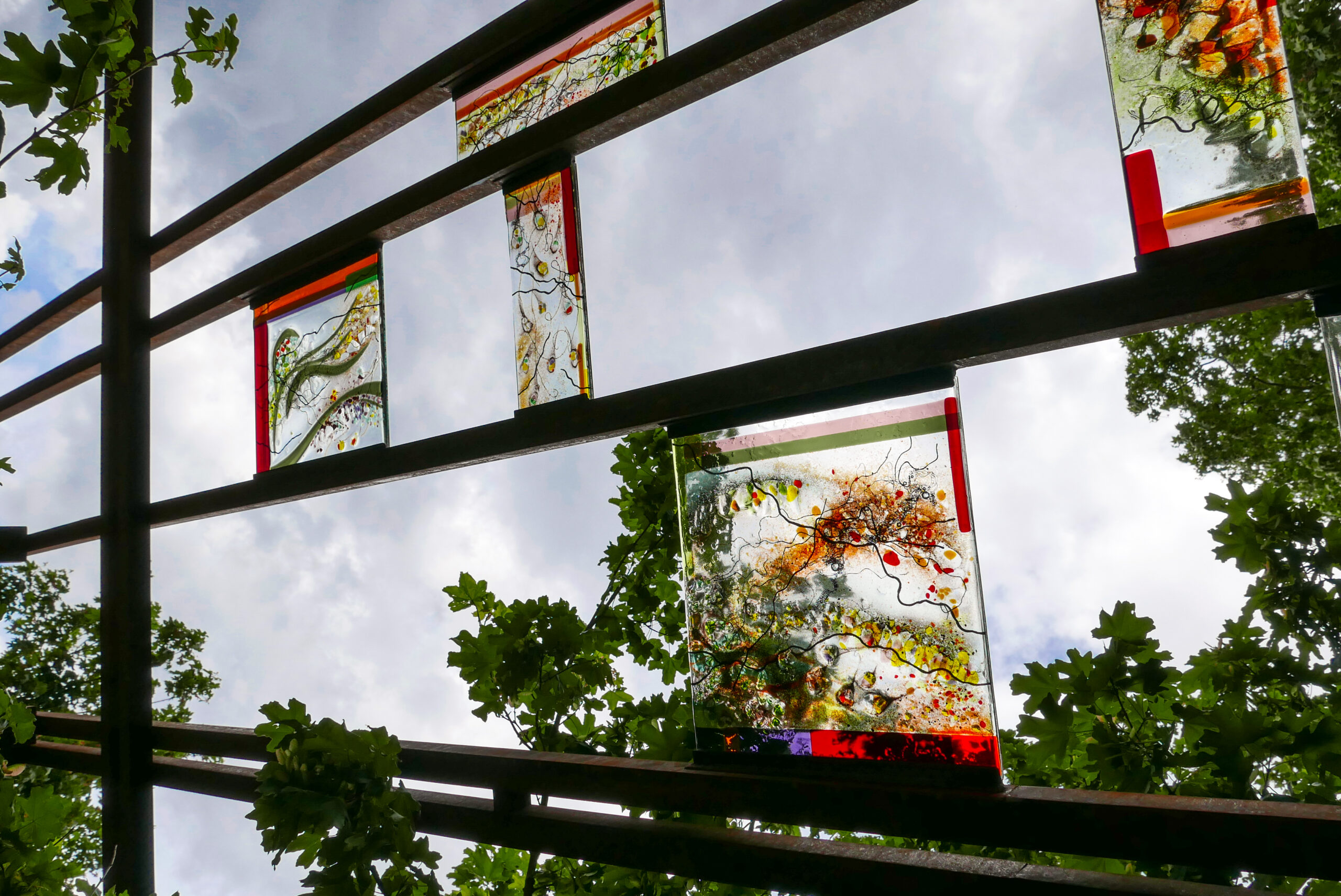
Three glass artists teamed up with renowned garden designer Patrick Clarke to produce a 28-piece glass installation for The Children’s Society Garden at this year’s RHS Chelsea Flower Show and it won a Gold Medal.
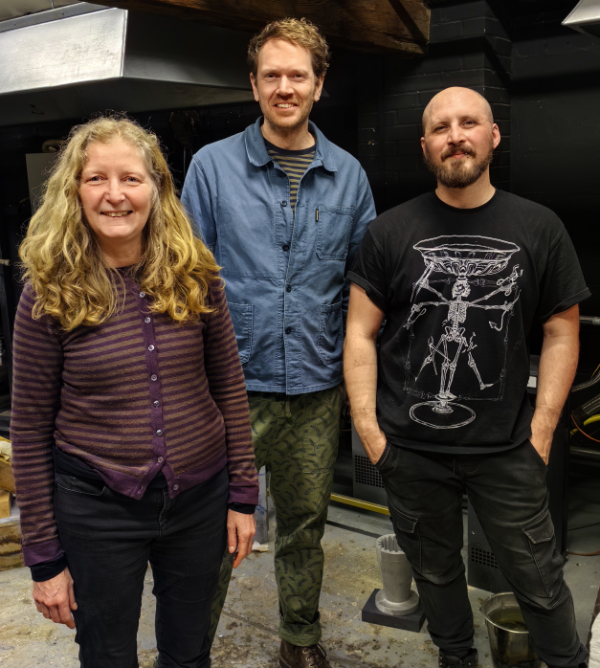
Matthew Nickels, the BBC’s ‘The Repair Shop’ glass expert, worked with established Yorkshire-based artist and University of Sunderland academic tutor Rachel Welford and Stourbridge-based Elliot Walker, winner of ‘Blown Away’ series 2, to bring the project to fruition within Patrick’s design requirements.
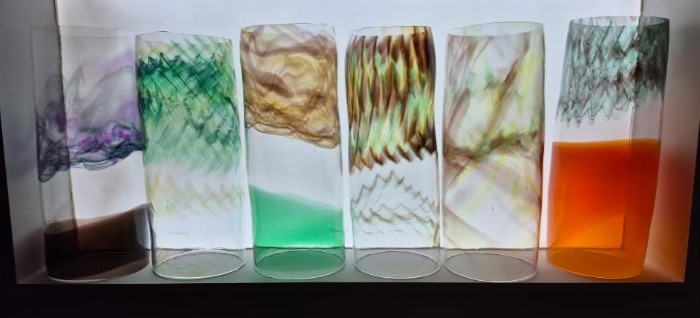
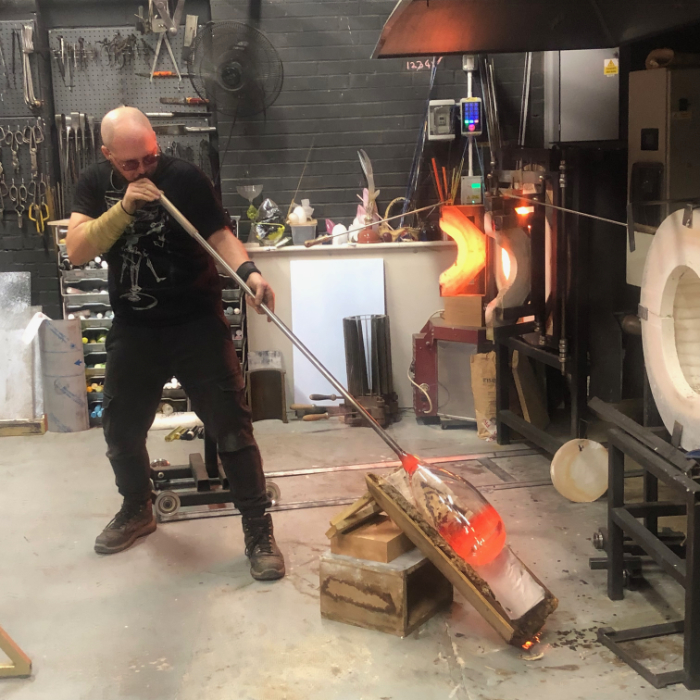
The installation includes traditional mouth-blown sheet glass, which is included on the Heritage Crafts Red List as an endangered craft. Elliot Walker trained with US glassmakers in 2025 to enable him to carry on this skill in the UK after English Antique Glass ceased making it. He was commissioned to make the cylinder sheet glass used in the project.
Patrick was keen to design a garden featuring glass and approached The Children’s Society with his ideas and concept. Following this, Matthew was invited to work on the plan and he brought in Rachel as he had always wanted to collaborate with her.
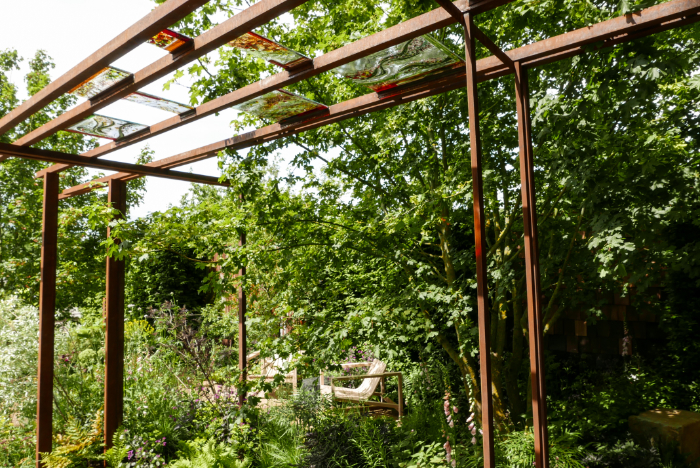
The contribution of young people from The Children’s Society was an integral part of the design of the glass artworks. Guided by Matthew and Rachel, ‘Young Creative Partners’ aged between 14 and 20 years, from the charity’s Youth Club Network, designed and created sample fused glass artworks that were used to guide and inform the artistic process.
Rachel commented, “Having The Children’s Society ‘Young Creative Partners’ guide the design has been so important in making sure the garden is created by young people and for young people.”
Matthew, Rachel and Patrick had many discussions regarding the brief, colours, glass, possibilities and limitations. As Matthew explained, “We followed Patrick’s outline to design the tailored workshop for the young people at the youth club. What made this such a great project for us was that Patrick recognised the need for us to have artistic freedom, as long as we were operating within the brief and used the artworks created by the young people as our foundation and inspiration. It was our artistic choice to use glass made by Elliot at Blowfish and to support the craft.”
They went to the hotshop in Stourbridge to ask Elliot to make six mouth-blown glass cylinders within the original brief boundaries and give suggestions, while still allowing his artistic creativity and understanding of the process to show his own interpretation.
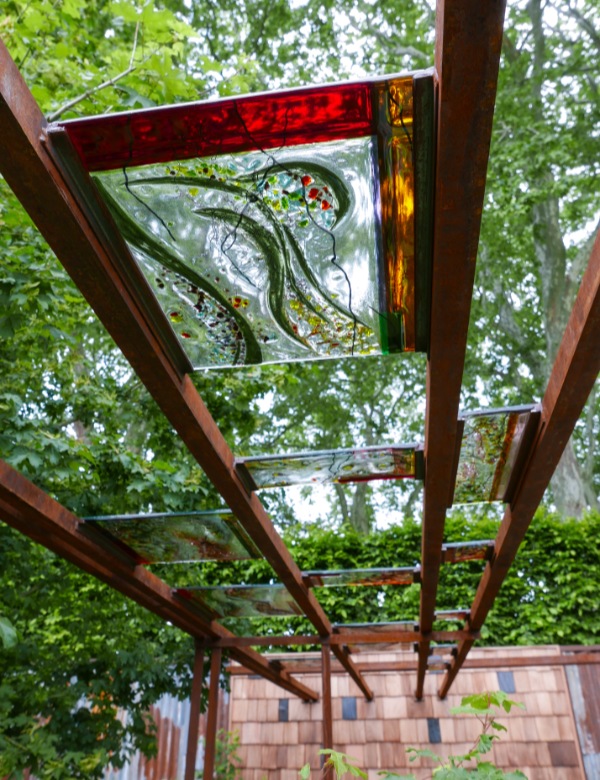
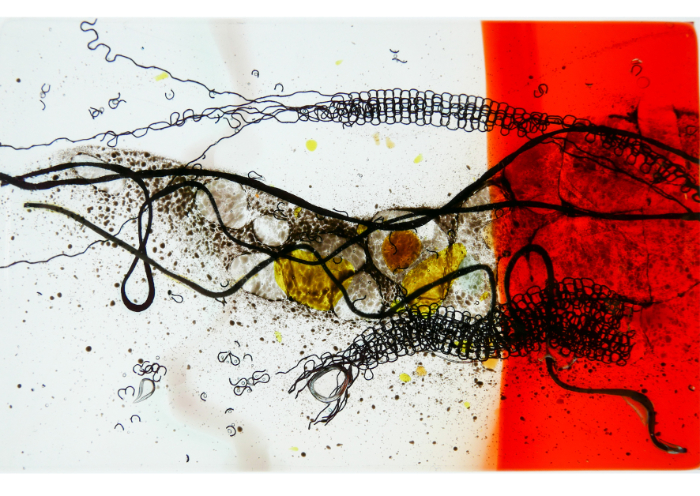
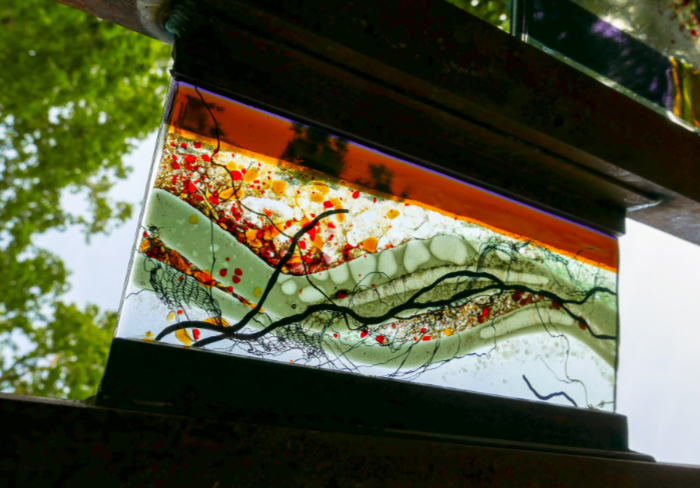
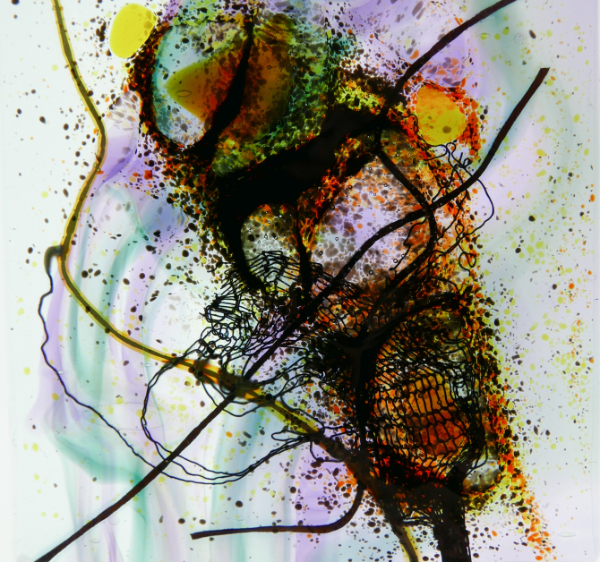
The 28 glass panels comprise a top layer of multi-layered glass with copper and silver wire sandwiched between more layers. These were fused on a 48-to-72 hour fusing schedule. Depending on the individual panel, this process was repeated two or three times, adding more detail each time until the artists were happy with the final piece.
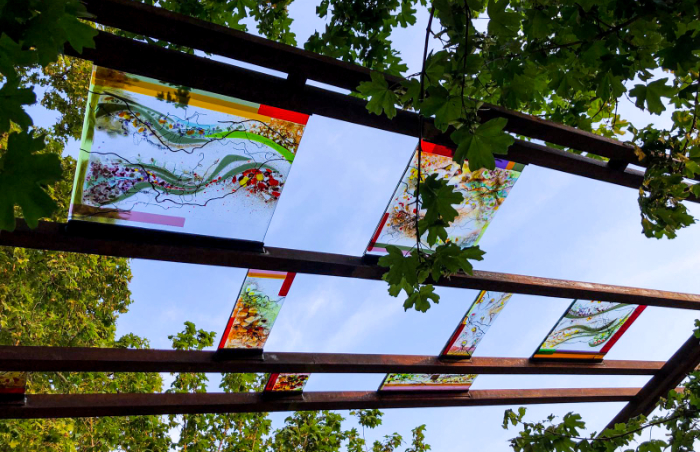
Matthew stated, “Each top layer was then laminated to either a piece of Elliot’s glass or a piece of clear float glass. We painted and fired lines onto this layer which joined up with lines from the other pieces to create a connecting, yet subtle, flow. We used Bohle 2K Silicone Verifix to laminate the pieces to allow this two-layered effect, as well as to make the glass shatterproof (essentially making it into safety glass).
For Matthew and Rachel it was essential to include traditionally made glass in the RHS Chelsea instillation. Matthew continued, “Not only is this important in maintaining UK craft skills but also a means to link young people from The Children’s Society with heritage crafts and the processes involved.
“Having mouthblown glass at RHS Chelsea brings together the historic craft of glass making, blending it with the classic and historic craft of garden design. The organic nature of glass lends itself so perfectly to the natural elements, so this really was the perfect marriage.”
Elliot said, “The knowledge needed to produce sheet glass, with all the multiple facets involved, is broad, but is something which can’t just be written down. It is a feeling and needs to be passed on through direct in-person teaching rather than just something in a book.”
Speaking about the concept behind his design, Patrick stated, “The glass pieces each cast contrasting coloured light and animated shadows to create a cocoon of creativity and safety for the young people.” There is also a recycled element to the design, which reflects the Japanese philosophy of ‘wabi-sabi’ that is interwoven throughout Patrick Clarke’s garden design – where forgotten, imperfect materials are recrafted with resilient plants to create a beautiful environment.
All this careful planning and collaboration resulted in a garden that impressed the Chelsea judges enough to award it a coveted Gold Medal.
Matthew summed up the team’s response: “We’re elated that The Children’s Society garden has won a Gold Medal. The concept behind the garden designed by Patrick Clarke has been about creating a real garden experience, providing calm and making a space where young people can reflect and find peace. The Gold Medal just gives recognition that this is exactly what it does!”
The garden was co-funded by charity Project Giving Back, which funded 11 gardens at the Show this year. It will be relocated to Leighton Buzzard Youth Centre in Bedfordshire and used as a permanent outdoor wellbeing space for young people from The Children’s Society Youth Club that is based there.
Another award at Chelsea
Contemporary glass was also recognised as part of the Eden Sculpture Pavilion, designed specifically for the Chelsea Flower Show by These White Walls to showcase large-scale outdoor art, with the display being awarded Five Stars.
The stand included a major sculptural work by award-winning glass artist Karen Browning, called Ortus. The sculpture is an oval form in glass, standing nearly a metre tall, which refracts surrounding colours, designed to seamlessly integrate with the natural landscape of the Chelsea gardens. Karen stated, “Ortus is my largest cast and polished optical glass piece to date, weighing in at just under 80 kg and 95 cm tall. It was made especially for Eden’s stand.”
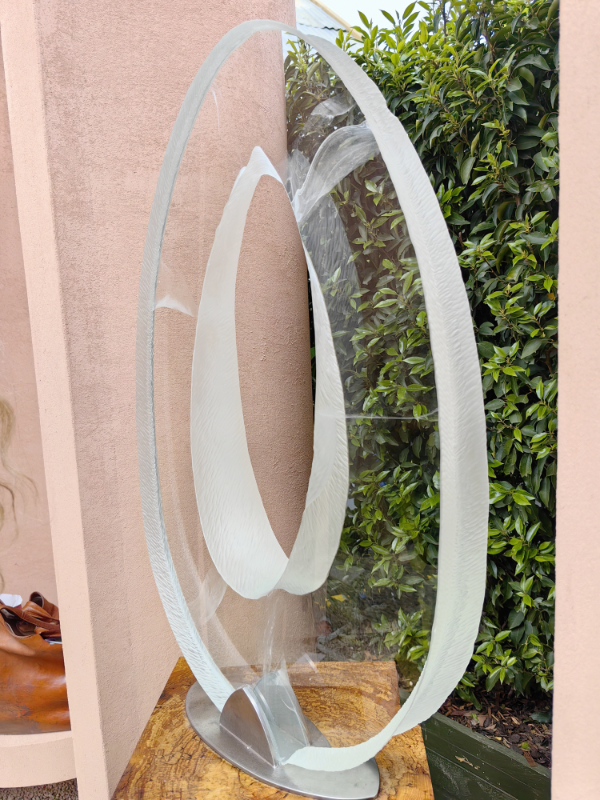
The artwork continues her move into new artistic territory with large-scale pieces for outdoor display, following the success of Realms of Reflection, shown at Charleroi Glass. Biennale in Belgium in 2024.
Karen is best-known for her bold, ‘gunshot’ glass pieces cast from bullet holes, which earned her the “Best in Show’ award at the British Glass Biennale in 2022. Her work also features in the V&A’s permanent collection.
Main feature image: Detail of panel from The Children’s Society garden comprising fused design elements and mouth-blown glass. Photo: Matthew Nickels.
Related Articles
25-05-2026
Chelsea Flower Show garden featuring glass awarded Gold Medal
28-12-2025