Scholarship funds pate de verre course at Bild-Werk Frauenau
When Maria Donnai discovered she was the recipient of an Alexander Tutsek Foundation scholarship, she chose to develop her glass powder-based practice into producing 3D pate de verre. Here she describes the experience of travelling from Yorkshire to Germany to hone her skills.
The email informing me that I had been successful in my application arrived on Christmas Eve. What a brilliant start to the Christmas holiday! I had seen the opportunity to apply for a scholarship provided by the Alexander Tutsek Foundation in the CGS newsletter and submitted a last-minute application without really considering what was on offer.
Therefore, it was rather a shock to discover that I would be going to Bild-Werk Frauenau’s Summer Academy in Germany and that this would not be a long weekend in a studio in Munich, but a much more intense 17 days in the small town of Frauenau, somewhere in the Bavarian National Park.
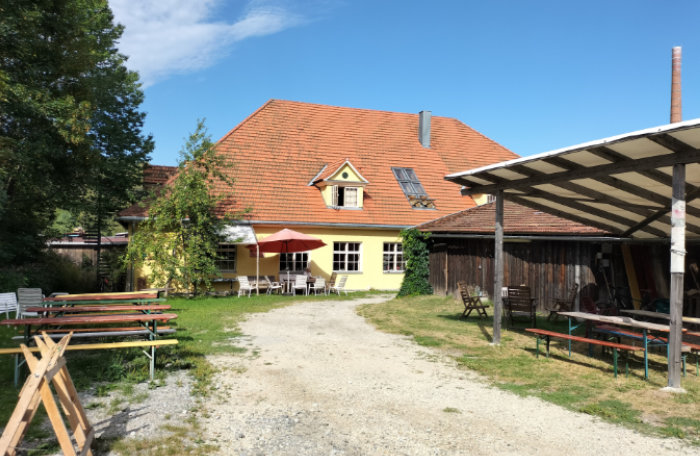
After a bit of research, I learned that Bild-Werk is an amazing place. Founded in 1987 as a non-profit educational institution, it offers a range of creative courses, not just in glass making, and aims to promote the exchange of knowledge, practical skills and ideas across borders and cultures.
I was quite nervous about travelling that far and being on my own, but, as the Victorian world tourist Mary Hall said, it was time for me to “Take every precaution and abandon all fear”. So, case packed with all the necessary PPE (dust masks, gloves, Yorkshire tea), I set off on my adventure.
I arrived after what felt like an epic adventure on planes, trains and automobiles. The team at Bild-Werk was so welcoming and made sure that we all knew what was going on right from the start. Everything was in English and German, information boards in the communal areas were updated daily and there was always someone happy to explain or translate when required.
It took a few days to settle into the rhythm of life in Frauenau, but I soon became accustomed to getting up early (6am!) for a walk to the baker’s for my fresh bread rolls. I even worked out the rather random opening hours of the local supermarket.
The lessons were from 10am – 6pm, but all the studios remained open 24/7 and it was not unusual to find someone working at any time of the day (or night!). It felt fabulously self-indulgent to totally focus on making art. However, there were also many extracurricular activities – evening lectures, demos, trips out and social gatherings. These, along with the communal soup lunches, brought people together from across the different courses. Listening to conversations that switched between German, English, Dutch, Czech and even Hebrew, I really felt part of an international glass community.
I had chosen to study pate de verre with Tali Grinshpan as I knew that this would complement my existing practice of working with glass powder. I was keen to learn how to make three-dimensional forms in glass and wanted to use a technique that I could continue to develop in my own studio at home.
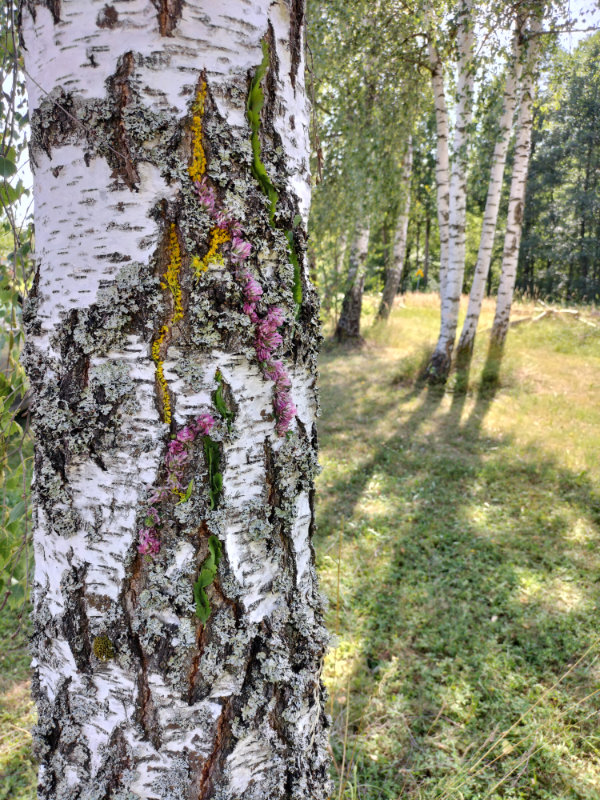
Tali had put together a varied and interesting course that encouraged us to try other methods of working – land art, cyanotype and clay were all experimented with. Land art is art made and left in specific locations outside, as practised by the artist Andy Goldsworthy. Tali showed us some images of his work and challenged us to go outside and create something using only what we could find in nature. The aim was to take a photo to document the piece and then let nature claim it back again. I battled wasps and ants and 30-degree heat to decorate a tree. I found these activities a useful way of resting my brain between periods of intense concentration on pate de verre.
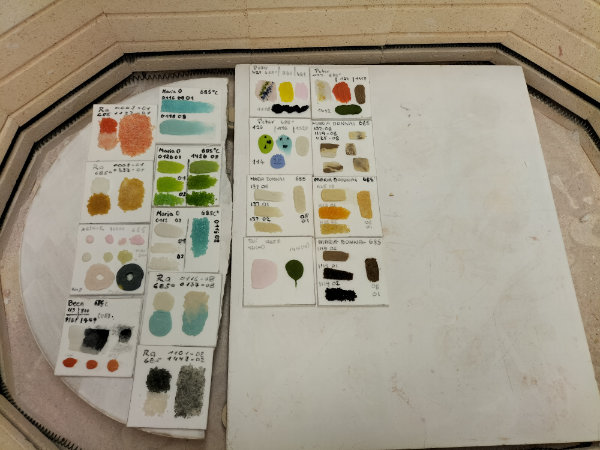
Bullseye Glass had generously donated a selection of glass powders and frits and we had the luxury of colour testing for the first few days whilst we learned how to mix the paste. Three kilns were fired at three different temperatures and the schedules had been carefully worked out to allow us to open them each morning and get the results.
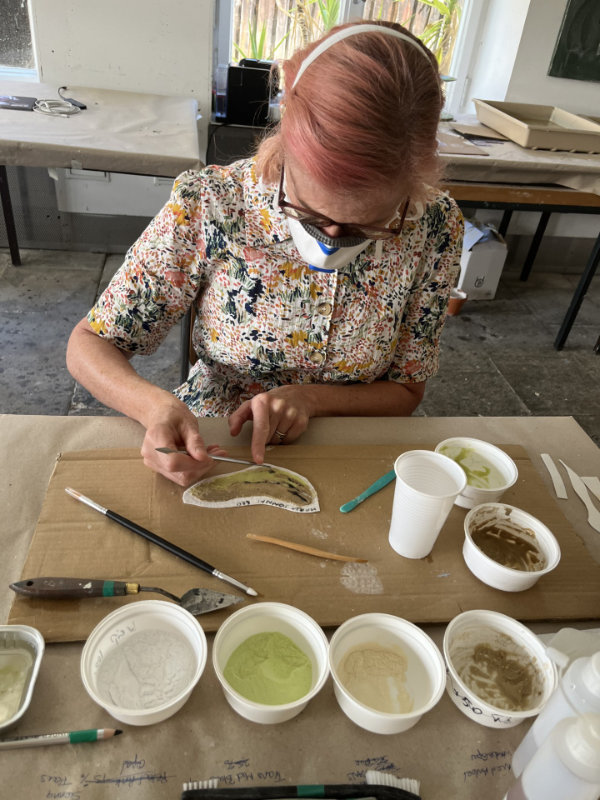
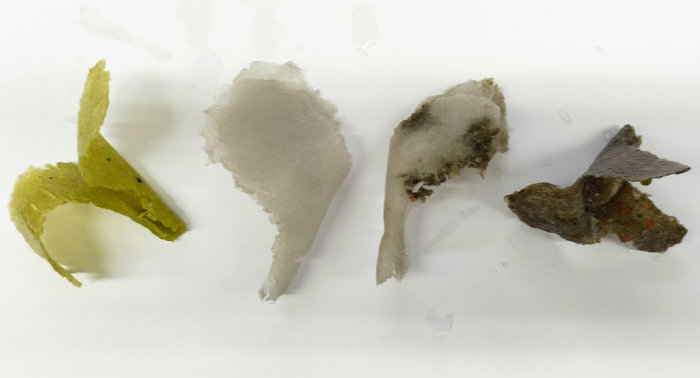
As the course progressed, we learned how Tali adds botanicals to the glass powder and how she makes her signature scrolls and vessel shapes. Then we each took these techniques in our own directions. For me, this meant concentrating on how to manipulate the paste to create organic, three-dimensional forms.
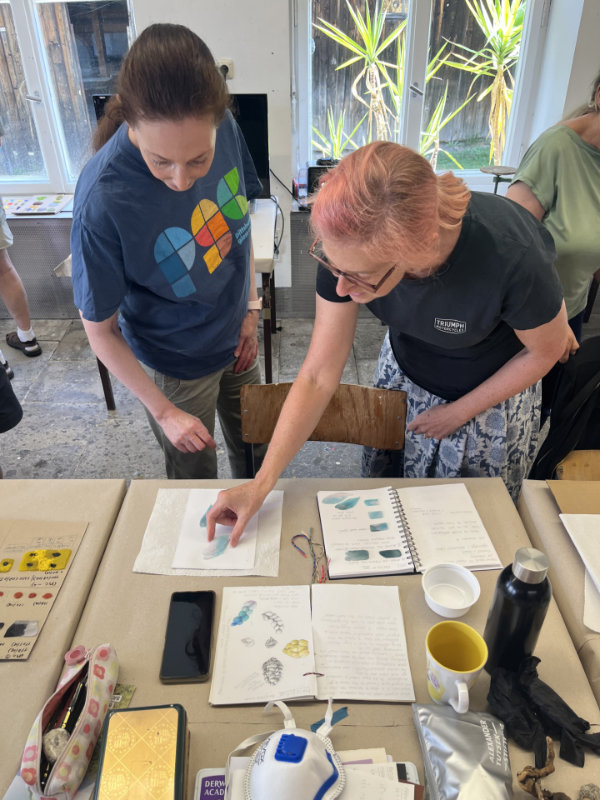
When the course came to an end there was a final exhibition of students’ work. This provided an opportunity to see what had been created in the Gas-Werks studios, which contained the ‘crazies’ working in the hot shop, coldworking and lamp working studios. Theirs was a much noisier environment than our quiet pate de verre room!
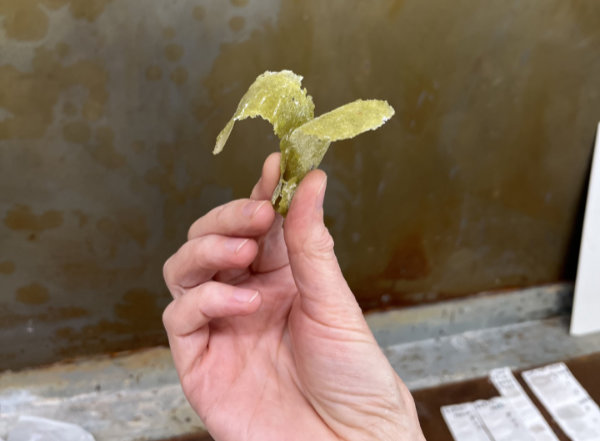
I returned to East Yorkshire tired, but full of enthusiasm to practise what I had learned. Previously I had been working with glass powder in plaster moulds, making very thin and relatively flat pieces. This new method of working allows me to make more complex forms that I shall eventually combine with porcelain.
My experience at Bild-Werk Frauenau was all I had hoped for and more. I learned a new technique, started to develop new ideas and made new friends from all over the world.
As an added bonus, I can also confidently ask for “two bread rolls , please” in German.
About the artist
Maria Donnai is a visual artist based in Hull, working primarily with glass and ceramics. She intentionally uses these delicate materials to encourage reflection on the fragility of nature and ongoing concerns around species extinction.
Inspired by natural history collections, her work consists of multiple small pieces that are assembled as sculptures or installations, often taking a museological style in their presentation.
Maria has recently completed an MA in Creative Practice. She had her first solo show in 2026 at 87 Gallery in Hull. She was also a finalist for the Scott Creative Arts Foundation (SCAF) award this year. She currently has work on display in the CGS ‘Cabinet of Curiosities’ and Blowfish Gallery ‘Fifteen by Fifteen’ exhibitions in Stourbridge, West Midlands.
Find out more about Maria and her work via her website or on Instagram: @mariadonnai
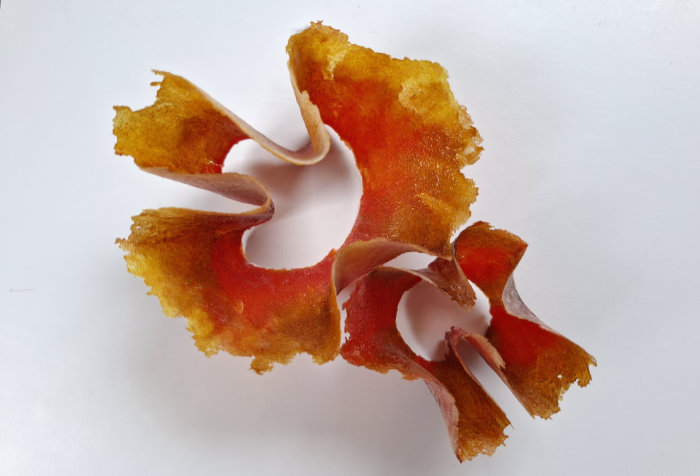
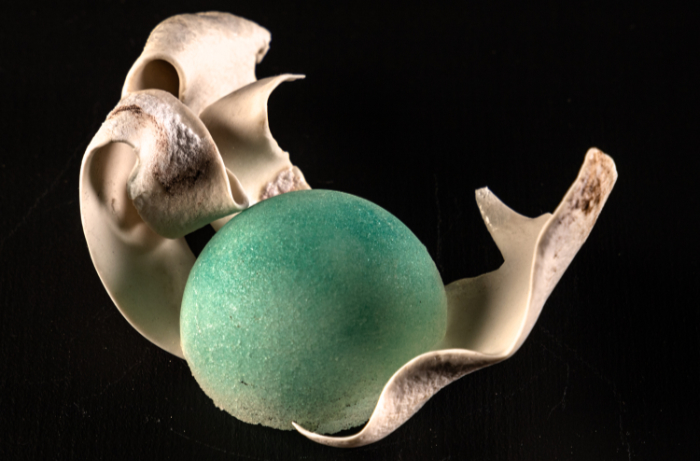
Main feature image: An example of Maria’s 3D work, created using new techniques she learned on the course. Photo by the artist.
Related Articles
25-09-2026
Scholarship funds pate de verre course at Bild-Werk Frauenau
23-01-2026