A splash of colour
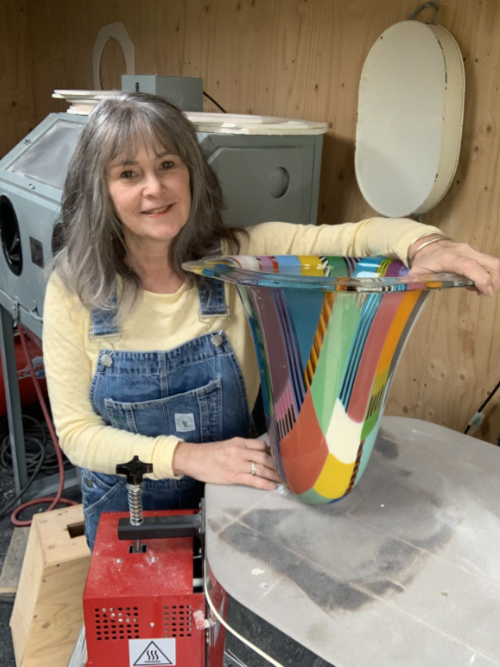
Ruth Shelley brings the palette and pattern of the world around her into her vibrant glass vessels and enjoys using gravity to transform her pieces. Linda Banks finds out more.
What led you to start working with glass?
After studying textiles at Art School and running my own knitting business for a while, I travelled Asia over a period of two years researching ikat fabric, which has always fascinated me. When I returned, with my head full of colour inspirations and designs, I stumbled across a stained glass course and, as soon as I joined, it was love at first touch! Immediately I realised that my background into colour and design suddenly made sense. The light reflecting on the glass touched me and made my heart sing. I had found my next career path.
What glass techniques have you used, and which do you prefer?
I enjoyed working with stained glass but wanting to diversify. I attended numerous courses in kiln-formed glass run by Anne Rosendahl and Detlef Tanz in the Glass Department at the Swansea College of Art. Others which made a huge impression on me were a masterclass on colour, led by Steve Klein and Kaffe Fassett at North Lands Creative, and a colour lab course taught by Nathan Sandberg at the Bullseye Resource Centre. These really helped broaden my knowledge base. I explored kiln casting after attending a masterclass at North Lands Creative with Silvia Levenson and am currently exploring warm and hot glass techniques.
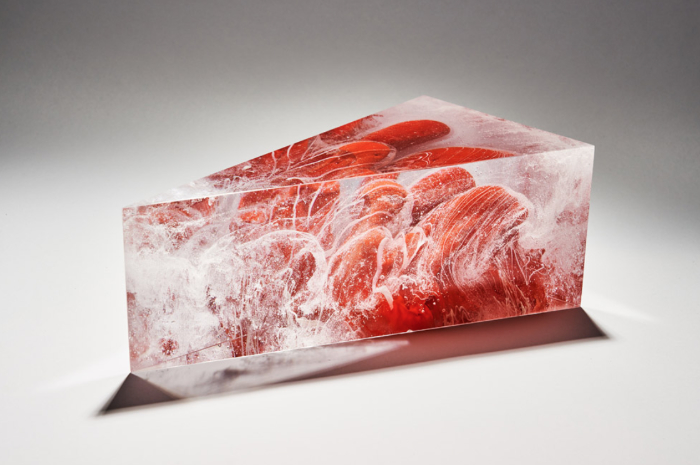
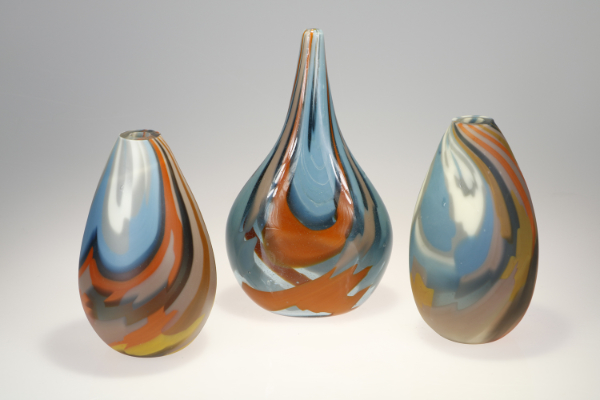
My current favourite technique is using the flow of glass when heated, especially as gravity affects the piece and colours and patterns transform from the initial fused piece, and with some colours only emerging at that stage.
Please tell us more about your creative approach. Do you draw your ideas out or dive straight in with the materials?
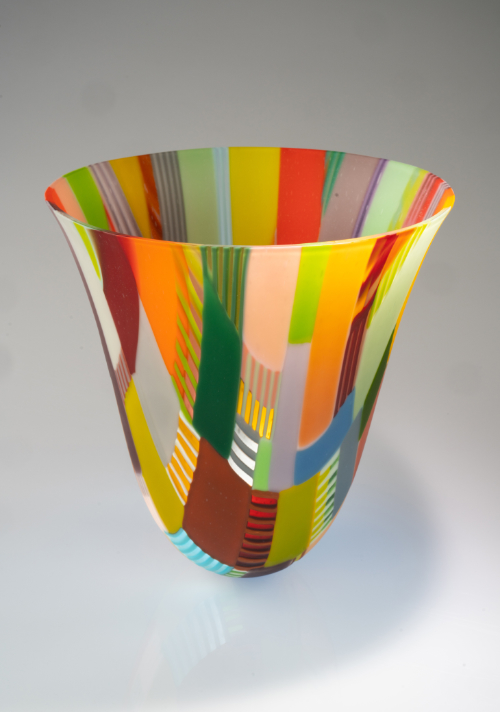
I am constantly inspired by colours whilst travelling or out walking. I take many photographs, which I transfer to a patchwork of watercolour representations when I return to my studio. Afterwards, I make fused glass samples, layering transparent over opaque glass, to find the most accurate representation, before making small, abstract watercolour sketches to get the balance of my palette correct. Collating all the information at my bench, I start a freehand approach balancing and layering coloured glass on a clear glass base to create patterns which represent my ideas, often hiding colours which will only emerge when gravity is applied. The work evolves as I work through the piece and I enjoy that freedom.
What message(s) do you want to convey through your art?
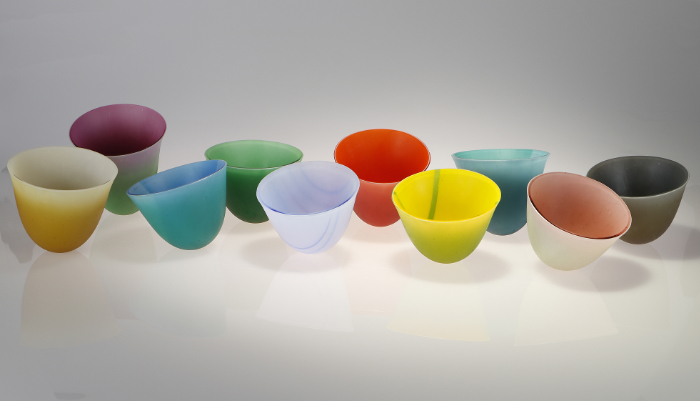
My message is simple – I aim to share the joy and delight I find in the colours of the world around me. My goal is to express the captivating and often remarkable colours that catch my attention, whether revealed through careful observation or suddenly making a striking impression, such as during a stunning sunrise or sunset. I also inhabit a world filled with patterns, found in anything from numbers to nature to textiles. Capturing these colours and patterns from my surroundings and transforming them into glass that brings joy and excitement to others is incredibly fulfilling.

What is your favourite tool or piece of equipment and why?
My favourite tool is my simple glass cutter. It enables me to cut the shapes and colours of glass I need to build my work. Without it I could not express my vision in the glass.
Do you have a favourite piece or collection you have made? Why is it your favourite?
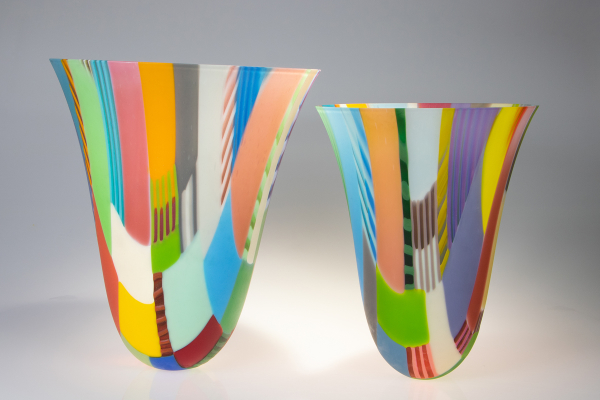
My current favourite is my Ghuncha Gul vessel, which combines my love of travelling, textiles and glass. It is based on a silk rug I brought back from a trip to Uzbekistan where I was researching evidence of Celtic influence on designs found along the Silk Road. I transferred the knotted design laboriously into small glass pieces, balancing each one, before it was fused and shaped into a vessel. It was exhibited as one of three of my vessels that were included in the British Glass Biennale Exhibition in 2024.
Where do you show and sell your work?
Most of my work is sold via a limited number of galleries in England, Scotland and Wales including, since 2015, London Glassblowing. In addition, apart from CGS, I am also a member of Homo Faber; Contemporary Applied Art; and Makers Guild of Wales, all of which show and/or sell my work. A small amount of my work is available for sale on my website.
Do you have a career highlight?
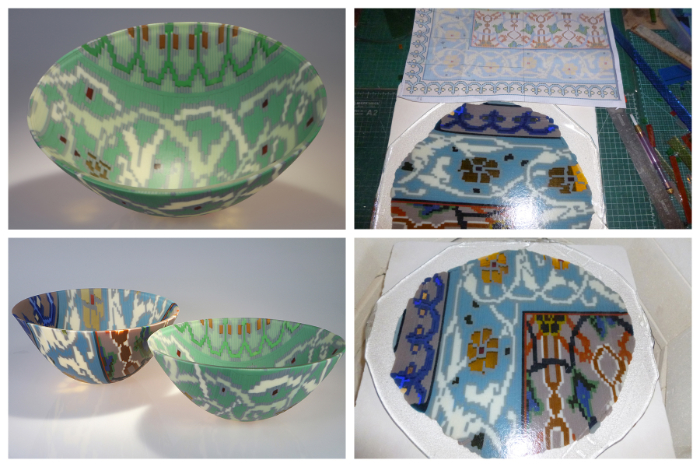
Winning the Glass Sellers’ Award at the British Glass Biennale in 2015 was a major milestone in my career, and accepting the award during an elaborate dinner at Mansion House in London was truly memorable. I am also grateful that my Uzbek-inspired piece, Sajda Gul, appeared in the latest New Glass Review 45, published by the Corning Museum of Glass, and that I had the opportunity to take part in a residency at Pilchuck Glass School.
Every award, grant, and publication I have received is deeply appreciated, as each contributes to my ongoing journey as a glass artist.
Where is your creative practice heading next?
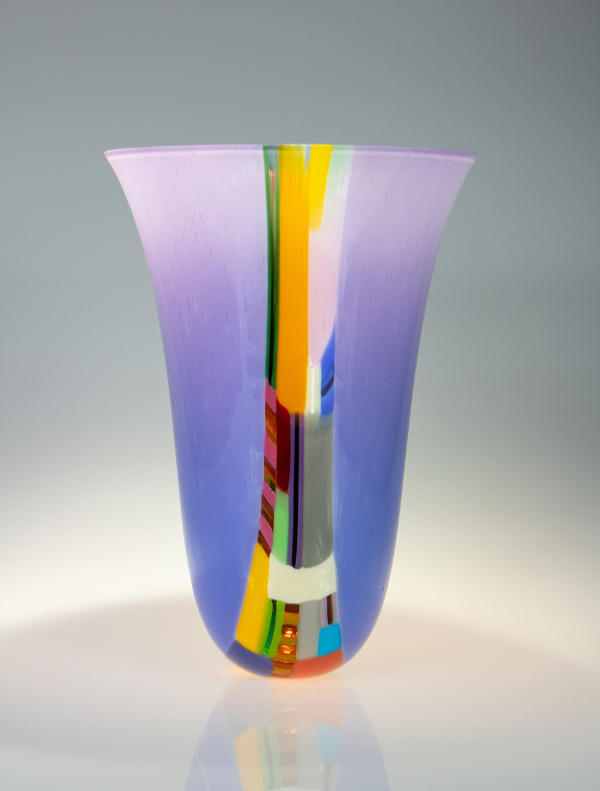
I am currently engaged in my Pontio Project (‘Pontio’ meaning ‘bridging’ in Welsh), which is supported by an Arts Council Wales grant. The project focuses on the integration of hot and warm glass techniques, whilst also exploring the use of waste glass, which is an inevitable byproduct of producing my existing vessels. At present, the forms of my vessels are constrained by the kiln-formed process, and I am actively investigating methods to broaden their shapes and patterns. Initial experimental results have been encouraging, indicating potential for further skill development and establishing a solid foundation in hot glass disciplines. Additionally, I will be attending a masterclass led by Scott Chaseling at the Glass Hub, which is anticipated to provide significant benefit and contribute meaningfully to the progression of this project.
Find out more about Ruth Shelley via her website
Watch Full Video of Ruth in the studio.
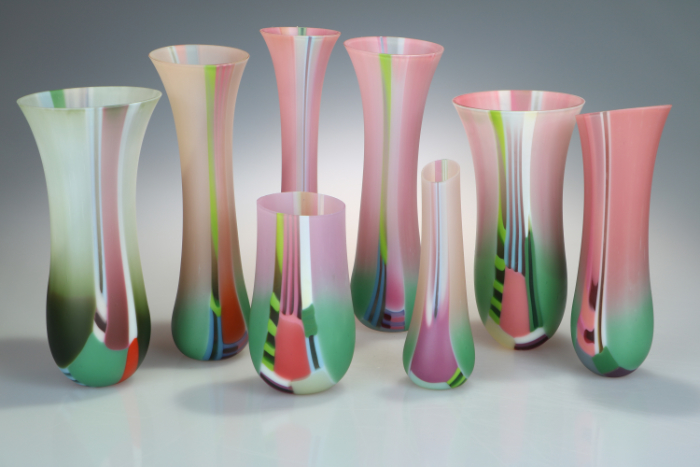
Main feature image: The ‘Rosebay Willowherb’ collection features Ruth Shelley’s bright and bold style. Photos: All by Ruth Shelley unless stated otherwise.
Related Articles
11-01-2026
A splash of colour