
Council agrees Article 4 Direction for National Glass Centre
Sunderland City Council’s cabinet has agreed to make an Article 4 Direction for the National Glass Centre (NGC), a move intended to bring any future demolition proposal under full planning scrutiny. However, the Direction will not take immediate effect and does not secure the building’s future.
The decision, taken on 7 October 2026, follows sustained campaigning to save the iconic building, which is owned by the University of Sunderland.
Subject to a further cabinet decision to confirm it, the Direction is set to come into force after a 12-month notification period. Once effective, it would remove the university’s permitted development right to demolish the building, requiring a formal planning application so that the council could assess the full planning merits of any proposal.
Importantly, the existing permitted development rights for demolition remain in place during the notification period.
The council said its decision followed a detailed assessment drawing on independent evidence and consideration of the potential legal and financial risks, including those associated with introducing the Direction with immediate effect.
Council leader Councillor Chris Eynon commented, “The challenges the university faces in sustaining this building are well understood. The strength of feeling of those who wish to find a way of preserving the centre is equally clear. There is no doubt this is a complex and emotive subject.”
Following the issue of a formal notice, there will be at least 21 days for representations to be made to the council. These will then be reviewed before cabinet considers whether to confirm the Direction. At the time of its announcement, the council anticipated that this second decision could be taken in December 2026.
Alongside this move, the council has decided to list the NGC as an Asset of Community Value, following an application by the Save the National Glass Centre campaign group.
Should the university decide to sell the building, this status would give the nominating organisation an initial six weeks to indicate whether it wished to bid, followed by a further four-and-a-half months to prepare its bid. However, the listing does not oblige the university to sell, guarantee a community purchase or prevent demolition. The university has eight weeks to request a review of the listing decision.
The NGC closed on 31 July 2026, following the university’s conclusion that structural issues, energy inefficiency and a multi-million-pound repair bill made the building financially unviable.
The closure was strongly opposed by glass artists and the wider community. Campaigners called for the university to pause its plans and allow time to develop alternatives, suggesting options including conference hire, an expanded online offer and a heritage hub. Their efforts have continued with the aim of protecting the building’s future.
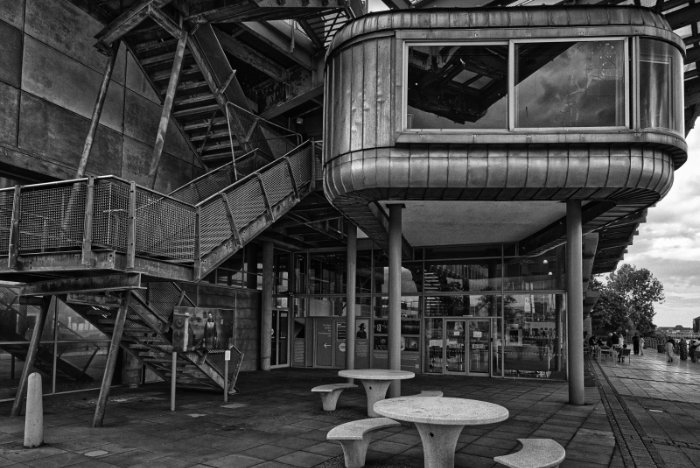
In the two hours following the NGC’s closure to the public in July, photographer Lewis Alexander (The Teeside Photographer) took a selection of poignant black-and-white images of different views of the building, one of which is featured with this news story. See more of his NGC images here, as well as his 3D rendition of the building here. With the university applying to put a 3m fence around the site, this may be one of the few ways to still see the building.
Meanwhile, Sunderland Culture has been developing Glassworks: Sunderland in the former Peter Smith Antiques building in Sunniside, with proposed specialist facilities, workspaces and learning opportunities for glassmaking and ceramics. Read more here.
Cllr Eynon added, “Taking everything into account, our decision today, coupled with the decision to list the National Glass Centre as an Asset of Community Value, creates a window of opportunity for all parties to carefully consider their next steps.”
Read the Council’s statement here.
Image: Part of the iconic National Glass Centre, which closed at the end of July. Photo: The Teeside Photographer.
Related Articles
21-10-2026
Council agrees Article 4 Direction for National Glass Centre

14-04-2026