Collect 2026 exhibition to showcase cutting-edge design

Renowned international craft and design fair Collect returns to Somerset House in London in February 2026. Featuring international galleries and arts organisations presenting exceptional new work and materials innovation across many disciplines, it is an opportunity to see the latest in contemporary art and craft under one roof.

Among the 40 exhibiting galleries, dealers and collectives will be some who represent glass artists, include Peter Layton’s London Glassblowing, Cavaliero Finn, Contemporary Applied Arts, DESIGN-NATION, Gallery FUMI, and the Society of Designer Craftsmen.

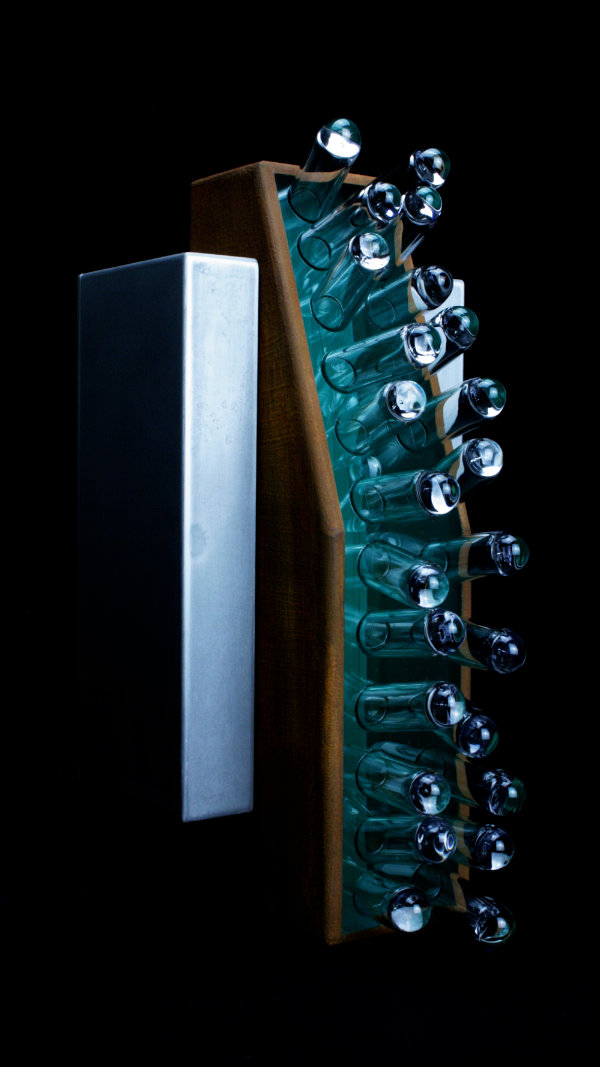
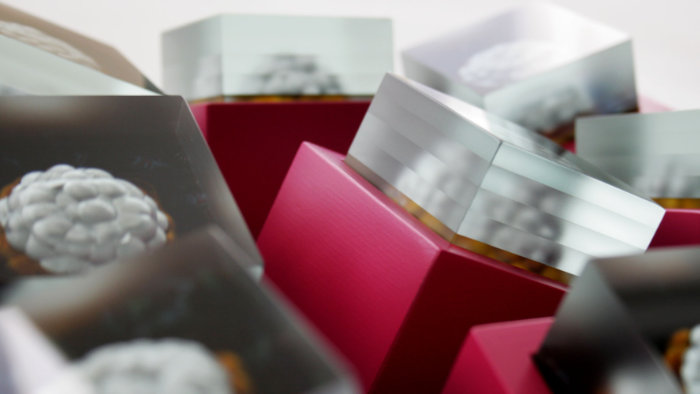
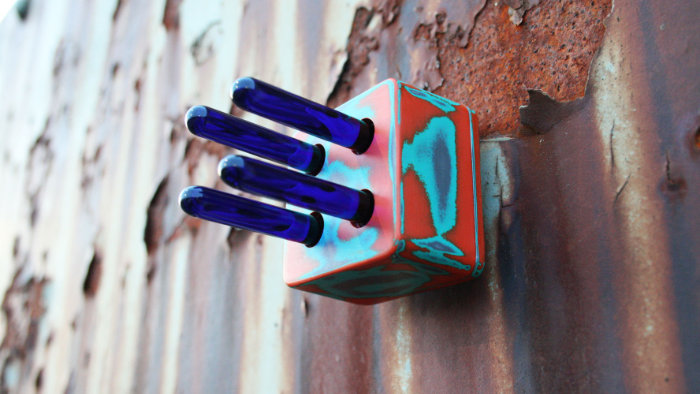
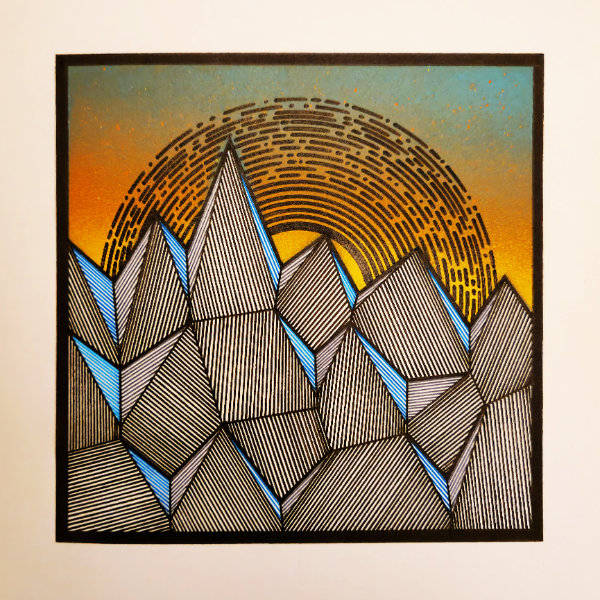
In addition, 11 cutting-edge artists have been selected for Collect Open, and will create projects especially for the fair that push their practices to the next level. None of those selected for 2026 work in glass, but their pieces are sure to be talking points.

Collect runs from 27 February – 1 March 2026, with tickets going on sale in mid-January. Opening times are:

Wednesday 25 February 14.00-21.00 (Collectors’ Preview by invitation only)
Thursday 26 February 11.00-21.00 (Preview)
Friday 27 February 11.00-20.00
Saturday 28 February 11.00-18.00
Sunday 01 March 11.00-17.00.

Somerset House is at the Strand, London WC2R 1LA.

Find out more via this link.

Strengthening contemporary glass links with Japan

CGS Chair Sarah Brown reviews her latest glass-focused visit to Japan – via Shanghai – a decade after her first trip in collaboration with the Naked Craft Project, which connects and strengthens ties between British and Japanese contemporary artists.

The Contemporary Glass Society (CGS) has partnered with the Naked Craft Project in Kobe, Japan for the past 10 years. Nobuyasu Yoshida, a glass artist based there who came to the UK to study glass at The University of Creative Arts – and became a member of CGS – has continued to forge an international connection to the UK through this project.

A large group of Japanese glassmakers with Sarah Brown at the opening party of the Naked Craft Project collaboration between Japan and the UK in 2015.
The opening party in 2015, with Sarah Brown on the left.

I was fortunate enough to be the first UK glass artist to go to Kobe in 2015, to run a glass workshop from his studio, and to show work in an exhibition of glass and ceramics at an immersive arts festival in Shin Nagata. It was an experience that has stayed with me ever since, and I hoped that one day I would be able to go back and be a part of it again.

Since then, CGS members Nina Casson McGarva, Griet Beyaert and Paul Miller and Yi Peng have travelled to Japan for a variety of residencies and events as a part of this project. We hope that other members will be able to participate in the future (possibly in 2027), but each year it depends how much funding is available.

Nobuyasu invited me to return to Kobe to celebrate the tenth anniversary along with glass artist Karen Browning. We exhibited in a fantastic exhibition at the Kobe Kitano Museum, alongside many artists from the UK and Japan. It was a joyful celebration of glass and international relationships. The opening featured speeches both in Japanese and English, canapes inspired by British and Japanese food and, of course, Sake and sparkling wine to celebrate the two nations, plus a pianist whose music mesmerised us.

Sculpture of the top half of a girl with swirling clear flame worked glass making a cloud all around her like a dandelion seed head, make by Yukiko Sugano.
Yukiko Sugano’s glass art on display at Kitano Museum.

Dominic Fonde, a CGS member who lives in Kobe, was there exhibiting his beautifully engraved glass art. It was lovely to meet him and the other glass artists, including  Yukiko Sugano and Chika Kato, as well as Carolyn Davidson, who is the British Consul General in Osaka.

Etched glass portrait of Eriko Kanda wearing a face mask, mounted in a looking glass by Dominic Fonde.
Etched glass portrait of Eriko Kanda wearing a face mask, from a series made during the COVID-19 pandemic by Dominic Fonde. Photo: Dominic Fonde.

Chinese highlights

Our trip to Japan was preceded by a stop in Shanghai, China, where we visited the Shanghai Museum of Glass. It was spectacular and immersive, sharing the science of glass and stunning pieces from a wide range of artists; everywhere you looked there was more to discover.

Outside view of Liuli Museum of Glass at night showing pink and purple lights highlighting a pointy textured wall.
Liuli Museum of Glass at night.

We also visited the Liuli Museum, where Karen’s piece ‘Double Take’ is part of the collection, which was lovely to see. We met Loretta Yang, an accomplished glass artist and one of the founders of the museum, and talked to her about the similarities and differences between working in glass in the UK compared to China, particularly the large-scale glass processing available to her in China. We were able to see her pieces up close, and hear about her inspirations and favourite pieces in her collection from a wide range of artists.

Karen Browning chats to Loretta Yang in the museum next to Karen's 'Double Take' wall art pieces, featuring two grey and black circles with thin gold 'veins'.
Loretta Yang (left) chatting to Karen Browning next to Karen’s art piece ‘Double Take’.

We then continued on to Kobe, meeting Nobuyasu and his friends for a tour around Kobe. We visited the Carpentry Museum and his studio and were able to appreciate so many different kinds of craftmanship. Of course, we also got to try Wagyu Beef, fresh tuna and okonomiyaki (a savoury pancake often called ‘Japanese pizza’), as a trip to Japan is not a trip to Japan without these!

We also had a little time to indulge my curiosity about Shokuhin Sanpuru, the fascinating fake food culture that uses silicone and other secret ingredients to create plates of realistic food that are displayed outside restaurants across Japan. We visited Design Pocket in Osaka, which was filled to the rafters with all sorts of different foods, from ramen to melon balls, burgers to jam on toast. We also had a go at making some ourselves. I created a fruit parfait and Karen made sushi. It was quite refreshing to be creating food from slightly easier materials than the glass I use myself!

We rounded off the trip with visits to Kyoto and Tokyo, both of which were filled with so much food and creative experiences. We went to Toyusu Fish Market to the Tuna Auction, TeamLab Planets Immersive digital experience, to shrines and temples as well as some wonderful art shops.

A large, bright and colourful abstracted trees glass panel lit from behind in a Tokyo train station.
A glass artwork at a train station in Tokyo.

Our time there was just not long enough, but we returned bursting with ideas for new work, and a longing to experience more of the creative scene of Japan in the future.

I hope that we can continue to strengthen this international connection with Japan in the future, and look forward to seeing Nobuyasu and some of the other artists at different glassy events across the world.

Main feature image: Karen Browning (left) and Sarah Brown with their fake food creations, made at Design Pocket in Osaka. All photos courtesy of Sarah Brown, unless otherwise noted.

CGS glass narratives event at the V&A

CGS Chair Sarah Brown reviews an interesting and informative gathering at this top London museum.

What a day it was on Friday 5 December 2025! Over 100 people met at the Hochauser Auditorium at the Victoria and Albert (V&A) Museum, London, for the Contemporary Glass Society’s ‘Narratives in Glass: An Artist’s Perspective’ event, hearing from four incredible speakers who use storytelling in many different ways within their work.

Sarah Brown and Helen Slater Stokes with glass chandelier in background by Dale Chihuly.
Sarah Brown (left) and Helen Slater Stokes with Dale Chihuly’s glass chandelier in the background at the V&A Museum.

The V&A’s Reino Liefkes, Senior Curator, Ceramics and Glass, and Kate Devine, Assistant Curator, kindly invited us to celebrate all things glass in an inspiring day of talks from Jeff Zimmer, Karen Browning, Moonju Suh and James Maskrey. Each spoke about the underlying themes that run through their work, finding their voice within their practice, how they became captivated by glass as a medium, and their own perspectives of life and being an artist today.

In addition, CGS Administrator Dr Helen Slater Stokes and I described our glass practices and ways of working with narrative. Katharine Coleman MBE shared a celebration of the work of Nancy Sutcliffe, who sadly passed away this year. She was a brilliant glass engraver with her unique style and ideas and also featured spectacular narratives within her work. It was a beautiful tribute and we learned a lot about her life and adventures. She will be greatly missed.

Reino Liefkes, senior curator of glass and ceramics at the V&A, showing visitors the museum's glass collection.
Reino Liefkes presenting the Museum’s glass collection to CGS members as part of the event.

Within the day’s programme we also had time to network over coffee and lunch, as well as over a few drinks at the pub afterwards. However, before we went to the pub there was an exciting opportunity to have tours of the V&A glass collection, led by Reino. He shared his favourite pieces, highlighting important works that have changed glassmaking over the years, and pointed out works by many contemporary artists, including James Maskrey, Jeff Zimmer, and a new acquisition, displayed for the first time that week, from Karen Browning and Jon Lewis.

A view across the glass collection cabinets at the V&A Museum.
The V&A’s glass collection holds a diverse array of glass artworks.

The day was filled with a buzz of excitement as we heard from the speakers, viewed the collections, met old friends and made new ones.

We can’t wait for the events coming up in 2026, where we will continue to foster connections in our community and share more about the many practices, ideas and processes within glass.

Main image: The four speakers, Jeff Zimmer, Karen Browning, Moonju Suh and James Maskrey. Photos: Courtesy of Sarah Brown.

A stitch in time

Emmy Palmer found fame in the BBC tv series Make It At Market in 2021, with her trademark knitted wire work that was encased in blown and polished glass. Here she explains how her glass practice has evolved since then.

Throughout my life I have found joy in making, although I never saw my creativity as a career choice until I was in my twenties. This is when I started my journey into applied arts. At first, I enjoyed trying out a broad range of material practices and learned so many techniques, but I found my place in large-scale metals.

A selection of brightly coloured 'Glass Pips' made from blown glass by Emmy Palmer.
‘Glass Pips’ – one of the collections refined during the Make It At Market tv series. Photo: Simon Bruntnell.

At this time, Dale Chihuly’s chandelier in the V&A Museum inspired me to take a taster course with a local glass blower. Creating my first wobbly glass blobs ignited something in me that has never been quenched.

In 2004 I moved on to do a Foundation in Applied Arts at Arts University Plymouth (formerly Plymouth College of Art and Design). I entered that course very determined to combine large-scale metals and blown glass, but my creative exploration took me in a slightly different direction. I specialised in blown glass in my second year and followed my Foundation with a BA (Hons) Applied Arts. In my final year I was lucky enough to be awarded a scholarship with Teign Valley Glass Studios and have continued a professional relationship with them ever since.

Knitted glasswork in progress. Knitting is created over the surface of a blue glass vessel.
The process of creating the knitted aspect of the glasswork. Photo: Emmy Palmer.

For inspiration, I’m really in love with Plymouth and its surrounding areas. It really is the most beautiful place to live. My ideas usually start with local visual research and then I end up down a rabbit hole of researching something related that catches my imagination. I take notes of colours and often do little sketches and methodical step-by-step thumbnails of the techniques I might use to achieve my ideas. Then I play with those techniques in the studio and go from there.

Copper wire crocheted into an octopus shape that will be incorporated into a glass vessel.
This octopus is crocheted from copper wire before encasing in glass. Photo: Emmy Palmer.

My glass making is more playful than impressively technical, but I do love making a good cut-and-polished surface and think I do it well. My knitted glass work started from very humble beginnings and was a real experimental journey. My knitted copper constructions were heavier and external to begin with. As they became more refined, I experimented with encasing the knitting. My mum has a little collection of wobbly pieces that beautifully illustrate my journey to refining my technique of encasing knitted wire into blown glass.

Glass rounded vessel featuring yellow, blue and green glass and an octopus.
Vessel featuring octopus design. Photo: Emmy Palmer.

In my Del Mar series the knitted wire is completely encased between the layers of blown glass and I cut and polish the pieces once cold so that you see a cross-section through the piece. It took me a long time to find the right knitting technique that didn’t restrict the glass bubble but stretched with it to a certain extent. These pieces were a real labour of love and were born out of a new and exciting time in my life, so for this reason they are still my favourite pieces to make!

In 2021 I took part in the BBC tv show called ‘Make it at Market’ (MIAM). Before that I’d only just started back in the glass studio after an eight-year break, so the opportunity arrived at just the right time for me when I needed some guidance. It was an absolute joy to be part of MIAM. The people at Flabbergast TV were such a lovely bunch and made the whole experience so much fun. Allister Malcolm was the perfect mentor and I learned so much from the experience. I found that the world had become a lot more digital compared to eight years earlier. The fantastic images of my work taken by Simon Bruntnell made a huge difference to my online presence. MIAM is the gift that keeps on giving. It gave me the tools and confidence to make my creativity into a business, gave me the exposure to sell to a wide audience and provided a welcome boost to help me set up a small coldworking space at home.

Emmy Palmer glassblowing and being filmed for the tv series Make It At Market.
Being filmed for the BBC tv series Make It At Market in 2021.

Most recently I’ve been creating free-formed crochet sea creatures that I am encasing in blown glass vessels and I’m just as excited about them. The copper restricts, distorts and pulls at the bubble in the blowing, but trying to control it is part of the fun. I have so many ideas that I’m currently working on for combining knitting and crochet with glass. I also use my open lace knits as stencils on Graal pieces so it appears as if knitting is suspended in the blown glass when, in fact, the original piece of textile is no longer present. I designed and made a collection called Knit One Purl One using this technique. I’m really happy with it, but it has great potential for further development.

Salmon pink glass vessel featuring knitted design by Emmy Palmer.
‘Knit One Purl One’ glass vessel featuring stitched pattern. Photo: Simon Bruntnell.

I’ve had an inspirational year. I’ve taken part in some interesting projects with other artists that have helped me to explore my connection with the sea. I joined local artists The Conscious Sisters with their Janner Gansey (fishing jumper) project at The Box. As a group we each knitted a Plymouth Gansey pattern based on local historical photographs. Over the 15-week project various sea-related experts, historians and creatives visited. Alongside this I joined a group exhibition project based around our local estuaries and I was inspired to research people and their lives around the estuary. I found some interesting historical stories that inspired my Shadows of the Sea pieces.

A mid-blue rounded blown glass vessel featuring etched sea creatures.
One of the ‘Shadows of the Sea’ series. Photo: Emmy Palmer.

The coming year looks exciting as I’ve just taken on the management of a cooperative at Ian Hankey’s Upcycled Glass Company, based on Brimpts Farm on Dartmoor. It’s a groundbreaking, small sustainable hot glass studio working with waste industrial glass, supported by Make Southwest. We have great plans and want this to be a creative hub open to anyone who is interested in glass blowing. Watch this space…

Find out more about Emmy Palmer and her glass work via her website, Instagram: @emmypalmerglass or Facebook: @emmypalmerglass

Main feature image: Part of Emmy’s ‘Del Mar’ series. Photo: Simon Bruntnell.

Ely Stained Glass Museum awarded major grant

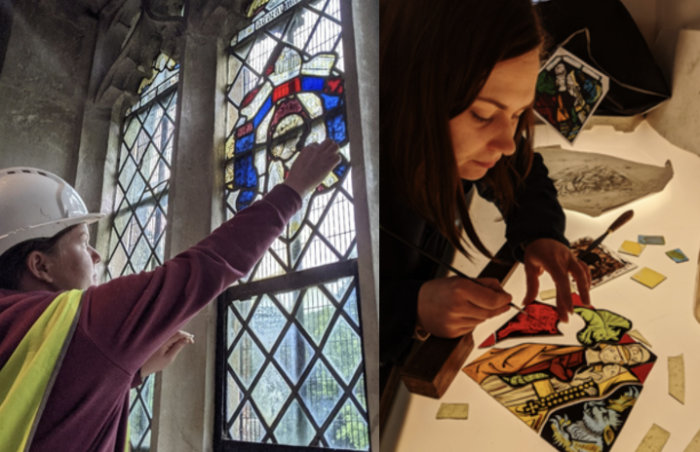
A conservation and training grant of over £90,000 has been awarded to the Stained Glass Museum at Ely Cathedral by The Julia Rausing Trust.

The money will be used over the next three years to improve the extensive stained glass collection’s care through conservation work and environmental assessment, while providing opportunities for training and public engagement around the care and conservation of stained glass. The museum holds stained glass from the 13th century onwards, from both secular and sacred contexts.

As part of this project, a specialist stained glass conservator will be appointed to undertake a programme of conservation on the stained glass windows within the museum’s collection, with adaptions made within the museum’s gallery to further protect these beautiful, but fragile, works.

Inside view of the Stained Glass Museum collection in the transept of Ely Cathedral.
A view of some of the stained glass on show in the Stained Glass Museum at Ely Cathedral. Photo © The Stained Glass Museum.

The museum will also offer two stained glass conservation internships to help train the next generation of conservators. With stained glass added to the ‘Heritage at Risk’ red list in 2023, offering these opportunities to the next generation is more important than ever. The students will be able to put their skills to use and gain valuable public-facing conservation experience, whilst continuing their studies. In addition to the preventative conservation, heritage and skills training, the project will showcase the specialist conservation processes and techniques for the public, through a variety of means, including online through video, in person with a series of behind-the-scenes tours, and with a variety of engaging learning opportunities.

In addition, children will enjoy special themed events during the school holidays and educational visits inspired by the science of conservation and the environment.

Dr Jasmine Allen, Director and Curator of The Stained Glass Museum, commented, “This grant of over £90,000 from The Julia Rausing Trust will allow the museum to undertake some essential conservation work to our specialist collection, whilst sharing this process with the public too. We are particularly delighted to be able to host conservation placements for trainee conservators as part of the project and offer the unique experience to combine the practicalities of stained glass conservation within our museum, which is based in a Grade I-listed historic setting.”

The grant will also cover an environmental assessment and upgrade to the museum’s environmental monitoring system.

The Julia Rausing Trust was established in memory of the late British philanthropist Julia Rausing, (née Delves-Broughton), who died in 2024. It donates £100 million to charities annually.

Find out more about the Stained Glass Museum at Ely Cathedral via the website.

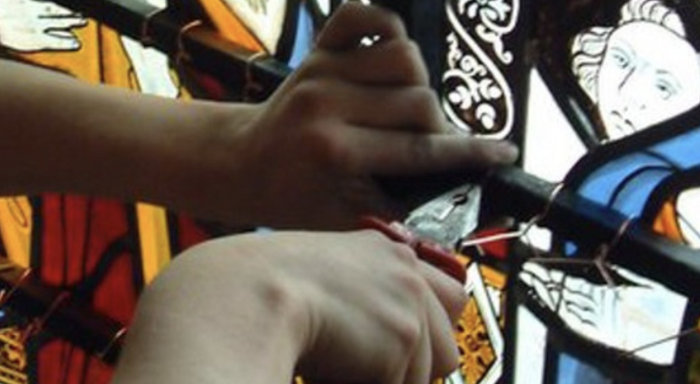
Main image: Conservation of a stained glass window at the Stained Glass Museum. Photo: © The Stained Glass Museum.

Stained glass apprentice runner-up in Heritage Crafts awards

University of Wales Trinity Saint David (UWTSD) apprentice Toby Britton-Watts has been awarded runner-up in the prestigious Heritage Crafts ‘Trainee of the Year’ Award 2025, recognising outstanding commitment and skill in preserving the UK’s traditional craft heritage.

Toby, who is undertaking a Level 4 Stained Glass Craftsperson Apprenticeship through UWTSD’s Swansea College of Art in collaboration with ICON (the Institute of Conservation), was one of only three national finalists selected from 13 nominations across the UK.

Toby Britton-Watts working on a stained glass window in the studio.
Toby Britton-Watts is learning all aspects of stained glass conservation under UWTSD and ICON tutors as part of his apprenticeship.

The Heritage Crafts Awards, supported by The Royal Mint and Wentworth Woodhouse, celebrate individuals and organisations working to ensure that endangered traditional crafts continue to thrive. The winners were announced at the Heritage Crafts Awards Winners’ Reception at Wentworth Woodhouse, South Yorkshire, on 17 November 2025.

“It was a real honour and privilege to be shortlisted for the award and recognised among such talented craftspeople,” said Toby. “Working with historic stained glass allows me to connect with centuries of artistic and cultural heritage while developing practical conservation skills for the future.”

Dr Mark Cocks, Dean of the University’s Wales Institute of Science and Art added: “We are immensely proud of Toby’s achievement in being shortlisted for the Heritage Crafts Trainee of the Year Award. His dedication, creativity, and craftsmanship exemplify the excellence we strive for across the Wales Institute of Science and Art. Apprenticeships like the Stained Glass Craftsperson programme demonstrate the University’s ongoing commitment to supporting traditional skills that are vital to our cultural and artistic heritage.”

Toby joined Holy Well Glass, based in Wells, Somerset, in 2023. After completing a BA (Hons) in Fine Art, he spent 18 months gaining hands-on experience under the tutelage of stained glass artist Amanda Blair, while also teaching art, before embarking on his apprenticeship.

Holy Well Glass has three ICON-accredited conservators and employs two apprentices with UWTSD. The company is renowned for its conservation work on stained glass from medieval to modern periods. The company’s projects include major heritage sites such as St George’s Chapel (Windsor Castle), King’s College Cambridge, and Winchester Cathedral.

Jack Clare ACR, Director at Holy Well Glass, said: “We’re delighted that Toby’s dedication and craftsmanship have been recognised at a national level. His work exemplifies the passion and precision needed to ensure that traditional stained glass conservation continues to flourish.”

The Heritage Crafts ‘Trainee of the Year’ Award highlights the vital role of apprenticeships and practical training in sustaining the UK’s heritage craft industries. It recognises individuals undertaking formal apprenticeships, traineeships, or institution-based practical study that forms a significant part of their professional development.

Main image: Stained glass window by Toby Britton-Watts.

UK International Festival of Glass 2026 call for entries

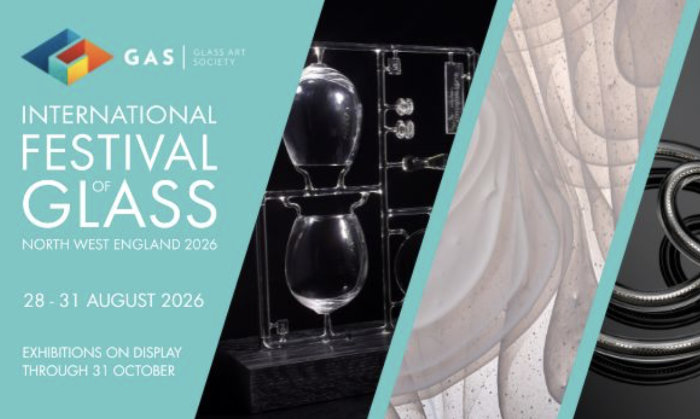
Submissions for the UK International Festival of Glass (IFoG) 2026 have opened. Taking place every two years, the Festival has established itself as the leading event for glass in the country.

For 2026 the event moves to the North West of England for the first time, under the new leadership of the Glass Art Society (GAS). Activities will take place in St Helens, Manchester and Liverpool over 27-31 August 2026.

The British Glass Biennale exhibition forms a major part of the IFoG, showcasing the work of the most prestigious British artists and artists living and making in the UK. This juried exhibition will be on display at The World of Glass in St Helens until the end of October 2026 and will include a digital exhibition hosted on the GAS website. Artists can submit up to three works for consideration but only one will be included in the exhibition.

Also part of the Festival is the International Bead and Jewellery Biennale, which is open to bead and jewellery makers worldwide. This juried exhibition will be held at The World of Glass in St Helens. All submissions must be predominantly made of glass but can include other materials. All glass techniques are welcome, but works must not be part of a production line. Up to three pieces can be submitted, but inclusion may be limited to one, depending on space.

A new exhibition for 2026 is the International GAS Member Exhibition. This juried exhibition will be shown at The World of Glass in St Helens until the end of October and a selection of pieces will then move to the gallery at London Glassblowing for display in November. Applicants must be GAS members on 15 November 2026 to qualify. All forms of glassmaking and video documenting glass-related performance pieces can be entered.

For all three exhibitions, entries must be made by 1 March 2026. There is no fee to submit but GAS will take a commission on sales. Successful entrants will be responsible for shipping to/from the venue.

Find out more and submit via this link.

Save the National Glass Centre campaign meeting update

A public meeting at City Hall in Sunderland on 19 November 2025 hosted more than 120 supporters of the campaign to save the National Glass Centre (NGC) from closure in 2026.

At the gathering, leaders of the Save the NGC group called on the local authority for support to hold the site owner, the University of Sunderland, to account and suspend the closure of the iconic building to allow time for a considered alternative plan to be put in place.

As part of the presentation on the challenges and choices that could be made for the NGC, campaign chair Carolyn Basing stated, “The most important act the council can take at the moment is to persuade the university to pause its closure plans.”

Ideas suggested for the future of the NGC by the campaign team included expanding its online offer, renting out empty spaces for conferences and making it a ‘heritage hub’.

Caroline Basing acknowledged, “We fully accept that the building needs work, but the business model within the building also needs a lot of work.”

However, council leader Michael Mordey, who is also on the university’s board of governors, reiterated that the NGC had been running at a significant loss for a long time, and that the decision to close it was “fixed”. He added that the proposed Glassworks site was a “perfectly viable option”.

He did note that he would be supportive of other options that had been mentioned in the meeting, such as the National Trust’s proposed Safe Harbour scheme that aimed to protect heritage assets at risk of disposal and degradation.

Meanwhile a university spokesperson said there had been “no credible plan” put forward on how the running costs would be met.

The campaign team was buoyed by the turnout on the night, calling it “inspiring” and “a clear demonstration that the people of Sunderland care deeply about the future of the National Glass Centre – enough to show up, speak up and stand together.”

Following the meeting, the group created an open letter and action list for the council leader, which are available online via this link, and called on supporters to “share them, sign them and send them”. The campaign petition on Change.org stands at over 38,000 signatures and can be signed via this link.

They concluded, “This campaign is far from over – but with your support, it is stronger than ever. Keep sharing. Keep talking. Keep pushing. Together, we will make sure that the National Glass Centre’s light does not go out.”

Image: (left to right) Campaigners Nigel Taylor, Carolyn Basing and Anne Loadman making their case at the public meeting.

Structural integrity

US glass artist Morgan Madison brings precise draughtsmanship to his architectural designs of kiln-formed and laminated cityscapes and artifacts. Linda Banks finds out more.

What led you to start working with glass?

I was introduced to glass by happenstance. I went to Lewis and Clark College, a small liberal arts school in Portland, Oregon, where I received a degree in Studio Art with a focus in drawing. After graduating I travelled around South America until student loans came due and I found myself back in Portland looking for any kind of art-related job I could find. A company called Bullseye Glass was hiring for a factory position and had an eye-catching ad in the paper that said something like “wow your friends and impress your enemies”. I knew nothing about glass at the time, but the pay was pretty good, and I could ride my bike to work, so I applied and was offered the position. It was hot, loud and intimidating in the factory but I took the job thinking I wouldn’t stay long. Being surrounded by all the colourful glass quickly piqued my curiosity though, and I ended up working at Bullseye as a glass caster and blower for seven years, essentially receiving a master-level class in glass along the way, which profoundly shaped the course of my career and life.

Glass artist Morgan Madison seated at a table behind several of his kiln-cast rainbow-coloured abstract glass forms.
Morgan Madison with a selection of his kiln-cast glass and concrete artworks. Photo: Pam Drago.

What glass techniques have you used, and which do you prefer?

I have explored many different kiln-forming processes, from fusing and slumping to casting and pate de verre. I have blown a little bit of glass and worked with others to create roll-ups from kiln-formed panels. I am not sure I have a favourite process; I find that working with a range of techniques in glass and a variety of materials alongside makes for a dynamic creative environment in the studio. I prefer to let the concept and character of a project drive methods and material choices, rather than being beholden to a particular technique or medium. I enjoy the challenge of figuring out a new way forward for each project.

Please tell us more about your creative approach. Do you draw your ideas out or dive straight in with the materials?

Creating improvisationally and working in a more measured and intentional way are both important and complementary aspects of my practice.

Working improvisationally and making without a purpose is important to exercise the creative muscles. I find that this way of working helps generate new ideas and prepares me for making choices and solving problems when I shift to working on more particular and involved projects.

Fortunately, when it comes time to be precise and clear I get to lean into drawing, my first love as an artist and the foundation of my creative process. Working out composition, form and colour through drawing is critical to my way of thinking and seeing. Drawing is also a crucial tool in problem solving and planning. When I have commissions or specific projects to pursue, this approach provides the structure to see them through.

Regardless of how big or small, casual or deliberate, a project may be, serious play would be an apt way to describe my approach to the creative process.

A rectangular kiln-formed glass artwork featuring angular lines and multicoloured glass.
‘Confluence – West’ comprises kiln-formed and cold-worked glass.

What message(s) do you want to convey through your art?

Ultimately, I want my work to be buoyant, an expression of hopefulness and a celebration of our fleeting existence in this realm. I would say that my work inhabits the realm where the architecture of nature, manmade architecture and imagination overlap. I frequently look to my physical surroundings for inspiration. I am seeking to develop a dynamic visual vocabulary based on the elements of place, such as material, form, colour, texture and pattern. In particular, I am looking for elements that resonate amongst the noise and can communicate about distinct niches of our environment.

My aim, though, is to hint at stories and scenes rather than to create work that drives with intention and is overtly representative, so as to leave room for interpretation and invite my audience to become engaged in the creative process.

‘Reach’ is made from kiln-formed and cold-worked glass in a square form with angular, architectural abstract panels of coloured glass.
‘Reach’ is made from kiln-formed and cold-worked glass.

What is your favourite tool or piece of equipment and why?
My favourite tool is a tough question. For working with glass specifically, it would have to be my Toyo glass cutter, which I have had since the beginning. Truly though, my coloured pencils and paper are closest to my heart – simple tools with endless potential.

‘Calling’ is made from kiln-cast and cold-worked glass and cast concrete. It features pink glass fading into blue glass in an angular form on top of a white concrete base of angular form.
‘Calling’ is made from kiln-cast and cold-worked glass and cast concrete.

Do you have a career highlight?

I am nearing an exciting milestone – the completion of a large-scale kiln-formed glass installation for SEA – the Seattle Tacoma International Airport. It consists of 13 unique artworks, each representing a distinct ecosystem of the Pacific Northwest. The work is meant to be a colourful and dynamic celebration of this region, bidding travellers farewell and welcoming visitors and folks returning home.

Rendering of ‘Cascadia’ – a large-scale glass installation for SEA – Seattle Tacoma International Airport – consisting of 13 unique kiln-formed and laminated panel sets, each measuring approximately 85 x 85 inches.

It has been a two-year process of design and collaboration to move from concept to completion, with installation coming in December 2025. Each artwork consists of two overlapping design layers that have been carefully cut, assembled, fired and laminated together at Bullseye Studio in Portland. The resulting glass panels will be installed inside the exterior terminal windows, acting much like traditional stained glass windows. I hope that they have a similar effect of fostering moments of serenity in an otherwise hectic environment.

‘Eastern Rivers’ is a photo composite of one of the 13 works in ‘Cascadia’.

By all measurables, this has been my most expansive, complex and challenging project and seeing it through will be very rewarding.

‘Montane’ photo composite of one of the 13 works in ‘Cascadia’.

Where is your creative practice heading next?

I have a few irons in the fire.

First, I hope to capitalize on the momentum of my current commission for SEA and continue to push into new territories of concept and scale through commissioned works of art for the public realm, and for private clients, too.

In Autumn 2024 I had a residency at S12 in Bergen, Norway, during which I got to explore exciting ways of layering sheet glass and powders. The initial results were promising and dynamic, but I have been so busy with other projects since then that I have had to pause the explorations that I began at S12. I am looking forward to some quiet time this winter spent gathering those threads anew to see where they lead me.

And, like most artists I know, I have numerous sketchbooks, pages filling every day with ideas I want to bring to life, so I have more than enough to keep me occupied until the next thing pops up. I suppose I had better get back to work! Time is the most precious commodity, isn’t it?

'Eternal Optimist' is a vertical sculpture in glass featuring blue glass, aqua glass, pink glass and orange glass formed into an angular structure.
‘Eternal Optimist’ kiln-fired sculpture.
An image of four steps in the process of completing Eternal Optimist sculpture, showing the model, firing and test details.
The process of creating ‘Eternal Optimist’, including designing, colour tests, model-making and an image taken pre firing in the kiln.

And finally…

I would like to share a few words of appreciation. It is so valuable to take moments now and again to write and reflect and assess in order to focus on what is meaningful and regain some of the clarity that can get lost in the day-to-day hustle. So, thank you for giving me the excuse to do so, and for the opportunity to share with the CGS audience. Cheers!

Find out more about Morgan Madison and his work via his website https://morganvanmadison.com or via Instagram and Facebook: @morganmadison .

Main feature image: ‘On the Way…’ is a kiln-formed and cold-worked glass triptych by Morgan Madison. All photos courtesy of the artist, except the photo of Morgan in the studio.

Apply now for New Glass Review 46

Corning Museum of Glass in the US is inviting applications for the next edition of the prestigious glass publication, New Glass Review. The review team is excited to discover how artists are reimagining glass and its possibilities.

New Glass Review grew out of a groundbreaking 1975 meeting with early leaders of studio glass who saw that a thriving field required a place of encounter, a place to discover the work of other artists, designers, collectors, museums, and enthusiasts. Four years later, after the exhibition ‘New Glass: A Worldwide Survey’ brought studio glass to people across the US and Europe, New Glass Review was launched.

Anyone from a beginning student to an established artist can submit their work. Most years, there are around 1,000 submissions from artists, designers, and organisations in more than 50 countries. These submissions are reviewed by a panel of curators, scholars, and artists, led by the Museum’s curator of postwar and contemporary glass or a guest curator. Only 100 images are ultimately selected for publication.

The museum states, “what appears in New Glass Review is not what is ‘best’ in glass in a given year. Instead, it is a collection of works, chosen by individuals from across the worlds of glass, arranged to spark new ways to see and think about this incredible material and the people who use it expressively.”

Work submitted must have been designed and/or completed over the past year (between January 2025 and January 2026). Video works can also be submitted, as long as glass is a main feature.

The deadline to submit your work is 13 January 2026.

Find out more and upload images via this link.

Image: ‘Illuminated Histories and Speculative Futures: Elmira’, by James Ronner, which features in New Glass Review 45.