
An inquisitive nature
Petri Anderson explains how he unknowingly started his career in stained glass at a prestigious studio and how he continues to channel his inner physicist in pushing the boundaries of colour and technique in his craft.
My route into working with glass wasn’t a particularly straightforward one. When it came to choosing the direction of study at school, I went down the science path. This led me to embark on a physics degree course at Birmingham University. My father was a physicist and my mother a talented amateur potter. Science was seen to hold better prospects than a life in the crafts but, after a year pursuing physics at degree level, the penny dropped that it really wasn’t for me. In the autumn of 1989, I dropped out of university and re-evaluated my future.
A friend told me of a stained-glass studio close to where I was living so I knocked on their door and enquired as to whether they were taking on staff. Little did I know that I had knocked on the door of one of the most prestigious stained-glass companies and furthermore that they had been considering taking someone on. The interview was arranged and, after a month’s trial on the glass painting side and a month doing bench work, I was given the choice of which side of the craft to pursue. It was only later that I realised that had they advertised the position, the advert would have gone out to art colleges, and I would have been overlooked.
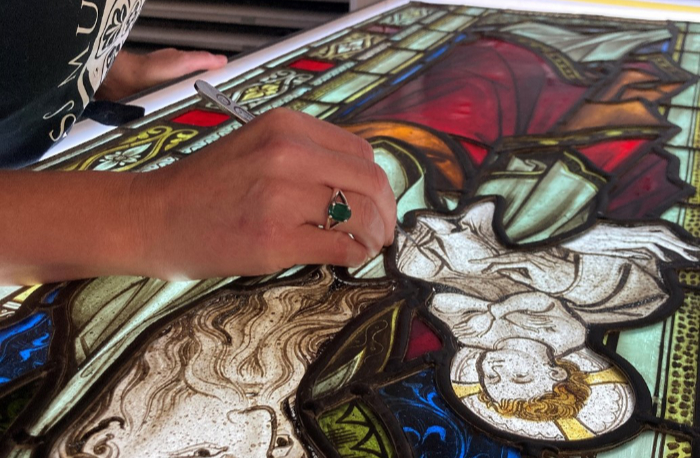
I chose to pursue the glass painting side and was trained in the craft by master glass painter Peter Archer who himself had worked at Whitefriars for a long time. For many years I worked at Chapel Studio honing my craft and experimenting with new techniques. That inquisitive nature has persisted throughout my career as I continue to experiment and explore possibilities. I guess there is still an experimental scientist in the DNA somewhere.
One of my tangential discoveries that I now use frequently is that you can achieve a nice subtle earthy orange hue by firing iron acetate into glass. I had a bottle of iron acetate solution, which was prepared by dissolving steel wool in vinegar. It’s a solution more commonly made by carpenters as an ebonising fluid. I thought to try firing some onto a piece of glass and was astounded by the result. I knew that microscopic iron particles fired into glass because there was an expensive, iron-based pigment on the market called Jean Cousin. My solution (affectionately named ‘Petri’s potion’ by several in the stained-glass community) fires less red than Jean Cousin but is a fantastic complement to its more costly sibling.
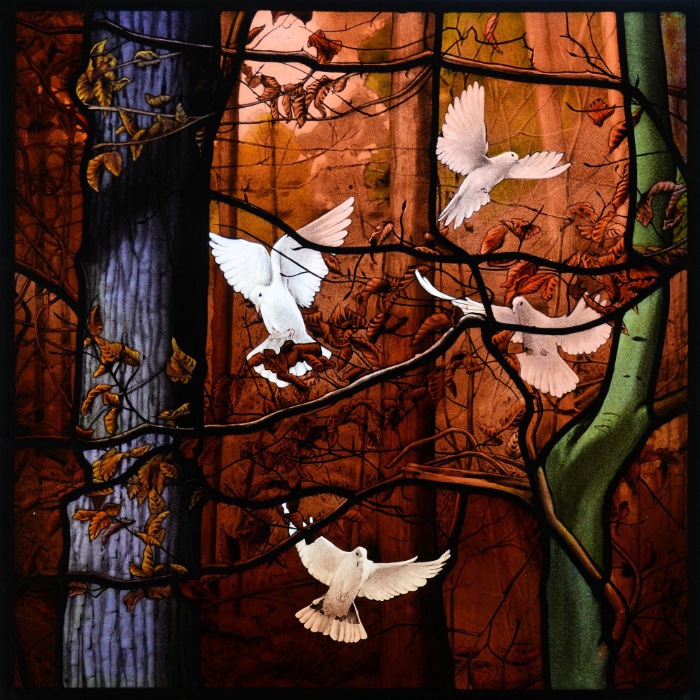
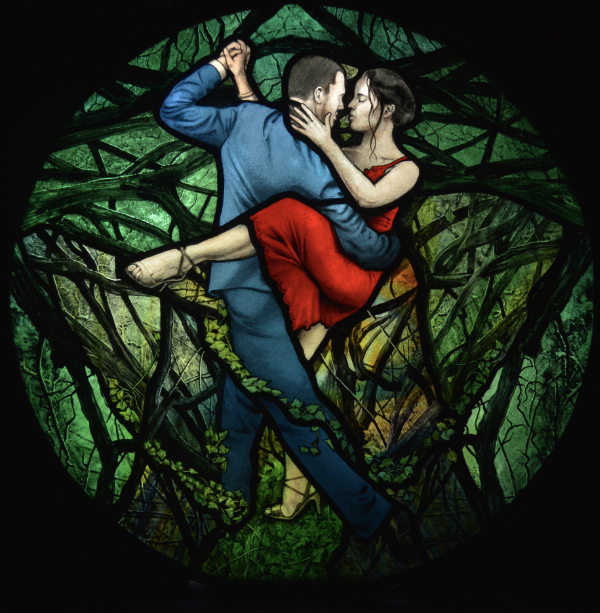
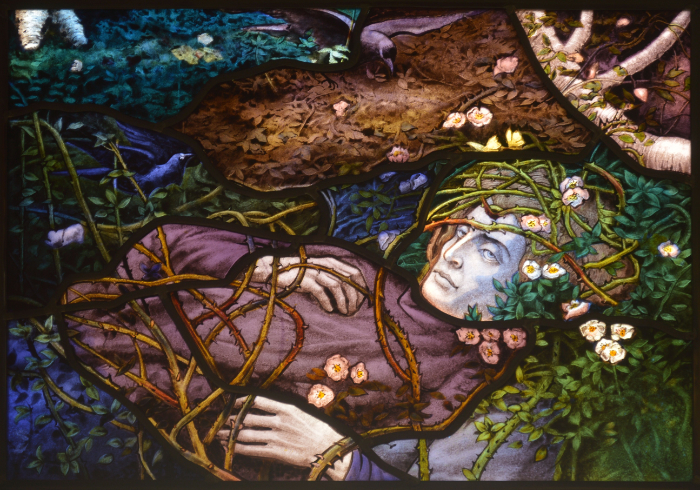
In recent years I have been pursuing a body of autonomous, standalone panels. They tend to be more detailed in nature than my architectural commissions. I’m always looking to ramp up the colour complexity. The iron acetate, Jean Cousin and silver stain are all applied colours that help towards this end. Other techniques that I frequently use to further increase the colour elaboration are acid etching of flashed glass and plating two layers of glass together. Marrying these techniques can place a phenomenal range of hues specifically where you want them on what appears to be a single piece of glass.
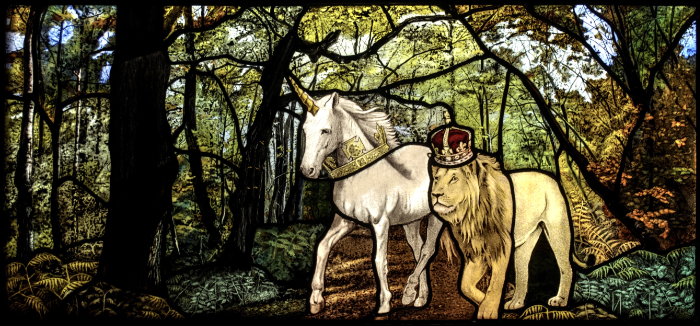
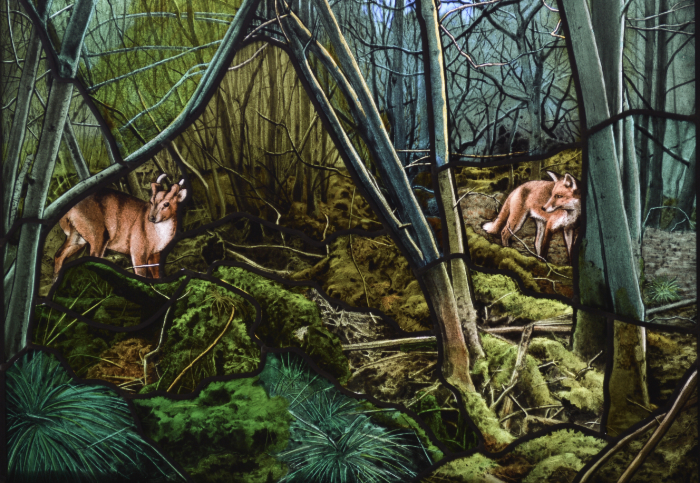
With careful and considered application of these techniques I’m able to realise the atmospheric woodland scenes that have become a bit of a hallmark of my more recent work. I really enjoy throwing myself into these pieces. It’s a very different kind of working practice from my commissioned site-specific work. I enjoy both. I like the challenge of working towards an architectural brief but then the freedom to just make without the constraints of pleasing clients or committees brings a fresh joy.
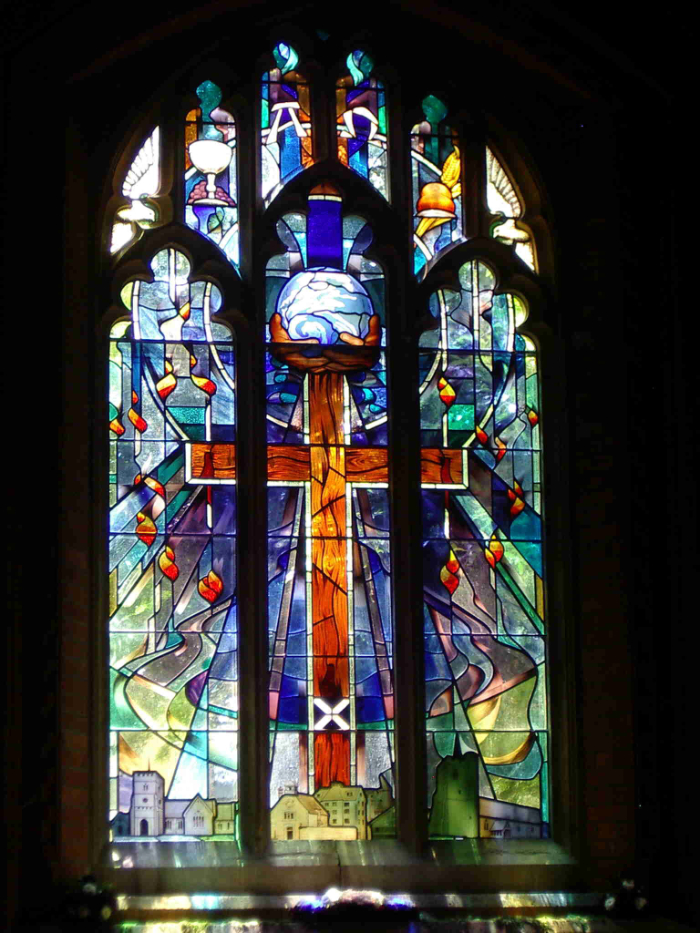
There is a certain discipline required for the commissioned architectural work. I design using the Procreate app on my iPad. The design takes shape and is ultimately shared with the client. Typically, some alterations and amendments are made during this process. Then the design is submitted to the Parochial Church Council (PCC) and, once approved, it goes to the Diocesan Advisory Committee (DAC). Each committee may have additional requirements and their meetings may be several months apart. I find the design process quite intense and the need to pick up and put down that process intensity throughout the flow of a commission does not come naturally to me. Therefore interspersing these commissioned works with the free rein of my autonomous panels helps me keep me enamoured with the craft for the long haul of a multi-decade career.
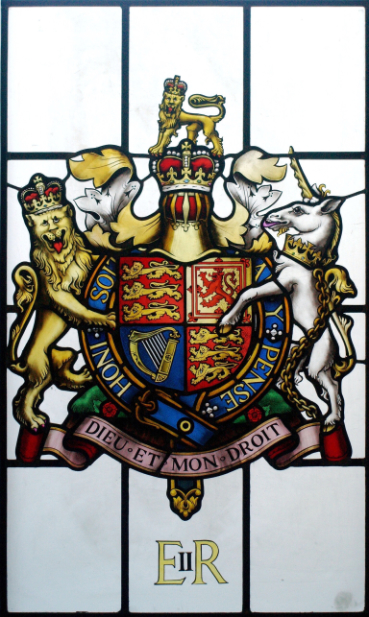
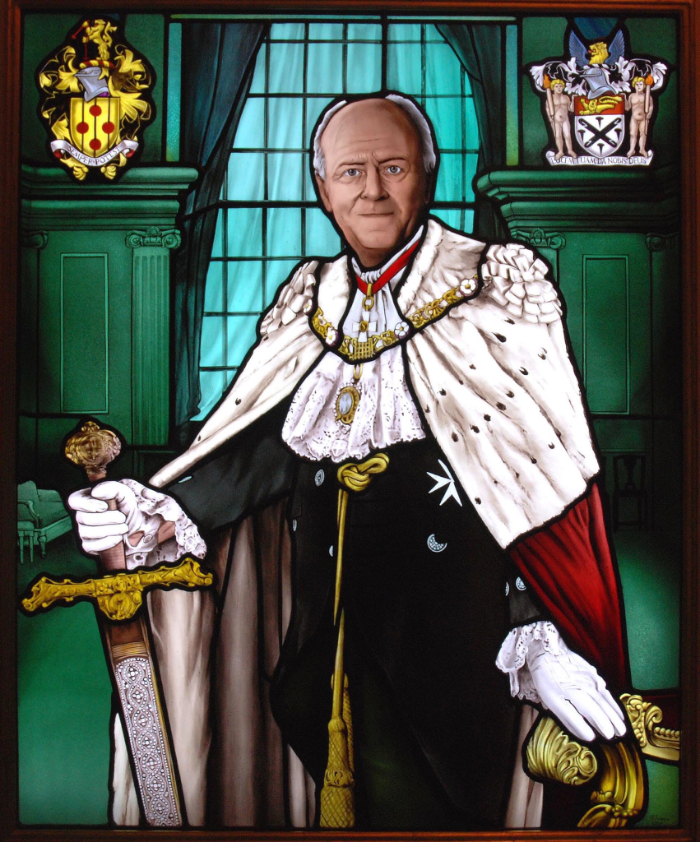
I feel blessed to have the career that I have. Some of the highlights have been making the coats of arms for Queen Elizabeth II and Prince Philip on the Sandringham Estate, Sir John Major’s Arms for his home, plus portraits of Sir John Stuttard for Glaziers Hall and for his home. Sir John is a former Lord Mayor of London and Master Glazier of the Glaziers Livery Company. It would be hard to say which of my works would be my favourite. At a push I would have to say my next one. I’m always looking to build on what has gone before and push into new territory.
Find out more about Petri Anderson via his website.
Main feature image: An example of Petri Anderson’s highly detailed and richly coloured stained-glass work featuring a fox and deer. All images: Petri Anderson.
Related Articles
21-06-2026
An inquisitive nature
07-12-2025