
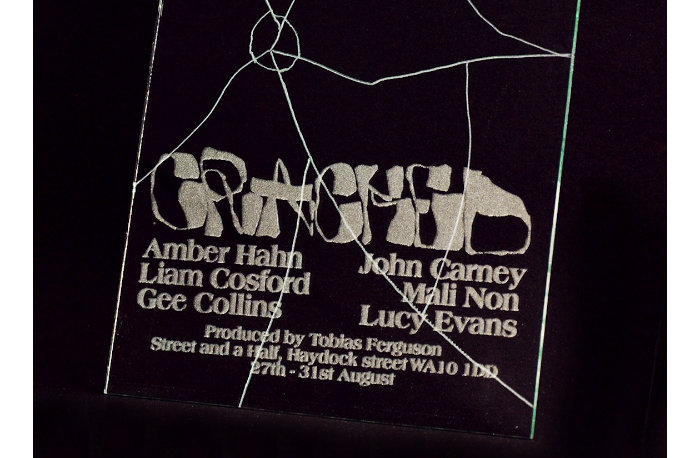
CRACKED exhibition confronts barriers to glass artists
An artist-led exhibition at Street and a Half in St Helens will take place as a satellite event to the International Festival of Glass (27-31 August 2026). The show, ‘CRACKED: A Contemporary Glass Exhibition Beyond Tradition’ examines the gap between St Helens’ world-famous glass heritage and the barriers facing artists who want to work with the material today.
The exhibition presents the work of six artists (Amber Hahn, Gee Collins, Liam Cosford, John Carney, Mali Non and Lucy Evans) who were brought together as part of Gee’s research (funded by Developing Your Creative Practice, Arts Council England) that focused on understanding curation and fabrication of contemporary sculpture, alongside learning more about where grassroots artists fit in to St Helens’ industrial heritage.
Over a 12-month period, Gee organised peer sharing sessions, with the artists meeting online as well as visiting Frieze art fair, Pilkington Glass Factory, The World of Glass, Stourbridge Glass Museum and Sunderland Glass Centre. They also took part in workshops on stained glass, glass blowing, and lamp work.
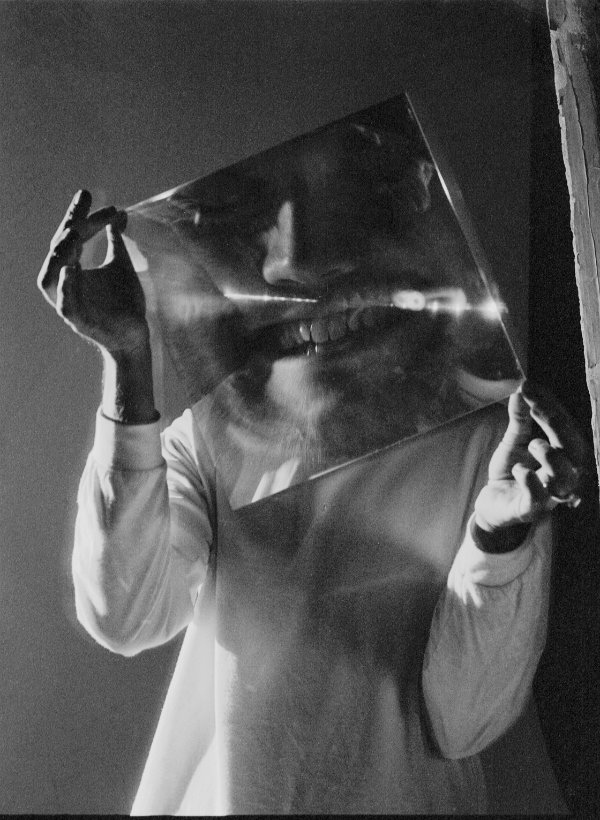
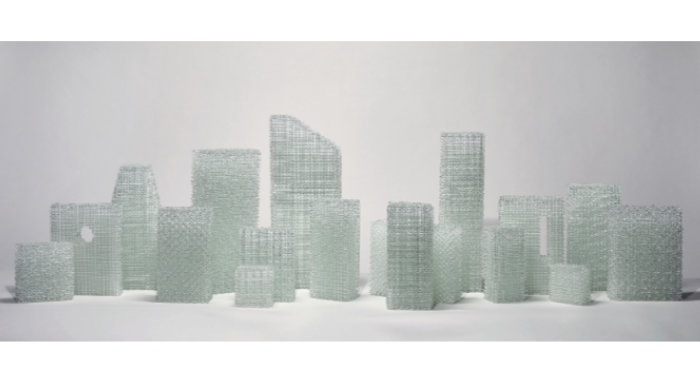
Their artworks take a playful approach to reflecting both the possibilities of glass and the practical barriers surrounding it: the cost of specialist facilities, the technical knowledge required to work safely, the energy involved in heating and forming the material and the limited opportunities available for independent experimentation. For example, the lack of access to professional lighting means an artist includes lights within their sculptures, or an artist purposefully includes dirt and fingerprints within a glass work that those used to working with glass try to buff out.
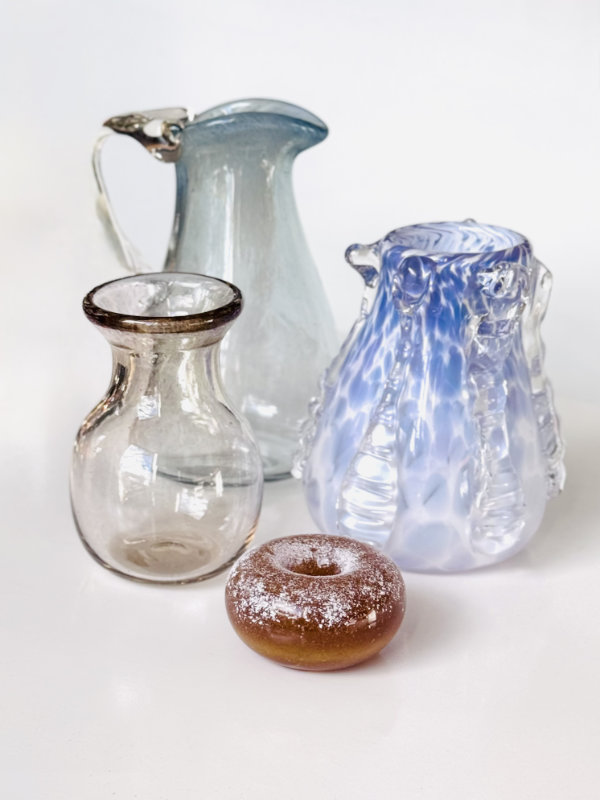
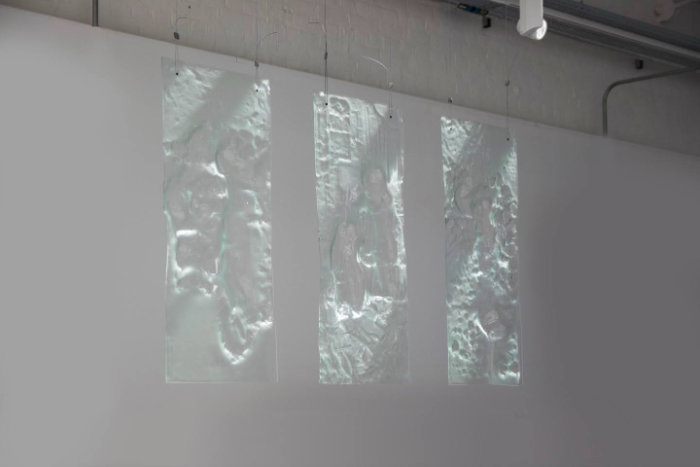
The artists have approached glass through cold engraving, computer-generated textures, industrial float-glass sheets, traditional vessels and experimental sculptural processes as their exhibits address what is needed to ensure that the area’s industrial heritage can support new creative practice.
They highlight that St Helens helped transform the way glass is produced around the world, continues to manufacture it at an industrial scale and is now home to major research into the future of low-carbon glassmaking. Yet, for independent artists living and working in the region, glass remains one of the hardest materials to access.
They explain that CRACKED begins with a contradiction at the heart of contemporary glassmaking. St Helens helped make high-quality glass available across the world. The float-glass process developed in the town transformed the manufacture of windows, buildings and vehicles and became an international industry standard. However, access to industrial infrastructure is not the same as access for artists. Large-scale factories and research facilities are designed for commercial manufacturing and technical trials. Independent artists need something different: affordable workspace, specialist equipment, practical guidance, time to experiment and the freedom to make mistakes.
St Helens-based Lucy Evans said, “Since graduating, I’ve encountered several barriers when trying to access the glass industry. Being a part of an exhibition that is putting a spotlight on the medium is incredibly exciting to me and gives me the rare chance to showcase my work in a glass-focused environment.”
Skills once acquired through large workplaces and passed between generations are now more likely to be encountered through heritage organisations, education, limited studio opportunities or short-term cultural programmes.
CRACKED considers what is lost when a material remains central to the identity of a place but becomes distant from the daily lives of many of the people who live there.
It also asks a wider question relevant to former industrial towns across the UK: can industrial heritage remain alive without giving new generations meaningful opportunities to work with it?
The exhibition creates space to discuss access, labour, experimentation and the conditions under which contemporary glass art is made. The group is using this to garner support and raise funds for an emerging glass apprenticeship, which would provide a young artist from the area with funds to access a glass hotshop and undertake important training.
Rather than presenting St Helens’ glass history as something finished, CRACKED connects that history to the future. The artists’ work considers how traditional craft can sit alongside digital processes, industrial materials and contemporary sculpture – and how glass can be understood not only as a beautiful or precious material, but as something shaped by labour, technology, class, energy and place.
CRACKED is produced by Tobias Ferguson, with support from Artist-Led St Helens. He has created a temporary structure and design lighting around the artworks. This custom space will highlight and navigate the barriers to exhibiting glass work at a grassroots level.
The exhibition is free to visit and takes place from 27-31 August 2026 (10am-4pm). There is a talk and artist tour (also free but spaces are limited) on Friday 28 August (12-3pm), titled ‘From Magic to Industry’, plus a launch event that evening (6-9pm).
Venue: Street and a Half, Haydock St, St Helens WA10 1DD.
Further details available via this link.
Related Articles
23-10-2026
Apply for Women in Glass exhibition at London Glassblowing
19-09-2026