
Invisible systems
Modular installations that allow the forms to interact and adapt are the speciality of kiln-formed glass artist Malina Cipleu. Here she tells Linda Banks what drives her practice.
You have a background in psychology. What originally led you to start working with glass?
I studied psychology before I ever thought of becoming an artist, and at the time I didn’t imagine the two would eventually connect. Looking back, though, I think my interest in perception has always been there – how we organise visual information, how patterns emerge, and how much we understand before we consciously put something into words. When I began working with glass, I found a material that allowed me to explore those questions visually rather than analytically.
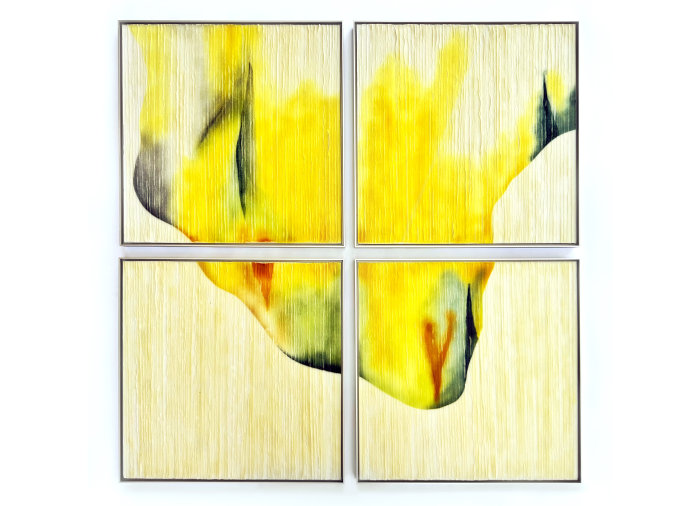
I came to glass unexpectedly, through a fused-glass event at my sons’ school and was immediately drawn to its capacity for transformation. Through heat, separate pieces could fuse into a continuous surface, while glass powders and particles could shift from something granular and distinct into something translucent, fluid, and entirely changed. That transformation gradually became part of the thinking behind the work itself.
Please tell us more about your creative process. Do you draw your ideas out or dive straight in with the materials?
I rarely start with a fully resolved drawing, but I make many watercolour sketches. The work usually grows from an observation, a structure, or a question. Sometimes that comes from something I have seen in nature, but it may be as simple as noticing how forms gather and disperse, how repetition creates rhythm, or how one system adapts around another.
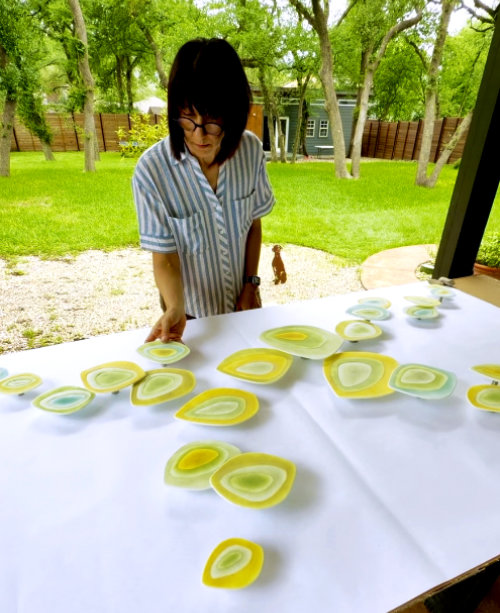
I sketch and work digitally when I need to think through scale or composition, especially for installations and public art, but much of the real development happens through the material. I make many tests, particularly with glass powders and small particles, and respond to what happens in the kiln. At lower temperatures the glass can retain a granular, particulate quality; at higher temperatures those distinctions soften and merge. I’m interested in these transitions because they parallel many of the ideas within the work – how separate elements connect, reorganise, and gradually become something larger than themselves.
How has your practice evolved since you began working with glass?
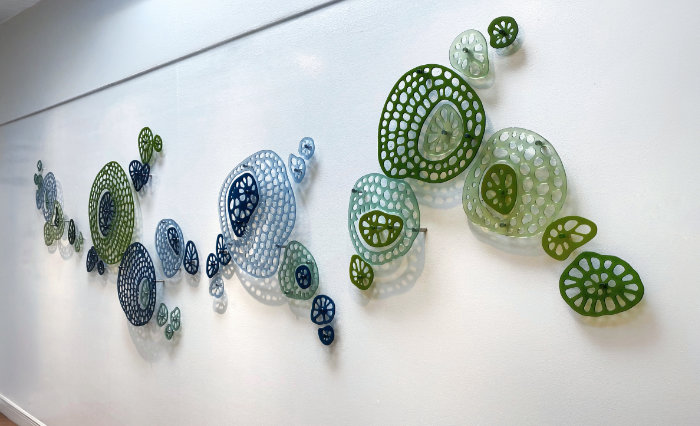
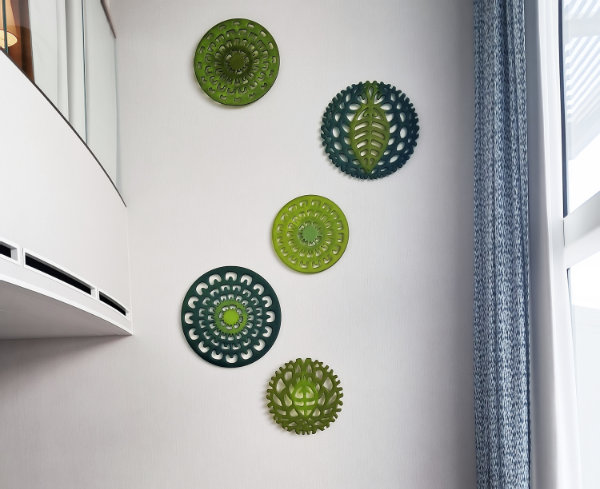
In the beginning, I was much more focused on learning technique and understanding what glass could physically do. Over time, technique became less of an end in itself and more of a language. My work gradually moved away from individual objects towards larger fields, repeated forms, and modular installations. I became increasingly interested in what happens between elements – how proximity creates connection, how repetition creates rhythm, and how a larger structure can emerge organically through the relationships among its parts.
That shift led naturally towards installation and public art. The work can expand, disperse, become more concentrated in certain areas, and respond directly to the architecture around it. I think of these compositions less as fixed objects and more as evolving systems.
What message or ideas do you want to convey through your art?
Nature enters my work less as imagery and more as a way of thinking. I am fascinated by the intelligence within natural systems – the ways things organise, adapt, repeat, disperse, gather, and respond to one another without a fixed hierarchy. Lichen spreading across a surface, roots finding their way through soil, the spacing of tree canopies, or the movement of water can reveal forms of organisation that are both complex and remarkably efficient.
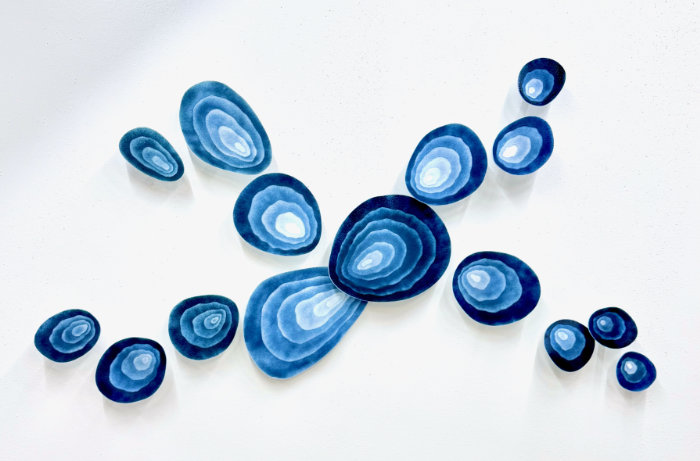
What draws me to these systems are the underlying principles rather than their literal appearance. In my work, repeated glass elements accumulate, separate, or form larger fields. Each element has its own presence, but its meaning expands through its relationship with the elements around it. Complexity emerges through accumulation, repetition, and connection. Perception is another important part of this. We often sense a pattern before we can clearly identify it. Something may register at the edge of vision or gradually become legible through repetition. I’m interested in that threshold between sensing and knowing, and in creating work that rewards sustained attention rather than revealing itself all at once.
Do you have a favourite piece or collection you have made? Why is it your favourite?
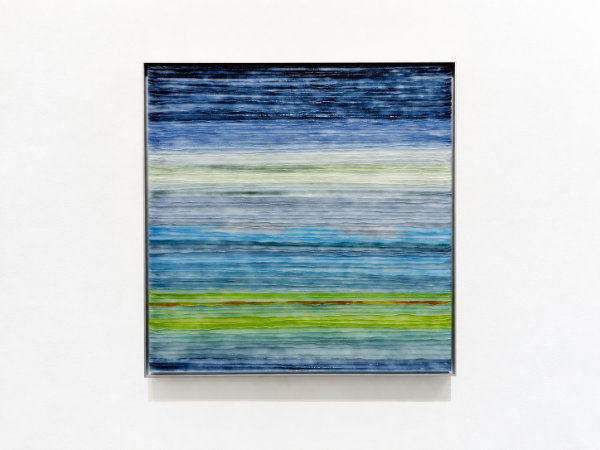
I tend to feel closest to the work that is most recent because it reflects where my thinking is at that moment. The body of work I created for my solo exhibition Open Thresholds feels particularly important because many of the ideas I have been exploring came together more fully there.
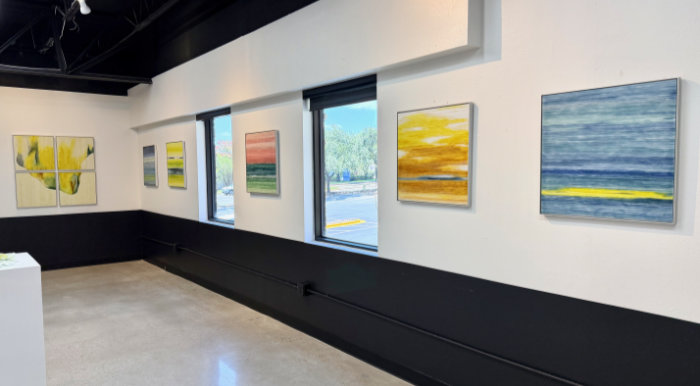
Open Thresholds begins with the idea that perception is shaped not only by what we see clearly, but also by what exists just beyond it. At the edge of perception, things begin to soften, making room for memory, intuition, and imagination. The work draws on rhythms and patterns found in natural systems – the ways they grow, adapt, repeat, and transform. For me, those processes offer a way of thinking about relationships, change, and the underlying intelligence connecting living systems.
Do you have a career highlight?
Moving into public art has been one of the most meaningful developments in my career. Seeing an idea move beyond the studio and become part of a permanent architectural space changes the way I think about the work. It requires collaboration, fabrication, engineering, and a greater awareness of how people encounter an artwork over time. Windows to Flight, a 22-foot-long kiln-formed glass installation commissioned for the Dayton Convention Center in Ohio, was an important step in that direction. Working at that scale helped open the possibility of thinking beyond an individual object and towards an installation as part of an architectural environment.
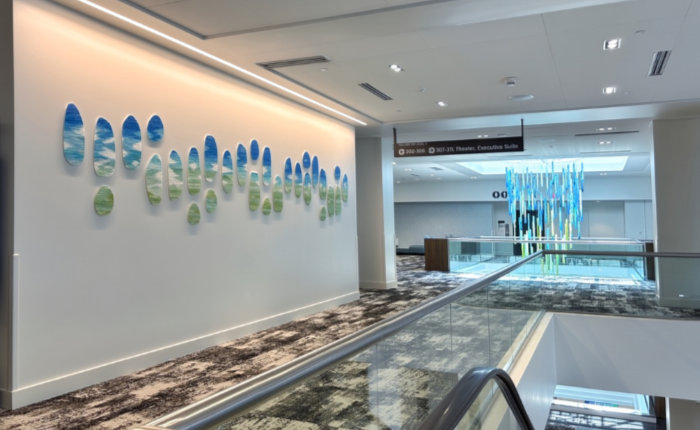
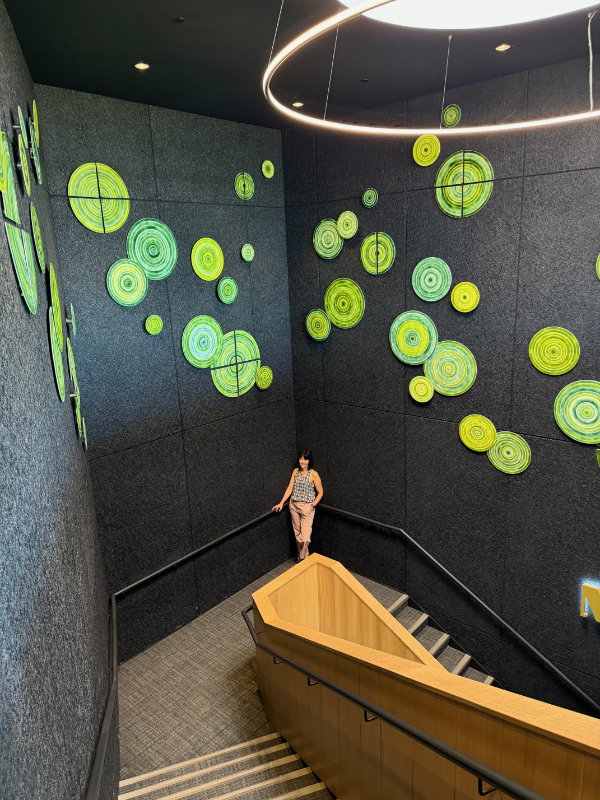
More recently, collaborating with artist Ana María Nava has expanded that thinking further through a site-responsive installation that wraps around the central staircase, following the architecture and creating a sense of movement and welcome as people enter the space. Public art has reinforced my interest in modularity and systems because the work has to respond simultaneously to its own internal relationships, the architecture, the site, and the people who experience it.
Where is your creative practice heading next?
I want to continue pushing the modular work further and exploring compositions that can expand, disperse, gather, and adapt to a particular space. I see my studio work and public art as different expressions of the same practice, shaped by different scales, spaces, and circumstances.
I keep returning to the intelligence of natural systems and to the way complex structures can emerge through relatively simple interactions. I’m interested in what happens when individual parts respond to one another, when repetition begins to produce variation, and when a composition develops without relying on a single centre or hierarchy. That thinking feels especially relevant as the work becomes more architectural. I want the installations to feel responsive rather than imposed – to grow through relationships among material, space, and surrounding elements. In many ways, I’m continuing to ask the same question that first drew me toward these systems: how can something complex, adaptive, and interconnected emerge from simple repeated forms?
Find out more about Malina Cipleau’s practice via this YouTube video, connect with her on Instagram @malinacipleu and Facebook @malina.cipleu, plus check out her website.
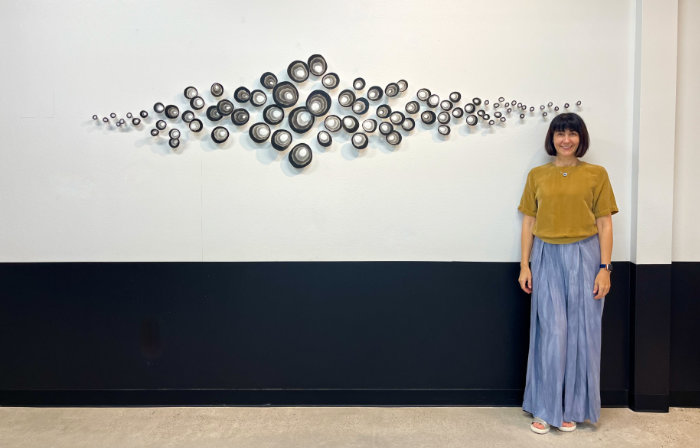
Main feature image: Malina Cipleu stands with ‘Magnetic Field’, part of the ‘Open Thresholds’ installation. Photo: Lilian Vega.
Related Articles
21-10-2026
Invisible systems

26-03-2023