Mark Fenn interview: A beeline to success
Returning to glassblowing after a 35-year gap was all in his stride for Mark Fenn. In the three years since appearing on the BBC tv series ‘Make It At Market’ with his honey-infused glass art, he’s had several ups and one down, but he keeps a positive attitude. Linda Banks finds out more.
You came back to glass after many years away from it. What inspired you to start working with glass again?
I watched Netflix’s ‘Blown Away’ Season 1 – the entire series – over the course of two evenings and within half an hour of watching the final episode I had booked myself on a three-day intermediary course at the Glass Hub as a 60th birthday treat to myself. It was 35 years since I had blown any glass, and I felt completely at home again being back in the chair. I booked onto several more courses at various venues over the next year, all of which were cancelled due to the COVID-19 lockdown. Therefore I set up my own studio as a hobby and began teaching myself how to blow glass again. Then I started running glassblowing courses.
What glass techniques have you used, and which do you prefer?
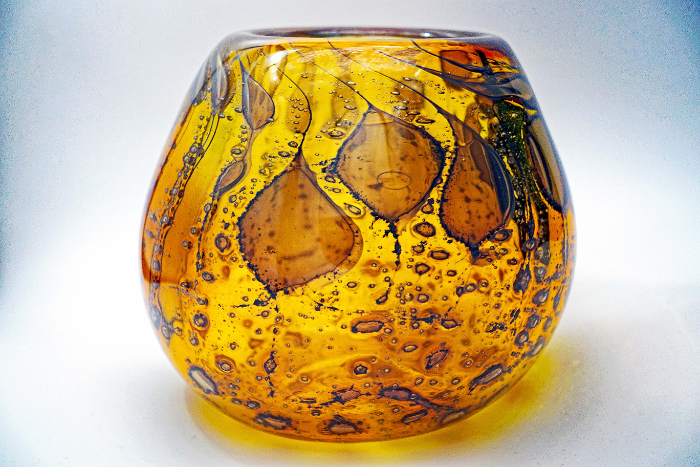
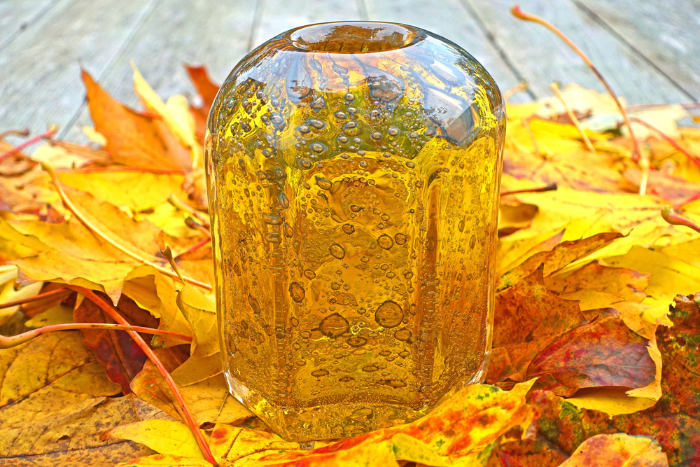
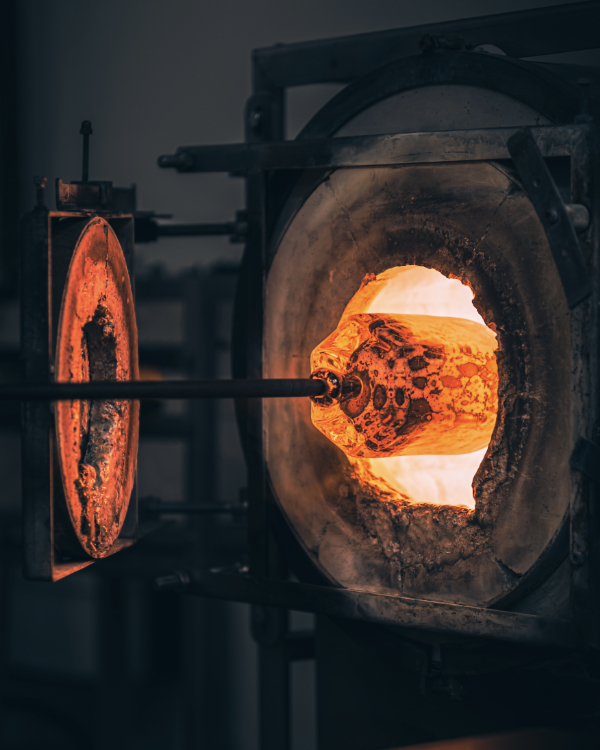
I prefer making my glass free-form, using heat, gravity and centrifugal force. I introduce bubbles into my forms and I like to experiment with infusing organic materials into the glass to create the bubbles. Traditionally, bubbles in glass were to be avoided at all costs. I started off infusing supermarket-bought sauces and condiments into my glass, mainly to save money on expensive colours while I experimented with infusion.
Please tell us more about your creative process. Do you draw your ideas out or dive straight in with the materials?
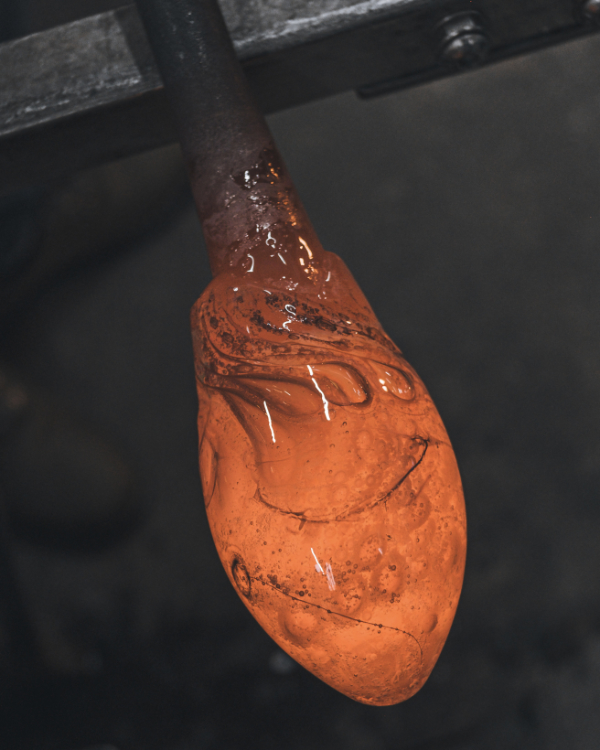
I start off with an individual base colour – green, ruby, blue, amber or white – which becomes the background for the infusions. Part of the experimental process was to try and control the distribution and flow of the resulting bubbles throughout the forms, and, yes, then it’s diving straight in. The forms that I make are all forms that are made by bees within the beehive. Each piece is a new adventure and experience and to a certain extent a new experiment as one never quite knows what interventions will be required, how it will go or turn out.
Unusually, you use honey in your glass designs. What is the significance of this?
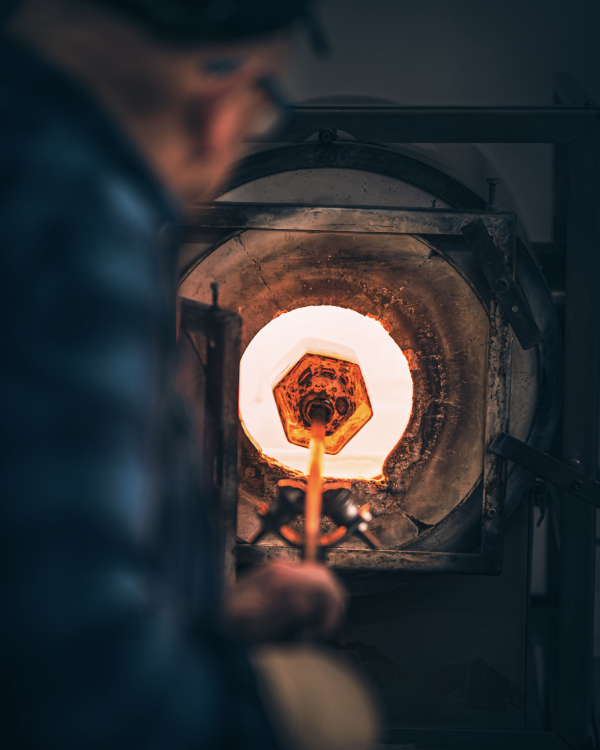
I’m a beekeeper and using the honey gathered from my native Welsh black bees to infuse into my glass was an obvious choice. Molten glass has the consistency of honey and I had some honey that had fermented so I took it into the studio to experiment with, rather than throw it away. Beekeeping is similar to glassblowing; focus and concentration are required. Even the calm and flowing movements of the beekeeper and the glassblower are similar; both require precision and timing and paying attention to detail.
You took part in the first BBC tv series of ‘Make It At Market’. How did that experience affect your glass practice?
It was a great honour and privilege to be selected for BBC1’s ‘Make it at Market’ and to have Allister Malcolm as our glassblowing mentor. I applied to go on the show largely because I had no previous experience of running a business or of how to sell my glass and thought that having a mentor would be helpful. I never thought for a moment I would be chosen and had nearly forgotten all about it when I found out I had been selected.
Within a couple of hours of the show airing, I had completely sold out of stock. I spent the next six months making the orders that kept flooding in, often working through the night. The show aired across North America, Scandinavia and South Asia and, all of a sudden, I had orders from the US. I don’t think any of us were fully prepared for that, not even the programme producers. It exceeded all our expectations. The glassblowing courses also took off at that point and I’ve had people from America and Australia attend my courses.
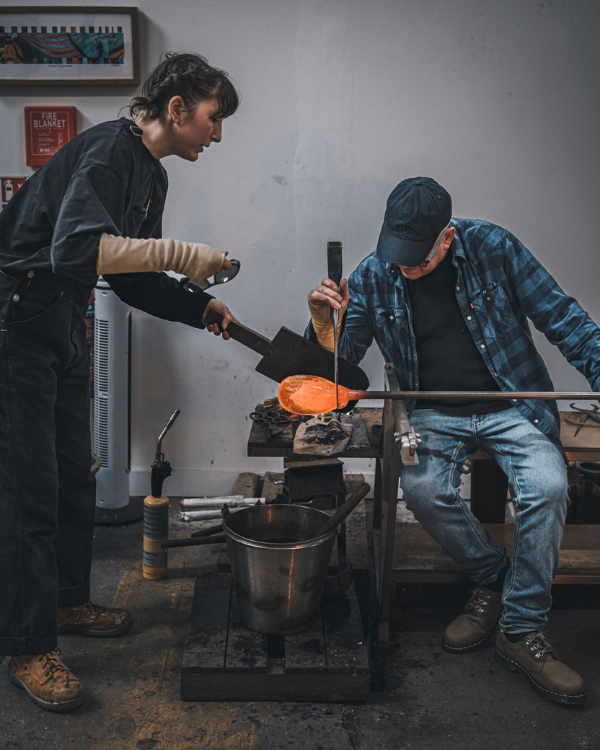
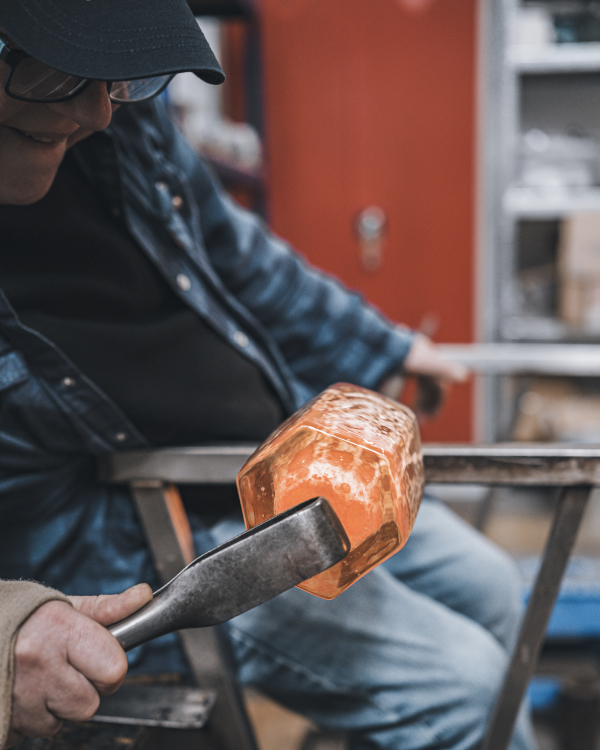
Allister picked up on my honey-infusion idea and we decided to develop this technique into something I could sell. I had only sold a handful of honey-infused pieces at that point and was considering abandoning that and moving on to making something else. I was already making shapes based upon the forms that the bees make naturally within the beehive, the queen cup and the queen cell, but I didn’t have anything at that time that represented the honeycomb. Allister had two hexagonal moulds in the back of his studio, one large and one small, which he gifted to me. This meant I had forms that represented the honeycomb and from that I developd a range to represent the seasons, Spring, Summer, Autumn and Winter. Although I use the moulds to produce the honeycomb forms, each piece is still finished in the furnace by hand.
Do you have a favourite piece or collection you have made? Why is it your favourite?
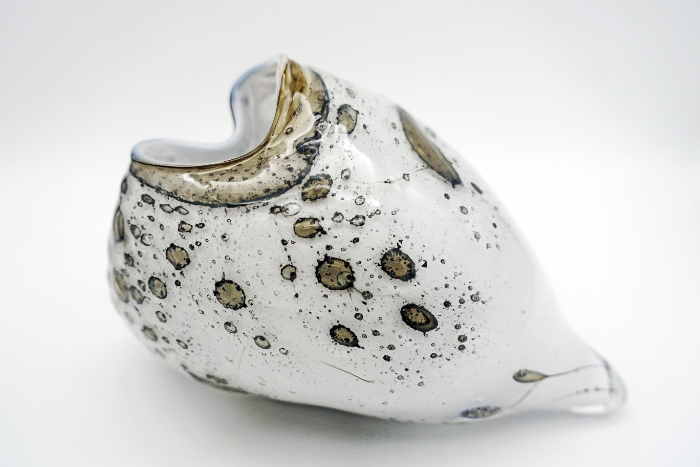
My next piece will always be my favourite. Of course, there are pieces that I have sold that I wish I had kept. I really like to use amber in all its shades, as it’s the natural colour of honey. Some of my favourite pieces have been ones that have happened unintentionally or by accident such as ‘Pollen Sac’ which I exhibited in the Contemporary Glass Society (CGS) exhibition ‘Flow’ in Cardiff (see main image).
Where do you show and sell your work?
I mainly sell my work online on my website and at a couple of galleries and museum shops: the Bluecoat Crafts Display Centre in Liverpool and Ruthin Craft Centre in north Wales, the Stourbridge Glass Museum shop and the World of Glass shop in St Helens.
Do you have a career highlight?
There are several, and they include the following (not in any particular order): appearing on ‘Make it at Market’; exhibiting my honey-infused glass in the CGS ‘Flow’ exhibition; my first live exhibition since my degree show at Stourbridge College of Art; being invited by the Bluecoat Crafts Display Centre to display my glass ‘In the Window’; the Museum of Glass in Stourbridge having two pieces of my Honey Infused hexagonal glass in their permanent collection; and being contacted by a famous Hollywood film director, who is married to a famous Hollywood casting director, who bought several pieces of my honey-infused glass after watching the show on BritBox.
Where is your creative practice heading next?
That’s a good question. I had to close the studio in March 2026 because the landlord would not renew the lease and all the tenants had to leave what was Liverpool’s ‘flagship’ arts venue. We were only told this in February. I managed to sell some of my studio equipment to fund moving the rest and a good glassblowing friend has very kindly let me store some of my equipment in their studio. Most of the stock has had to go into storage, too, so it’s been a very trying time, as well as physically and emotionally exhausting. I thank everyone for being so patient and understanding and those who offered help.
I’m a big believer in if one door closes another door opens and, a few weeks ago, I was asked by The World of Glass if I would like to help out in the run-up to the International Festival of Glass in August, so I’m working on the Hot Shop floor and happy to be there.
And finally…
These are very difficult and challenging times for small businesses, particularly for glass studios, and even more so due to the rise in the cost of living, rent, materials and fuel. There needs to be more support made available, both locally and by central Government, in terms of funding, venues for studios and leases. It’s all very archaic. New thinking and a strategy is required that both reflects the changing times that we live in and is fit for the future.
Find out more about Mark Fenn and his work via his website.
Main feature image: Mark Fenn’s ‘Honey Infusion Pollen Sack’ was created with uncontrolled flow and exhibited at the ‘Flow’ exhibition in Cardiff. Photo courtesy of the artist.
Related Articles
08-06-2026
Mark Fenn interview: A beeline to success
08-04-2025