9th John Ruskin Prize open for entries

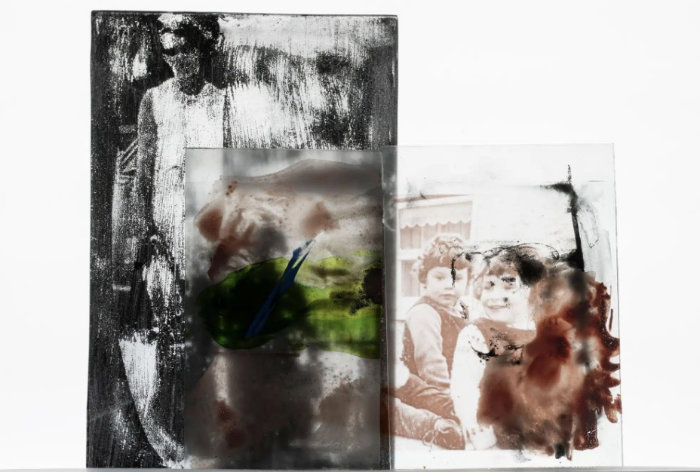
The 9th John Ruskin Prize is open to entries from artists, designers and makers, amateur or professional, from anywhere in the world.

This year’s theme, ‘Not for Present Delight’, invites artists, designers, and craftspeople to question the role of the maker today, considering what it means to understand the world not only as it is, but as something we can actively shape.

In “The Seven Lamps of Architecture”, Ruskin urged architects and masons to build as much with the future in mind as for the present day. This year’s Prize expands this idea across the fine and applied arts, opening space for reflection and discussion on how creative practices might carry forward-thinking intention, responsibility, and care.

The exhibition welcomes work that functions as a tool for change or critique, while asking the question: Must art serve a purpose beyond itself? Can it exist simply for pleasure, independent of moral or social obligation?

The Prize welcomes works in all mediums, including glass in all forms, drawing, painting, print, sculpture, photography, textile, animation, mixed media, digital, performance, installation and more.

Submissions must be digital in format as work will be viewed and judged digitally.

Work must have been made within the past four years. The main criteria is that the piece engages with the theme. Both individual artists/designers and collectives are eligible to apply.

The selection panel will select work for inclusion in an exhibition at Trinity Buoy Wharf, London, from 28 January to 21 February 2027.

Four winners will receive prizes totalling £9,500: a 1st Prize of £3,000, The Alan Davidson Under 26 Prize of £1,000, Ruskin Mill Trust Prize of £3,000 and the Chelsea Arts Club Award of £2,500.

Deadline to enter: Tuesday 17 November 2026, 5pm.

Find out more and apply via this link.

CGS Cabinet of Curiosities – buy your favourite now!

The Contemporary Glass Society’s (CGS) Cabinet of Curiosities exhibition, which launched at the August 2026 International Festival of Glass (IFoG) event, has been extremely well received.

The show continues at The World of Glass in St Helens until 31 October 2026, giving visitors an extended opportunity to experience this unique celebration of contemporary glass. In addition, for those who cannot visit in person, CGS has a showcase of all the exhibits online, which you can view and purchase here.

Prices range from £85 to £500, making it an ideal opportunity for both first-time buyers and established collectors to acquire original glass art. Proceeds from sales support the exhibiting artists, The World of Glass, and CGS’s ongoing programme of exhibitions, education and events, including celebrations marking our 30th anniversary in 2027. Several pieces have sold already, so make sure you have a look soon.

You can also vote for your favourite to win the People’s Choice Prize (via the same link) up to 1 November. This £250 prize is sponsored by Mark Holford.

The other prize winners in the Cabinet of Curiosities exhibition have already been announced and are listed below.

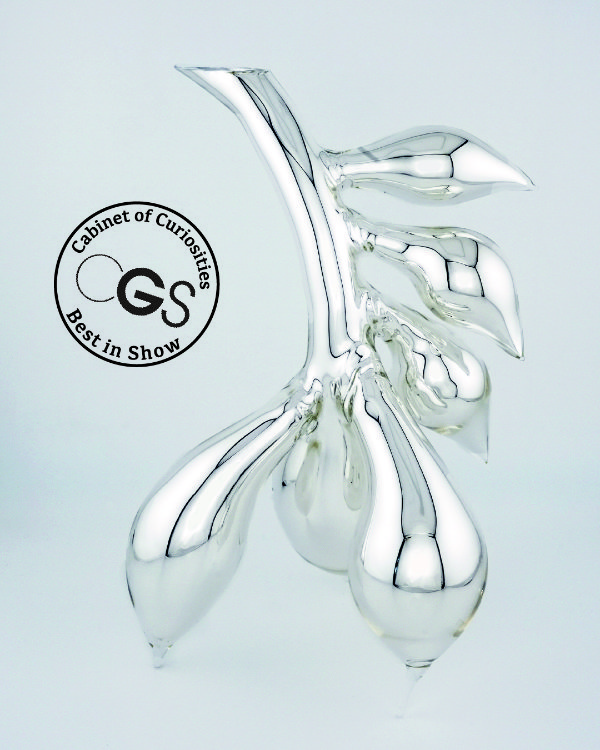
Best in Show – sponsored by Vessel Gallery (£300 Prize): Laura Quinn with ‘Unfurl’.

A blown glass spring in mirror glass by Laura Quinn called Unfurl.
‘Unfurl’ by Laura Quinn is made using lampworking techniques with the inner cavity silvered and sealed. Photo: Laura Quinn.

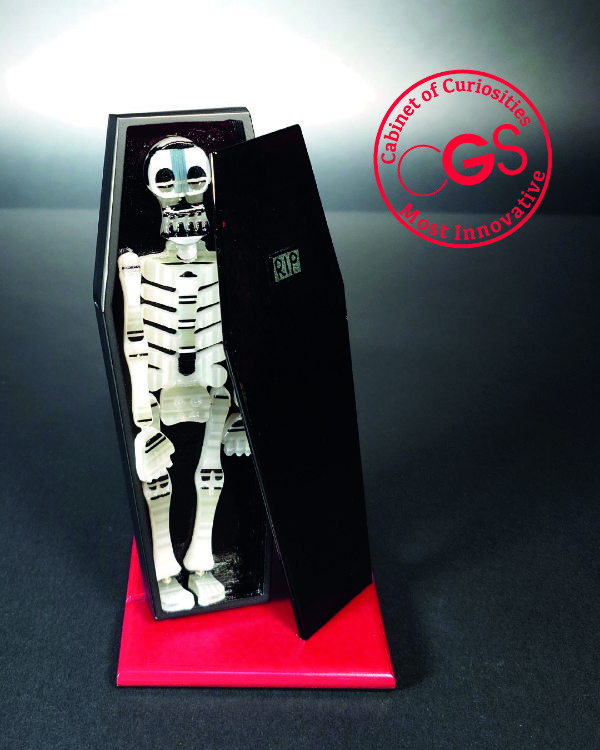
Most Innovative Prize – sponsored by Mark Holford (£150 Prize): Ian Chadwick with ‘GlAsS Momento Mori’.

A kiln-formed black glass coffin and articulated white glass skeleton both standing upright with the lid balanced to the side to show the skeleton standing inside. By Ian Chadwick and called GlAsS Momento Mori.
‘GlAsS Momento Mori’ by Ian Chadwick features kiln-formed glass and cold working, creating an articulated skeleton. Photo: Ian Chadwick.

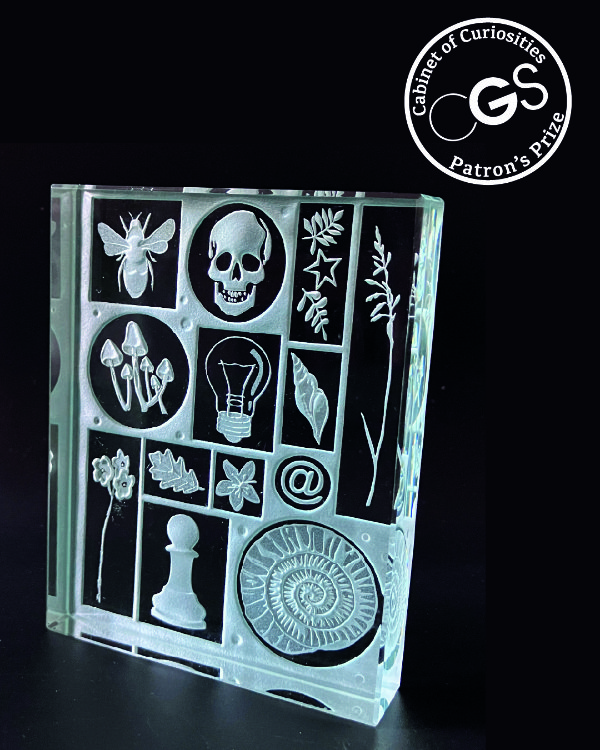
Patron’s Choice – sponsored by Mark Holford (£50 Prize): Becky Harris-Cowley with ‘Glass Curiosities’.

Rectangular clear glass that has been sandblasted to create the effects of a mini cabinet of curiosities featuring items from nature and a skull and chess piece in square and rectangular sections as though on shelves. Called 'Glass Curiosities' by Becky Harris-Cowley.
‘Glass Curiosities’ by Becky Harris-Cowley is a mini cabinet of curiosities formed through sandblasting. Photo: Becky Harris-Cowley.

Highly Commended – sponsored by Mark Holford  (£50 Prizes):

Claire Williamson – ‘My 80s curio collection’

Dovile Grigaliunaite – ‘Adaptive Assemblage X’

Lyndsey Gates – ‘Aspicio’

Sarah Smith – ‘A Poppet Self-portrait’.

Congratulations to all our participating artists for making this such a wonderful display, and a big thank you to the sponsors for supporting CGS once more.

The World of Glass is at Chalong Way E, St Helens, WA10 1BX.

Main image: ‘Land Sea Sky’ by Effie Burns. Photo: Ceri Oakes.

Visit The Other Glass/The Art of Recycled Glass exhibition

Stourbridge Glass Museum invites visitors to explore a new perspective on glass in a new international exhibition called The Other Glass/The Art of Recycled Glass. This international exhibition celebrates the creativity, resilience and unexpected beauty of reclaimed materials. The show takes place from 29 August 2026 to 27 February 2027.

Curated by Norwegian artist and author Tone Ørvik, the exhibition brings together 10 contemporary artists from seven countries who transform discarded, repurposed, geo-specific and second-life glass into extraordinary works of art. They create sculpture, stained glass, jewellery and functional objects.

Working with everything from discarded bottles, windows and television tubes to studio scraps, jam jars and locally sourced natural materials, the artists reveal the hidden potential within glass and challenge our understanding of value, sustainability and craftsmanship.

The featured artists are Irene Frolic (Canada), Frederik Rombach (Belgium), Hannah Gibson (UK), Jeanne-Sophie Aas (Norway), Gregory Alliss (UK), Debbie Dawson (Ireland), Ioana Stelea (Romania), Mafalda Maya (Portugal), Jeff Zimmer (UK) and Lulu Harrison (UK).

Non-traditional glass has been seen as discarded, dirty, difficult. The invited artists focus on the story inherent in the glass itself, its origins, its history, its second life, as much as the personal perspectives they bring to their work – giving evidence to the resilience and beauty of The Other Glass.

Stourbridge Glass Museum is at Stuart Works, High Street, Wordsley, West Midlands, DY8 4FB.

Image: ‘Mommy Dearest’ by Debbie Dawson. Photo courtesy Stourbridge Glass Museum.

Contemporary glass makers receive 2026 QEST awards

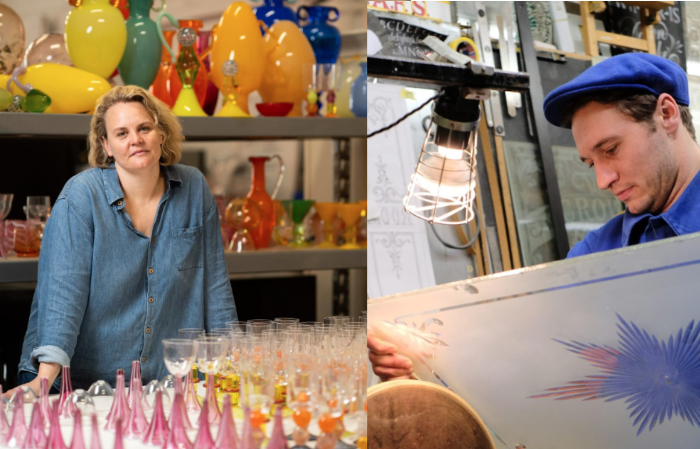
Two glass specialists have received training grants in the latest round of financial awards from the Queen Elizabeth Scholarship Trust (QEST).

The successful applicants, Tobias Newbigin and Phoebe Stubbs, join many previous winners of these prestigious and career-changing craft awards, including many glass artists.

Tobias Newbigin receives the 2026 QEST Johnnie Walker Scholar award for Glasswork/Signwriting. He is trained in traditional signwriting, glass embossing, brilliant cutting, gilding and silvering. He specialises in precise brushwork and historic lettering styles, skills that have taken him to restore period buildings in the UK and internationally.

He studied Fine Art Painting at Camberwell College of Arts, London, before apprenticing under Nick Garrett. He went on to study reverse glass gilding and ornamental glass with David A Smith MBE, and brilliant cutting with leading practitioner James Witchell. Over the past 12 years he has built his own studio practice, trained two apprentice signwriters, and continues to share the craft with others to see it pushed in new directions.

QEST funding will allow Tobias to undertake further training with James Witchell and David A Smith in hand bevelling and French embossing. In addition, he’ll learn about decorative glass techniques suitable for conservation-grade restoration with Ash Bishop at Brilliant Sign Co Ltd. This will support new bespoke commissions for heritage buildings, hospitality spaces and private collectors, and ensure these heritage craft skills are preserved.

Speaking about the award, Tobias said, “I am truly grateful for the QEST Scholarship, it will enable me to spend valuable one-on-one training with some of the remaining masters of the craft, saving me thousands of hours of mistakes.”

Phoebe Stubbs receives the 2026 QEST Famous Grouse Scholar award for Glasswork. She is a glassmaker specialising in functional, hand-blown glassware and lighting. Her practice centres on hot glass processes, including mould-blown forms, hot assembly, and bold colour. Her brand Gather creates functional tableware, decorative objects and lighting for a range of clients including Fortnum and Mason and Paul Smith.

Her QEST Scholarship will fund specialist training in chandelier making and large-scale glass at Pilchuck Glass School, mentorship with British chandelier maker Carl Nordbruch at Wilkinson Ltd, and Venetian chandelier techniques with Fabiano Zanchi.

Moving into advanced glass lighting and large-scale work requires understanding of complex hot assembly, structural arm pulling, and the integration of glass with architectural and electrical systems. Phoebe will use these skills to strengthen Gather, which has had a permanent glassblowing studio since 2023. The studio offers public workshops, supports skilled employment, long-term training, and collaborative making at scale. Phoebe is dedicated to the renewal of British glassmaking, demonstrating that traditional skills can evolve and support viable creative businesses. By combining heritage techniques with contemporary design and real-world production, she hopes to help secure a future for complex glassmaking skills in the UK.

She stated, “I am now 20 years into glassmaking, and have created a studio and aesthetic that finally feels fully my own. I’m now ready to extend that into chandelier-making – a craft I’ve wanted to learn since I was a teenager, and one I’m delighted that the QEST Scholarship is making possible, via workshops and training in the UK, Italy and the US.”

For any contemporary glass practitioners who would like to extend their skills with additional training, look out for the next funding round from QEST, with applications open from 13 January to 17 February 2027.

QEST offers three grants for training, education and skills development to support professional makers and conservators at various career stages, strengthening the pipeline of talented craft professionals in the UK. It supports contemporary and traditional craft, as well as the exploration of innovative techniques. QEST defines craft as ‘the skilled making, by hand, of tangible objects, or the conservation/restoration of such objects’.

Find out more via the QEST website here.

Image: Phoebe Stubbs (left) and Tobias Newbigin. Photo: QEST.

The Glaziers’ Company Charity opens Annual Grants Scheme

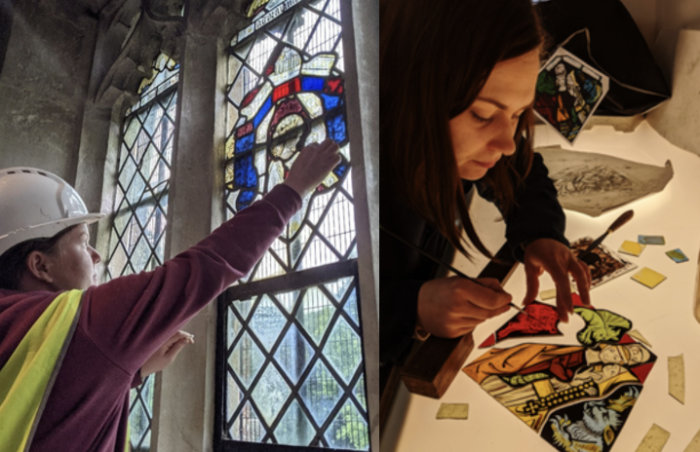
The Glaziers’ Company Charity is inviting applications for its Annual Grants Scheme 2026/7.

The grants are designed to support the training and development of artists and conservators working in the fields of architectural and stained glass. There are three categories of grant, including one to support a new taster week work placement.

Ashton Hill/Lever Grants

These are work placement grants for emerging stained-glass artists (Lever Grant)

and conservators (Ashton Hill Grant). The grants offer up to £6000 to support a 12-week placement in up to four studios, plus a £300 Evelyn and George Gee tool allowance. Host studios receive £125 per week, which is paid directly to them.

Professional Development Grants

These grants offer up to £1,000 towards the costs of undertaking relevant professional development activity. They can be used to support training, research and conference attendance.

Taster Week Work Placement Grants

Taster week work placement grants are available for those planning on, or participating

in, vocational training in stained or architectural glass. They offer up to £625 for a five-consecutive-days work placement in a professional stained glass work environment. The host studios receive £125 per week, which is paid directly to them.

Applications close on 30 September 2026.

For guidance notes and to apply online, please visit the Awards page of the website.

The Worshipful Company of Glaziers & Painters of Glass is a Royal Charter company, RC000912. The Glaziers Foundation, Registered Charity Number: 1143700.

Images credits: Sarah Shepherd; Rita Griskontye.

Sign up for ICON stained glass group conference 2026

Tickets are available for this year’s ICON stained glass group conference, titled ‘Data, Damage, and Decision-Making: The Next Era of Stained Glass Conservation’.

The event takes place from 10–11 October 2026 at The Hospitium, Museum Gardens in York, UK. York is particularly appropriate to host the conference as a feasibility study is currently under way to mark it as an ‘International City of Stained Glass’.

This year’s theme looks to the future, considering how the field of stained glass conservation may change for the next generation of conservators in an increasingly globalised world. In a time of rapid technological advancement, environmental change and political instability, what new challenges may stained glass conservators face?

Exploring themes of technology, sustainability, documentation, craftsmanship, and heritage care, the programme brings together leading practitioners and researchers to share ideas, challenge assumptions, and discuss the opportunities and challenges shaping the profession’s future.

Speakers include:

Brianne Van Vorst: From Documentation to Site Work: Saving Time and Sanity with Digital Technology in Stained Glass Conservation Projects;

Margot Steurbaut: The Past as Inspiration for the Future: Historical Glass Paint Preparation as a Viable Response to Supply Chain Instability;

Jasmine Allen & Isabelle Davies: ‘Preserving a Stained Glass Legacy’ at the Stained Glass Museum: Decision-making based on cross-collection issues;

Aurelia Fernandes: Set In Stone – Documentation as a Cornerstone of Conservation for South Asia’s Coloured Glass Fitted Jalis;

Caroline Holmriis Steffansen: Cold Paint in a World of Global Warming;

Adrianna Polcyn: 3D Scanning Advancements – Utilising Gaussian Splatting as a new framework for digital preservation of stained glass;

Bronwen Stone: A Window onto the Medieval World;

Christian Baierl: Mouth-Blown and Hand-Cast Flat Glass – traditional craftsmanship looking to the future.

New this year is a panel discussion allowing a more informal exploration of the future of stained glass conservation. There will also be a ‘Shards of Glass’ session during a tea break, providing attendees with an opportunity to raise stained glass topics for informal discussion, knowledge sharing and collaborative problem solving.

There will also be opportunities to tour some of York’s most significant stained glass heritage, including York Minster and All Saints, North Street.

Saturday 10 October: 9.00am-5.00pm + optional York Minster visit, Quiz & Dinner (additional fee)

Sunday 11 October: 9.00am-2.00pm + optional visit to All Saints, North Street.

Check the website for further details and to book a place.

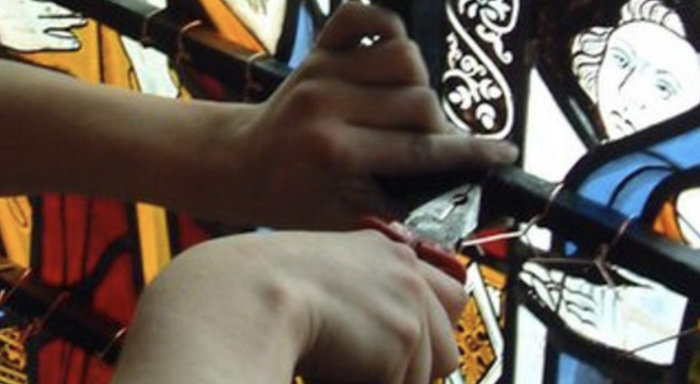
Image: Detail of work on a stained glass window. Photo: ICON.

Venice Glass Week marks 10th anniversary in 2026

The Venice Glass Week celebrates its tenth anniversary this September with over 200 events taking place across Venice, Murano and Mestre from 12 to 20 September 2026.

This international festival was created to celebrate, support and promote the art of glassmaking. Its 10-year milestone will be marked by the richest programme to date, featuring exhibitions, installations, talks, guided tours, workshops and many other activities.

This edition will also see the presentation of the Observatory ‘The Venice Glass Week and the Murano Glass District’, a study carried out by Banca Ifis, one of the festival’s sponsors, analysing Murano’s current role as a production and cultural district of international significance, and to explore the impact that the festival has had on the city and on the glass sector over its first decade.

Alongside The Venice Glass Week, the fourth light installation exhibition, Murano Illumina il Mondo, will take place from 13 September to 1 November 2026. Under the arches of the Procuratie Vecchie, in the heart of St. Mark’s Square, visitors will be able to admire new, original light installations created by internationally acclaimed artists and designers, such as Norman Foster, Cerith Wyn Evans, Bethan Laura Wood and Pierre Charpin in collaboration with some of the most prestigious Murano glass workshops. The works, designed specifically for this Venetian setting, highlight Murano’s glassmaking tradition and its capacity for creative experimentation.

A significant change this year is the new venue for The Venice Glass Week HUB by Generali, dedicated to artists and designers aged over 35. Thanks to a prestigious partnership with Generali, the exhibition will be hosted at Palazzo Morosini in Campo Santo Stefano. This new collaboration will showcase the works of 50 established and mid-career artists from around the world in a highly evocative Venetian setting.

In addition, the Venice Glass Week HUB Under35, dedicated to emerging young international artists, will be hosted by the Fondazione Bevilacqua La Masa in the Galleria di Piazza San Marco, St. Mark’s Square.

The HUBs are group exhibitions featuring artists and designers from Italy and abroad, selected through an open call, conceived to provide an authoritative and multifaceted overview of contemporary research in glass.

British glass artists participating in The Venice Glass Week this year include Elliot Walker (at Galeri Cam on Murano) and Rosie Stonham (as part of the Floating exhibition at Giudecca Palanca, Venice).

Find out more about the event via the website.

The art of making carved stained glass

Jonathan Soper is one of a few glass artists working with this niche and skilled technique to create glowing, coloured glass panels. Here he describes his inspiration for taking up this challenging approach and outlines his methods.

Is it possible to make stained glass window images by lightening the coloured glass itself, rather than by darkening it with dark oxides, as is done with traditional stained glass windows?

This was the question Rudolf Steiner [who was an Austrian philosopher, social reformer and esotericist who founded Anthroposophy, a spiritual philosophy that attempts to bridge the gap between science and the spiritual world – Ed.] and friends asked in 1913 when they were considering making large, coloured windows for their new conference centre and theatre auditorium in Dornach, Switzerland. They wanted to show images to do with the spiritual nature of the human being, and how our repeated incarnations and karma are affected by various influences.

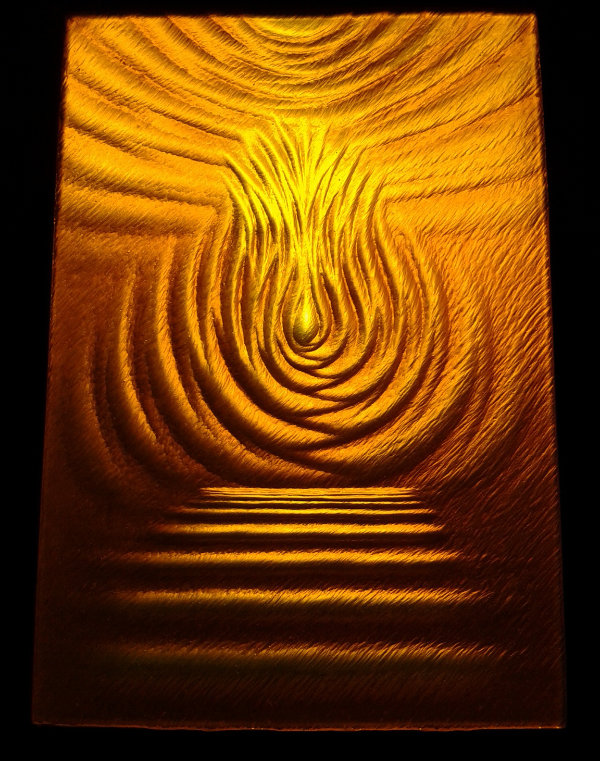
A rich monochrome amber stained glass panel that has been carved with a semi-abstract design resembling steps up to a central flame with swirling curves above and to the sides. The deep carving creates dark shadows.
Jonathan Soper’s carved glass ‘Christian’s Window’ measures 45 x 70 cm. The carving marks add to the tonality and richness of this piece.

With the then-recent advent of the abrasive material carborundum (silicon carbide) and the electric motor, it had become possible to carve large, 2cm thick, homogenous coloured pot-metal glass sheets of 4m by 1.5m. They found that lightening the coloured glass by carving into it gave a particular luminosity, depth and glowing transparency.

The Goetheanum, as their building was called, contained nine large windows, each of a single colour. These produced strong colour spaces inside, as well as coloured shadows. I believe this was the first time large carved stained glass windows of this type had been attempted.

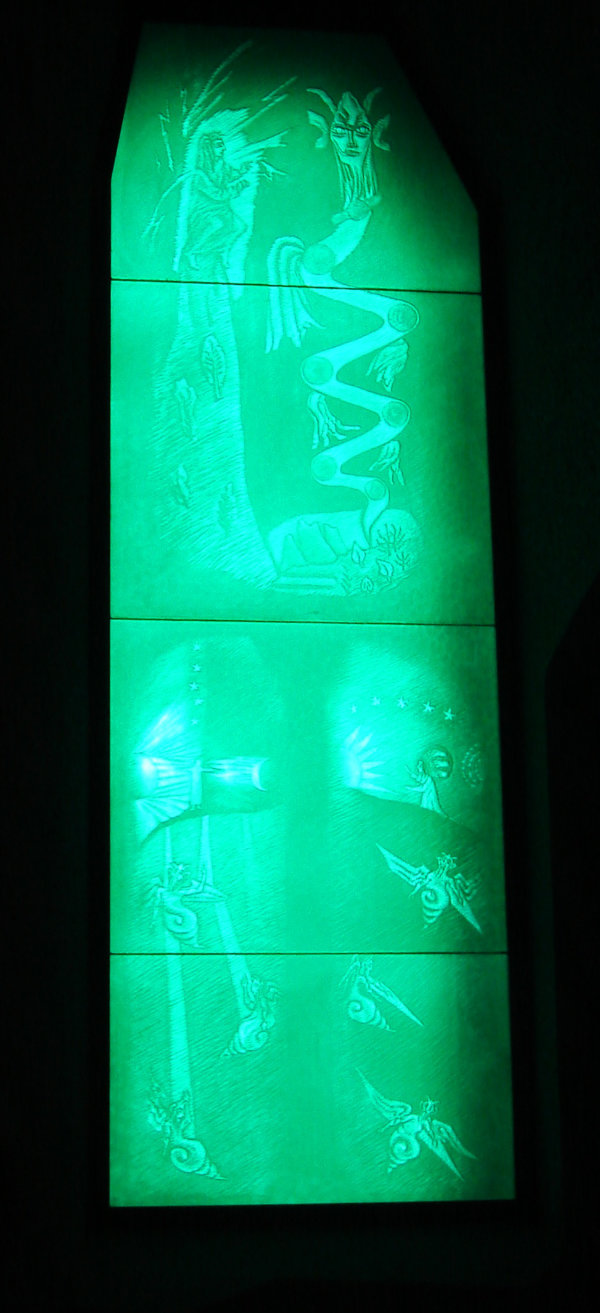
A green carved glass panel at the Goetheanum in Switzerland featuring mystical creatures.
The Goetheanum auditorium window was carved by Asia Turgeniev to a design by Rudolf Steiner and measures 5m high by 1.5m wide.

Unfortunately, that building burnt down in 1922, but a second Goetheanum was soon built in its place, with similar large (5m by 1.5m) carved windows. I saw these when I was a young man, and I was impressed – to the point that I decided to try some glass carving myself. It turns out it’s not that easy, and there wasn’t really anyone to learn from.

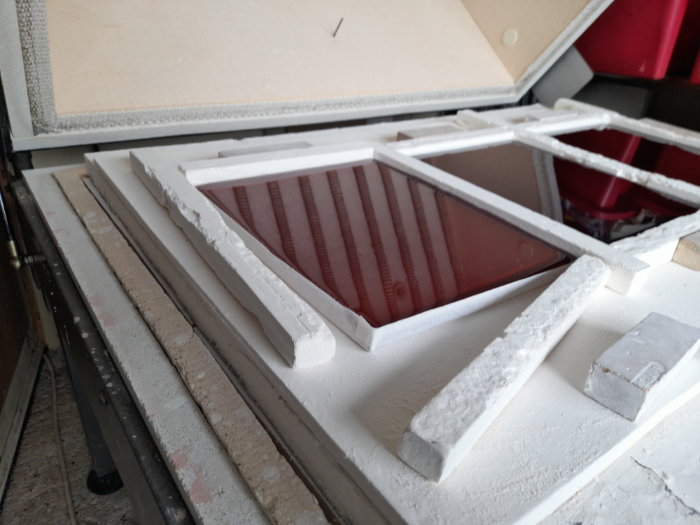
Three rectangular, newly cast glass slabs sitting in an open flatbed kiln ready for carving.
Newly cast glass slabs, ready for carving.

Trying different grinders and grinding wheels with different glasses, I finally came across Hartley Wood dalle de verre slabs whose beautiful colours and fairly stressless glass helped me to get going. Either several dalle slabs can be joined together with resin to form a window sheet, or coloured cullet or slabs can be melted in the kiln to produce sheets of various sizes and thicknesses. The glass sheet is then placed vertically in the studio window, and the design motif is carved into the thickness of the glass using silicon carbide discs on modified small angle grinders. (Diamond wheels on a flexible drive can be used, but that requires water spray to stop the glass overheating.)

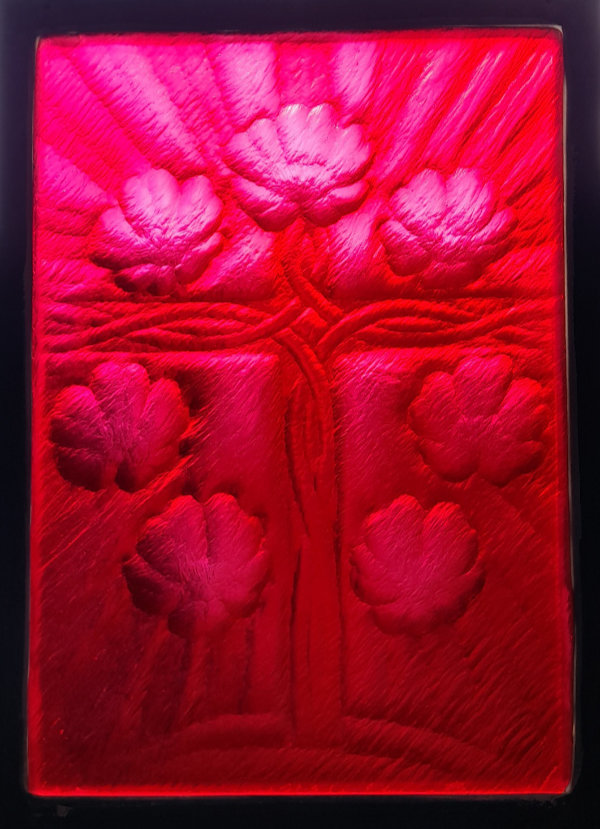
A rich red-pink carved glass monochrome panel entitled 'Rose Cross', featuring a central cross with a Celtic-feel design surrounded by 7 large flower designs.
‘Rose Cross’ features gold ruby glass.

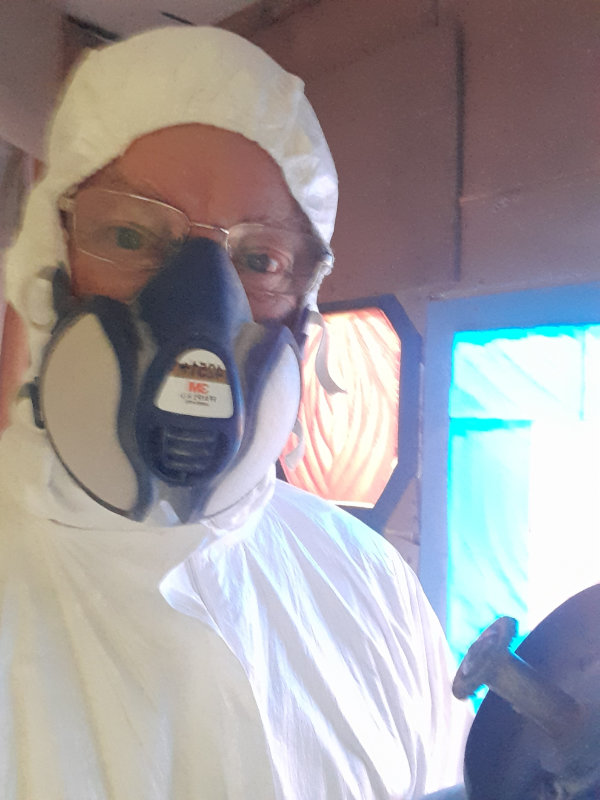
In addition, a dust extracting system is required (or do it outdoors!). Plus, a good mask and overalls, eye protection, etc. are necessary. It’s noisy, smelly and dusty, and you’ll be hanging on to a machine for hours. It is not exactly therapeutic.

Glass carving expert Jonathan Soper in protective clothing including a full overall with hood and respirator.
Jonathan Soper fully attired and ready for glass carving in his studio.

As the thickness of the coloured glass is carved into, the hue gets lighter. Also, because of the sculpted shape of the glass surface, it produces highlights and shadows that change as the viewer moves position. The finished, carved window panel is best installed into a window frame protected by clear glass on the outside.

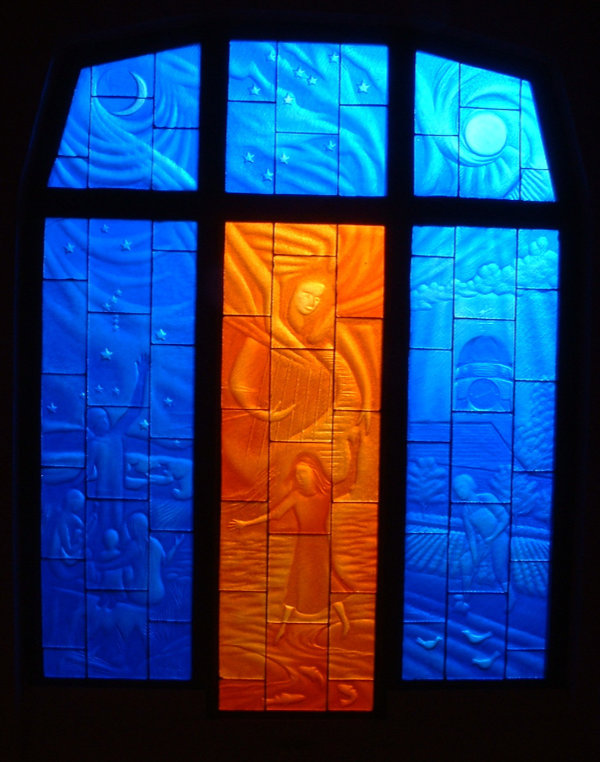
'The incarnation child' window features three long vertical carved stained glass panels with three smaller ones above. Five are in blue monochrome and the centre bottom one is in vibrant orange. It resides at the Michael Hall Steiner School in Forest Row, East Sussex.
‘The incarnation child’ was made for the Michael Hall Steiner School in Forest Row, East Sussex.

It seems to be increasingly difficult to find good glass for this work, as many excellent glass companies have closed in recent times. Ideally the glass needs to be homogenous and well annealed with no stress in it. Barium crystal, as made by Glasma of Sweden, is excellent, as is lead crystal, which is nice and soft. Ordinary soda lime glass is OK, but not all glasses are equal.

Commissions

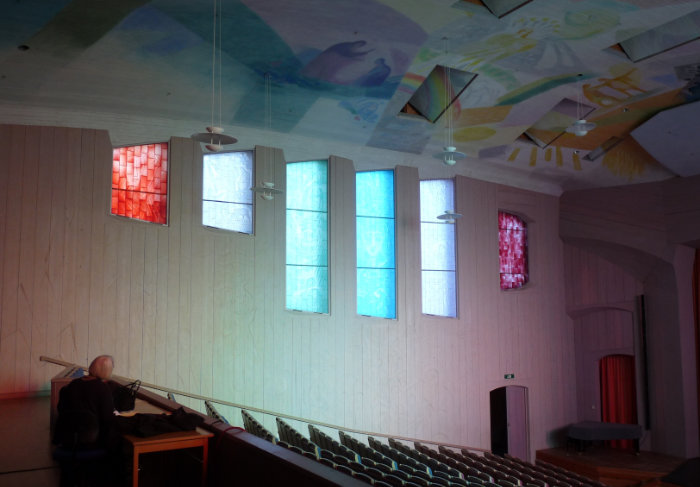
Over the decades I have undertaken several commissions, the largest to date being one for the Kulturhus in Ytterjarna, Sweden. There I trained other artists, and we spent nearly two years making 12 carved coloured windows. The largest were 5m x 1.5m and positioned along each side of the beautiful theatre/concert hall auditorium. They had quite light hues, using Linshammar glass made with Glasma batch, coloured with metallic oxides, including two gold ruby windows. This was a wonderful project, with motifs designed by Arne Klingborg (who also celebrated the Anthroposophy perspective), installed in a beautiful building.

A view across chairs in Sweden's Ytterjarna auditorium to the north side wall featuring three short and three long carved glass window panels, each in a different monotone glass.
Ytterjarna auditorium showing six carved glass panels in the north side wall.

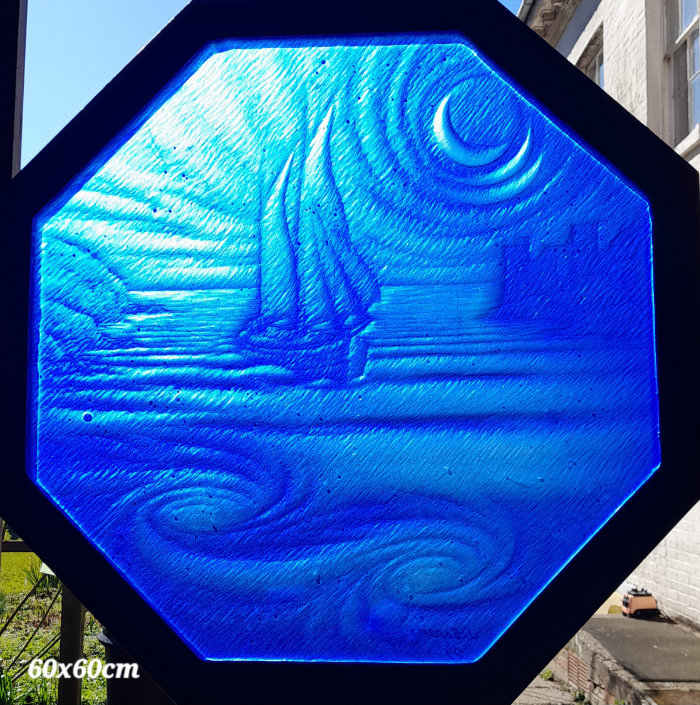
Aside from such projects, I have worked on smaller commissions, and I sell small hanging panels from time to time. I have a small studio in Forest Row, UK, but I’m not good at promoting my work.

An octagonal black frame houses a rich blue scene of carved stained glass with a sailing boat travelling along a river by moonlight.
An example of a smaller piece of carved stained glass by Jonathan Soper.

By Jonathan Soper

Find out more about Jonathan Soper via his Instagram account: @jonathansglass

Main feature image: ‘Undine’, by Jonathan Soper after Arne Klingborg, is made from Kokomo glass and measures 73cm x 46cm. All images courtesy of the artist.

Apply for Toyama International Glass Exhibition 2027

Glass artists are invited to apply for the next Toyama International Glass Exhibition, which will be held at the Toyama Glass Art Museum in Japan in July 2027.

The exhibition is an international, open-call, triennale established to showcase the latest achievements in contemporary glass art from around the world and contribute to the further development of the field.

Since its inaugural edition in 2018, the exhibition has been held three times. In the most recent edition in 2024, 785 works were submitted from 50 countries and regions worldwide.

The exhibition will spotlight contemporary glass, which has diversified rapidly into a dynamic artform filled with limitless creative potential. The organisers state, “It is our hope that this exhibition will open new horizons for contemporary glass art while also serving as an opportunity for Toyama, known as the ‘City of Glass’, to further establish itself as a global centre for glass art.”

Prizes

Grand Prize: JPY 3,000,000 (about £13,780) (1 work)

Gold Prize: JPY 1,000,000 (about £4,500) (1 work)

Silver Prize: JPY 300,000 (about £1,378) (2 works)

Jury Prize: JPY 100,000 (about £459) (6 works)

It is a condition of the competition that the winning Grand Prize and Gold Prize entries will be donated to the Toyama Glass Art Museum.

Judging panel

Tami Landis, Curator of Postwar and Contemporary Glass, Corning Museum of Glass (USA); Uta Klotz, Editor-in-chief, NEUES GLAS – NEW GLASS: art & architecture (Germany); Aimee Frodsham, Director of Canberra Glassworks (Australia)

Cho Hyeyoung, Independent curator and Honorary Chairperson, The Korea Association of Art and Design (Republic of Korea); Washida Meruro, Director of the 21st Century Museum of Contemporary Art, Kanazawa; Associate Professor at Tokyo University of the Arts (Japan); and Tsuchiuda Ruriko, Director of Toyama Glass Art Museum (Japan).

There will be two rounds of judging, the first based on submitted images. The selection of 50 works for the exhibition will take place on 20 January 2027, with results announced on the website, and the chosen artists informed.

The second judging will examine the actual works in April 2027 and select 10 prizewinning pieces. These results will be announced on the website in mid-May 2027, and the artists whose works have won prizes will be informed.

The Toyama International Glass Exhibition takes place from 10 July 2027 – 11 October 2027 at Toyama Glass Art Museum (Floor 2-3, Exhibition Rooms 1-3), Toyama, Japan.

The opening ceremony, award ceremony, and private view will be held prior to the opening of the exhibition, on 9 July 2027.

The application deadline is 11 November 2026. There is no submission fee but transport of selected artworks to the venue is the responsibility of the artist.

Find out more and apply via this link.

Glassworks: Sunderland planning application submitted

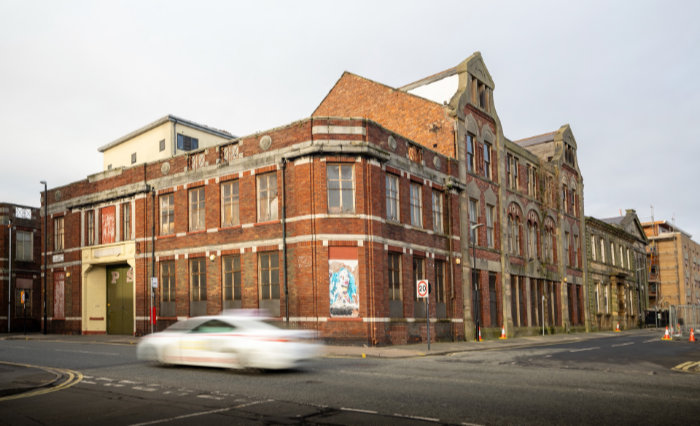
After months of design work and consultation with artists, makers and creative businesses, Sunderland City Council has received an application to develop the historic former Peter Smith Antiques building in Sunniside into Glassworks: Sunderland, a vibrant hub for glassmaking, ceramics and creative production.

This new project was launched in response to the final closure of the iconic National Glass Centre (NGC) on 31 July 2026, which was strongly criticised and campaigned against by the glass and wider community. The NGC’s owner, the University of Sunderland, cited structural issues, energy inefficiency and a multi-million pound repair bill as reasons that the NGC was no longer financially viable.

Sunderland Culture’s leadership team has said that Glassworks: Sunderland is not a like-for-like replacement for the NGC, but a rescue intervention designed to save the city’s 1,300-year-old glassmaking heritage from disappearing. There will be no café or galleries like the NGC had, but a strong focus on a maker ecosystem.

If planning permission is approved (a formal decision is expected in early autumn 2026), Glassworks: Sunderland will provide specialist facilities, workspaces, learning opportunities and business support for glassmakers and creative enterprises.

The planning application reveals:

The public will be able to access the ground and first floor for classes and activities, but the building is primarily conceived as a space for glassmakers;

Each discipline of glassmaking and ceramics that was available at the NGC will be retained in the new facility;

The building has been designed with equitable access throughout with a lift reaching all floors;

The design retains the historic fabric of the building, with exposed brick, stone staircases and original features from the 19th century Durham and Sunderland County Institute for the Blind;

The upper floors are available for flexible creative offices and maker studios – more studio space is proposed than was available at the NGC;

It will have an energy efficient and decarbonising layout backed by a dedicated on-site substation;

Heat produced from the 1,150oC furnaces will be recovered to warm the co-working and public spaces.

Tom Billington, Chair of Sunderland Culture, which submitted the planning application, explained: “The submission of our application is a significant milestone for Glassworks: Sunderland and for the ongoing transformation of Sunniside.

“It’s important to stress that local, regional and national artists, makers and creative businesses have played a central role in shaping these proposals through workshops, site visits and surveys. Their involvement has helped ensure the project responds directly to the needs of Sunderland’s creative community while building on the city’s internationally recognised glassmaking heritage.

“The progress made to date is hugely encouraging and demonstrates the ambition, partnership and commitment that exists to make this vision for glassmaking a reality.”

Sunderland-based glass artist Helen Gordon said: “The plans for Glassworks are well considered. They include the vital specialist equipment that glass artists like me need to continue producing work and upholding Sunderland’s global reputation for contemporary glass. By providing a sustainable home for glass and ceramic artists, the facility will help safeguard specialist skills, support local creative industries, and ensure that Sunderland remains a leading centre for contemporary glass for future generations.”

If approved, Glassworks: Sunderland is scheduled to open in 2028, leaving a two-year gap between the closure of the NGC and the launch of the new facilities. In the interim, Sunderland Culture is establishing a transition programme including commissions, business support, residencies, bursaries, commissions, temporary workspaces and activities to maintain artist and audience engagement.

A grant of £5 million towards the project will come from the Department for Culture, Media and Sport’s (DCMS) Cultural Development Fund, which is administered by Arts Council England. Sunderland Culture is leading fundraising to secure match funding to realise the project.

The Contemporary Glass Society supports the development of Glassworks: Sunderland, to keep the possibility of glassmaking alive in Sunderland, as noted in an open letter, but none of the 204 signatories of that letter agreed with the closure of the NGC that brought this situation about.

See the architect-designed images of the proposed Glassworks: Sunderland via Sunderland Culture.

Image: The former Peter Smith Antiques building where Glassworks: Sunderland will be situated if planning permission is granted.