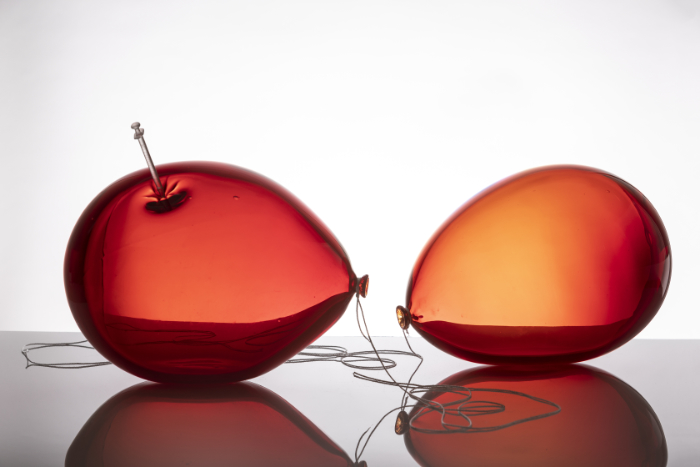
Appeal to save The World of Glass in St Helens

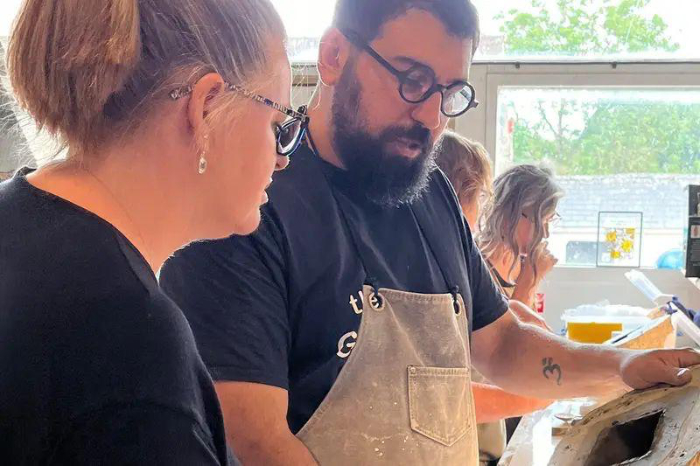
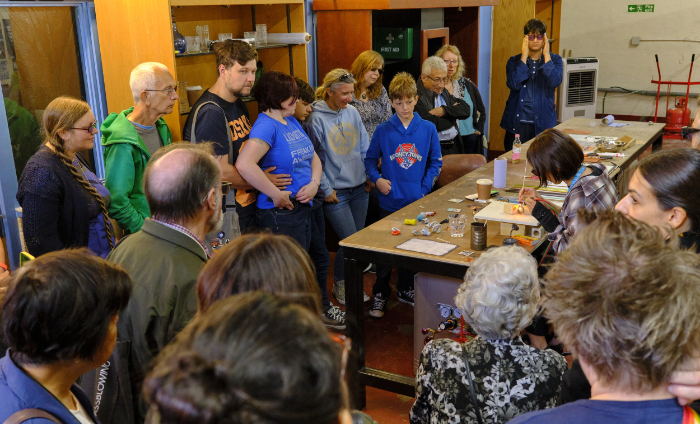
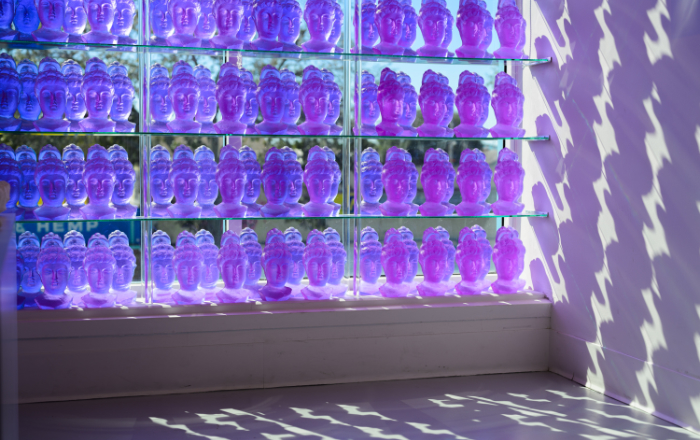
One of Merseyside’s most treasured cultural landmarks, The World of Glass (TWOG), is celebrating its 25th anniversary but facing imminent closure unless £50,000 is raised by 22 September 2025.

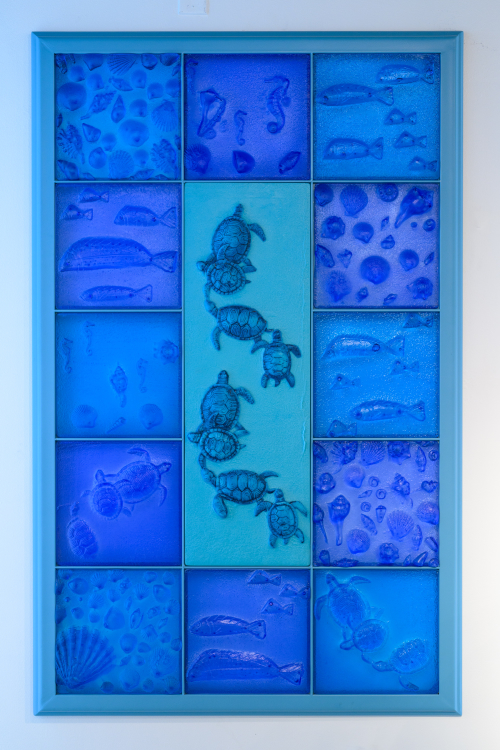
TWOG has launched a crowdfunding campaign to secure the charity’s future. Rewards for donations include glassblowing experiences, the opportunity to design your own glass masterpiece, to become part of the 25thanniversary glass mural, to enjoy a behind-the-scenes glass heritage experience, or to curate your own exhibition.

TWOG is also scheduled to host the 2026 International Festival of Glass (IFoG) – the first IFoG to be organised by the Glass Art Society.

TWOG points out that it is more than just a museum: “It’s a living tribute to St Helens’ industrial legacy and a vital hub for education, community events, and heritage preservation.” Visitors can find out about the properties of glass, look through periscopes and microscopes, and play with lenses to change the colours in light. In addition, there are displays of contemporary glass from some of the world’s greatest makers.

At time of writing (10 August 2025) the campaign has raised almost £22,000, or 43% of the total needed.

To donate to help save TWOG, visit the crowdfunding page here.

Find out more about TWOG via the website.

Transformational material

Mixed media artist and CGS board member Linda Norris talks about the importance of community in her practice and how working with glass with disadvantaged people has helped her develop and grow alongside those with whom she collaborates on group projects.                                             

A glass 'quilt' made from squares of coloured glass by pupils at Narberth school with help from Linda Norris.
Narberth CP School Glass Quilt made with 160 pupils in 2014.

I am an artist based in Wales working in mixed media. Since leaving college in 1982, I have maintained a lively community arts practice alongside developing my own work. When I came to glass in 2012 it was obvious that I needed to incorporate this transformational media into that work, as well as into my studio practice.

I wanted to use my skills for the benefit of others, though I decided early on not to train as an arts therapist. Instead, I wanted to facilitate opportunities for those in underrepresented groups and circumstances to explore and express their own creativity. I wanted people to take part of their own free will and not as part of a clinical therapy programme. (Having said that, I have occassionally worked with people on probation who were obliged to attend my sessions!)

I was motivated by a desire to share the freedom and agency I found in creative activity with others in the community, as well as by the need to fund my own practice and Community Arts fitted the bill. Initially, in the 1980s, I painted murals with women and children in Women’s Aid refuges across Wales. The idea was always to empower people to improve their environment and to find some solace and joy in creative activity and in interacting with others whilst creatively occupied.

Linda Norris helping primary school children in Wales to make glass bowls.
Helping primary school children in Crymych, Pembrokeshire, to make glass bowls.

I am fully Disclosure and Barring Service (DBS) checked, which enables me to work with vulnerable adults and children. I’ve developed my skills in community arts and teaching over many years.

Apart from four years when I was employed as an artist at Kaleidoscope, which was a hostel for young people and a drug project in Kingston-on-Thames, I have always been self-employed and have nearly always had to fundraise for my projects myself. This has not always been easy! At times I have been juggling many different day and evening sessions while writing reports for funders and working on fundraising for future projects, alongside maintaining and promoting my own practice. But it has always been rewarding to see the way people, and relationships, can be transformed and flourish by the simple human activity of creative interaction with materials.

Fused and slumped glass bowls made with primary school children in Pembrokeshire featuring a patchwork effect in lime green and red.
The finished fused and slumped glass bowls made with the primary school children in Pembrokeshire.

Often individuals who have behavioural challenges really find their voice and confidence through the attention I am able to give them. One parent of an autistic boy who was in a mainstream school and who had previously not been given appropriate support or understanding, and therefore had not managed to achieve any task in school (and who I had to insist was included in my project), wrote to me and said what an incredibe experience it had been for him and how he had found hidden talents and been so proud of his achievements. He has a real ability with his hands, which had been overlooked in the busy conventional classroom setting. Very quickly he became my assistant and was showing the kids who had previously bullied him how to cut and arrange glass for fusing.

Close up of a child's hands placing coloured glass pieces on a fish-shaped clear glass base. The child is autistic and is being assisted by Linda Norris.
Cutting and arranging glass with an autistic child, Pembrokeshire. Photo: Linda Norris.

I have developed tools and ways of working with glass that make it accessible and safe for everybody to handle and use. Sometimes I pre-cut shapes of glass, I mix frit powders with a paste made from 50 per cent water and 50 per cent aloe vera gel, which I package into easy-to-hold small bottles with nozzles. If necessary, I pre-fire striking colours so that people can see the colour the glass will be once it is fired, or to soften sharp edges for safety reasons. Having said that, I generally prefer people of all ages and abilities to try to handle the raw material in all its glory, and I find that explaining dangers, and trusting people to take responsibility for themselves, is all part of the empowering experience. Anyone who has ever tried to cut paper with small children using  ‘safe’ scissors, will know that properly handled sharp scissors are actually far safer, more effective and result in a better learning opportunity.

A child working with an aloe vera frit pen to decorate the Narberth School Quilt.
A child working with an aloe vera frit pen on the Narberth School Quilt. Photo: Linda Norris.

Over the years I have developed these practical skills, as well as skills in organising my own time, taking initiative, documenting projects, and working with people of all ages who are living in all kinds of circumstances. I have worked with people with autism, dementia, as well as mental and physical health challenges of all types. I have adapted and learned from my students and developed safe and effective ways of communicating across language and speech challenges, plus developed ways of working that always enable the participants to do the work themselves.

As in everything, communication is key! I have learned other languages (including Makaton), I have learned to listen to every form of communication, not just verbal. I have found effective ways to give people choices and facilitate meaningful, creative activity across the community. I have worked in schools and other institutions and I have taken the activity to the participants in locations where they feel safe.

I have collaborated with teachers, health and social care workers, probation officers, parents and carers, and occasionally with other artists. In particular, I have collaborated with writers. For one project in Ysgol Ger Y Llan, a Welsh language school, I worked with Welsh writer, Damian Walford Davies, to develop some text for a window I was making with a group of hard-to-reach children for the school library. The theme was Y Môr (The Sea), so to engage them in the project and introduce them to glass, I got each of the children to make glass fish badges before starting work on the window. Damian turned up with hand-outs and paper to write on, but the children were completely intimidated by the idea of writing, so we drew around the badges they had made as a way of getting them to come up with words they associated with the sea. Once the paper was covered in expressive pen marks the children were able to write some words and a bilingual poem was formed.

A child's drawing showing how the class drew around their glass fish brooches and made marks before writing words associated with the sea to go with a window for the school library.
One of the children’s drawings that helped them find words about the sea to be used in the window project.
The fused glass badges made at the start of the project.
 The completed window at Letterston CP School, Pembrokeshire, featuring fish, crabs, eels and other sea creatures against an etched clear glass background with seaweeds..

The completed window at Letterston CP School, Pembrokeshire. Photo: Linda Norris.

For several years, I worked as art and craft tutor with young adults with autism and complex learning needs for Ruskin Mill Trust at their Pembrokeshire farm college, Coleg Plas Dwbl.  Ruskin Mill Trust takes a Rudolf Steiner-inspired approach to teaching craft, and the Pedagogy of Craft it has developed as a method of learning through craft as an integrated body/mind learning and therapeutic experience, resonated with me.

I have always learned a lot from my community practice and this has fed into my own work. Sometimes I have learned new techniques in order to facilitate a project and sometimes I have developed new ideas that I have used in my own work. In another part of my practice, Rachel Phillips and I work together to make architectural glass as Studio Melyn. In 2017 we were commissioned to make an internal screen wall for Bro Cerwyn, a health and social care setting in Pembrokeshire, and I worked with local school children to develop the design. I led some drawing workshops where we went out into the landscape and the children learned to draw the landscape from life. The pupils had been expecting to design using photographs and computers, so to go outside was a revelation to them! We returned to the classroom and made prints from ferns and leaves which Rachel and I later incorporated directly into our design.

A montage of images of children drawing nature outdoors and working with glass in the classroom, alongside images of printed leaves and etched glass featuring leaf images.
Design workshops at Ysgol y Frenni, Crymych in 2017.
Two people sitting chatting in front of indoor 'Cysgod y Coed' window, Bro Cwm Cerwyn, Crymych, Pembrokeshire, made by Studio Melyn, 2017.
‘Cysgod y Coed’ window at Bro Cwm Cerwyn, Crymych, Pembrokeshire, made by Studio Melyn in 2017. Photo: Linda Norris.

In recent years the boundary between my own practice and my community projects has become less distinct. During the COVID-19 pandemic lockdowns I worked with poet, Emma Baines, on a project called ‘Bards ’n’ Shards’, where I was commissioned by Narberth Museum to make work inspired by poems written by the participants in online creative writing workshops. These pieces were gifted to the participants on completion of the project in a gesture democratising the commissioning process. Some of these pieces are currently on show in Aberystwyth Arts Centre as part of the Re:Made exhibition.

Re:Made exhibition featuring wooden spoons and flat glass tea cups with text on them suspended over a table with other cups, a teapot and plate.
The Re:Made exhibition is on show at Aberytwyth Arts Centre until 12 October 2025. Photo: Linda Norris.

Following on from this I developed my piece, Fragment Dresser (see main feature image for a detail of this installation), made of cup-, jug- and teapot-shaped flat glass, which I engraved with fragments of poems inspired by ceramic shards found by the workshop participants on their daily walks.

Artist Linda Norris standing with her installation piece Fragment Dresser in a darkened room with light projection on the dresser where clear glass etched cups, jug and teapot are displayed.
Projected light highlights the dresser and glass objects of ‘Fragment Dresser’ by Linda Norris (2023). Photo: John Sunderland.

This work has, in turn, gone on to inspire a community project undertaken by ceramic artist, Sizanne Lanchbury, which is currently on show alongside my own work in Re:Made at Aberystwyth Arts Centre.

One of the things I have valued, and actively engaged with, since I started working in glass is the community that exists among glass makers and artists who work with glass. The generosity of spirit and cameradery of my fellow artists has been an inspiration in itself. In 2023 I formed Broken Home, a collective of women who work with glass and want to use the medium to illuminate social and political issues, specifically the growing plague of domestic violence and coercion experienced primarily by women across continents. In 2023 we made No Place Like Home, a collaborative work which was shown at the International Festival of Glass in Stourbridge. The Collective has recently expanded and we are currently working on our proposal for a new work to be shown at The Glass Art Museum of Alcorcón (MAVA) in Madrid in 2026.

Five women of the Broken Home Collective group working round a table.
Broken Home Collective working in the studio of Silvia Levenson (2023). Photo: Paolo Sacchi.
A wall cabinet in grey featuring assorted objects like cups and baby beakers with etched slogans.
‘No Place Like Home’ by Broken Home Collective (2023). Photo: Dewi Tannatt Lloyd.
Linda Norris’s screenprinted and painted flat glass cups showing x-rays of intimate partner violence, part of 'Broken Home' (2024).
Linda’s screenprinted and painted glass cups showing X-rays of intimate partner violence, part of ‘Broken Home’ (2024). Photo: Dewi Tannatt Lloyd.

As an artist, my work is all about connection: connection with place, with others, with our histories and landscapes. As a transformational medium, glass has given me new ways to express ideas and evoke feeling in my work, and I take delight in the technical challenges. As a community arts practitioner it offers a myriad of possibilities. The making process is absorbing; people can see that they can change the material by applying heat, by fusing it together, by kiln forming and engraving… They can learn about change and control, about fragility and strength and chemical properties and, above all, they can have fun playing with transparency and colour and make something beautiful in the process.

Find out more about Linda Norris via her website.

Main feature image: Detail of ‘Fragment Dresser’ installation by Linda Norris.

Invitation to CGS Glass in Wales Symposium

The Contemporary Glass Society (CGS) invites members and non-members to a Glass in Wales symposium, to be held at Aberystwyth Arts Centre on Saturday 13 September 2025 (09.30 – 17.30).

The symposium offers glass makers and others interested in glass the opportunity to get together, hear speakers, network and share ideas and information. In addition, you are welcome to bring a piece of glass work to display and discuss in a roundtable conversation.

Members of CGS and the British Society of Master Glass Painters (BSMGP), plus students, pay a reduced rate to attend.

Outline Programme:

09.30   Registration (coffees available in Arts Centre Café)

10.00   Welcome by CGS /BSMGP

10.30   Speaker and Q&A: ‘Unearthing Connection’. Linda Norris will talk about her recent work (some of which is currently on show in Aberystwyth Arts Centre) using glass and glaze to investigate aspects of archaeology and illuminate overlooked craft in society.

11.30   Coffee break (Arts Centre Café)

12.00   Pecha Kucha (members of CGS and BSMGP talk about an aspect of their practice. Each presentation is 7 minutes and participants will show 10 images of their work). If you would like to apply to speak at the Pecha Kucha, please apply here.

13.00    Lunch (Arts Centre Café or bring a packed lunch)

14.00   Speaker and Q&A: Verity Pulford will talk about recent developments in her practice.

15.00   Speaker and Q&A: ‘Staying Positive and Making Things Happen’. Catrin Jones will talk about the background and process of making glass artworks for the public realm, remaining adaptable, the challenges involved in working to a brief, a budget and to a deadline, culminating in her most recent project for ‘The Leri’, a new cancer unit for Bronglais hospital, Aberystwyth.

16.00   Tea and Roundtable discussion

17.00    Summary

17.30    Optional tour to see The Leri, Catrin’s commission at Bronglais Hospital

18.15    Optional sea swim

19.00   Optional Evening Meal at Medina Café.

Cost of symposium: £35 for members of CGS and BSMGP (non-members £40 and students £25).

Lunch and refreshments will be available to purchase from the Arts Centre Café. Parking in the Arts Centre car park is free at weekends.

Aberystwyth Arts Centre is at Aberystwyth University, Penglais campus, Aberystwyth, SY23 3DE.

If required, overnight accommodation on site can be arranged from £40pp at The Bunkhouse.

Register and pay to attend the symposium on Eventbrite via this link.

Image: Pâte-de-verre glass work ‘Dark Glimmers’, by Verity Pulford, who is one of the speakers.

Obituary: Brian Clarke (1953-2025)

It is with sadness we report the death of master architectural stained glass artist, Sir Brian Clarke DLitt, Hon FRIBA, who passed away on 1 July at the age of 71 after a short illness.

Clarke was noted for integrating his medium within architecture and was one of the most important contemporary artists working in stained glass, with his contribution to the arts ultimately recognised by his knighthood in 2024.

Born in Oldham, Lancashire on 2 July 1953, into a working class family, he won a scholarship to study at Oldham School of Arts and Crafts in 1965. Following a subsequent two years at Burnley College of Art, Clarke joined the architectural stained glass course at North Devon College of Art and Design in 1970.

Following a travelling fellowship to study medieval and contemporary stained glass in Italy, France and West Germany, Clarke designed 20 windows for the Church of St Lawrence, Longridge, in 1975, which are considered his first mature works in glass.

As well as curating and showing work at many exhibitions over the years, Clarke undertook many prestigious stained glass commissions in the UK and overseas. He collaborated with renowned architect Norman Foster on various projects, including a large stained glass window for the Al-Faisliah Center in Riyadh in 2000.

In 2012 Clarke was appointed Honorary Liveryman by the Worshipful Company of Glaziers and Master Glass Painters.

Marking Clarke’s 70th birthday was the exhibition ‘Brian Clarke: A Great Light’, held at Damien hirst’s Newport Street Gallery (9 June 2023-7 January 2024). The show featured a selection of his works made since 2002, including ‘Ardath’ (‘Blooming Meadow’), a 450-square-foot glass artwork made from three layers of glass and without lead cames (see image).

His final work was the monumental stained glass installation ‘Concordia’ at Bahrain International Airport, which he unveiled earlier this year.

Find out more about Brian Clarke and his art via the website.

Celebrating 35 years of creating glass

Ian Pearson looks back over his long career in scientific glassblowing and creative lampworking with his characteristic frank and humorous style.

My business, Glass Creations, is celebrating trading for 35 years. I commemorated this fact earlier this year by writing 35 blogs, each 350 words long, all of which can be seen on my website. It is a lot to ask anyone to read them all, so the following is a summary.

Ian Pearson at the lamp working bench in his studio creating glass sculptures.
Me at the workbench.

First an overview of my involvement in glass. I was trained as a scientific glassblower in 1970 by my uncle at his business, Scientific Glassware Specialists in Thorton Heath, South London. My first introduction to artist lampworking was making fish using uranium glass. This glass was supplied by Plowden and Thompson, which was once owned by Barbara and Richard Beadman, who recently popped into my studio on their way to Shetland!

Humorous lampworked clear glass stag with a hole in its side outlined in red, holding a revolver pointing forward in its front hoof. Titled Stag Hunting.
‘Stag Hunting’ illustrates my sense of humour and lampworking style. Photo: Artist.

I wanted to travel the world, so I left my uncle to work in Oldham at the Scientific Glassblowing Company. It was here that I discovered my love of making glass abstract sculptures from scrap glass, which is very fashionable now since it’s known as recycling glass!

Lampworked green glass highland cow being kicked in the side by a calf in clear glass.
‘Family Wars’. Photo: J Turnock.

I moved back to the South and worked for Jencons Scientific Ltd in Hemel Hempstead. Here there seemed to be a growing market for glass parties where glass flowers made by ‘moonlighting’ scientific glassblowers sold well.

Clear glass sculpted into a variety of balanced components including a viking helmet and a heart. Titled 'Cultural Exchange'.
‘Cultural Exchange’ is in the North Lands Creative collection. Photo: D. McLachlan.

In 1981 I was employed by the Nuclear Power establishment in Caithness, Dounreay, Scotland. I was in charge of their scientific glassblowing department for many years. It was while making glass presentation pieces for retiring members of staff that the idea of having my own business emerged.

Humorous lampworked glass sculpture called 'Glory Whole' featuring end of lamp working torch and red glass flame and words made from clear glass.
‘Glory Whole’ celebrates lampworking.

In 1990, my wife Maureen and I set up Glass Creations in a small building next to Thurso River. The location is important since, over time, we realised that the river flooded and has done at least 14 times. I have given up insuring the building as no insurer can offer reasonable rates. I work with oxygen and propane cylinders, naked flames, fragile glass items and the workshop is open to the public. All this is insured, but ingress of water? No such luck.

Sculpture made using lamp working featuring clear glass circular base with clear glass verticals supporting colourful glass creatures that look a bit like Nessie the Loch Ness monster.
‘Circle of Life Nessie Style’ was entered for a Scottish Glass Society exhibition. Photo: S. Lay.

In 1989 my mother-in-law died, leaving some money that we invested in buying the building where I still work. It cost £5,000 for a building the size of a double garage, which offered space for a burner and cabinets full of my products. The business address was, and remains, Thurso Glass Studio, and we set it up as a tourist attraction. It took us years to establish what worked and what didn’t. Our opening hours were 10am until 5pm, then 7pm until 10pm daily, seven days a week, plus at other times by appointment. Many days I was working until 2am and once or twice I feel asleep at the flame. The smell of burning flesh is prominent when it’s your nose that is getting burnt!

Our plan was that I would make glass ‘stuff’ and Maureen would sell it – ideally from the studio. The space was divided into half for the workshop and half for the showroom. We also went to craft fairs in Aberdeen and Glenrothes, as well as travelling all around Caithness and Sutherland. We attended several trade fairs at Aviemore and, during the first few years, our turnover was close to the VAT limit. Yet, we had a bank overdraft, so we were not actually making money. It was fortunate I had a ‘real’ job at the same time.

Lampworked clear glass sculpture titled 'Thistle Family at Teacake Barbecue' with four thistle figures standing round a central glass podium with a teacake wrapper on the top.
‘Thistle Family at Teacake Barbecue’ was entered in a Scottish Glass Society exhibition. Photo: S. Lay.

What was I making? Glass thistles sold well, as did anything Scottish, but not to tourists with backpacks or who were travelling on buses. I enjoy commissions and special products, and it is this approach that has kept my flame alive. Living near the coast with its fishing connections means glass fish (remember those uranium glass fish?) are popular. Associated with that are other sea creatures. Once I did seal a real lobster in a glass tube, but was reported to the SSPCA for cruelty to lobsters. Promised not to do that again.

In 2005 my wife Maureen died, but I was determined to continue with the business. I needed to keep that flame alight. The Glass Creations logo was incorporated into Maureen’s headstone, and I made an entwined, double glass heart sculpture that was placed on her coffin at her funeral. I now realise that I have manged the business on my own longer than I did with Maureen.

For the 30th anniversary of Glass Creations, I made 20 small sculptures, each consisting of a couple of figures. The series was titled ‘Connections’, and I placed them all around Maureen’s grave for a photoshoot!

20 pairs of stick figures made from lampworked clear glass.
These 20 pairs of lampworked glass figures were made to celebrate 30 years of Glass Creations. Photo: Artist.

The COVID-19 situation gave me a bonus of a grant from the local council, who supported businesses on condition they supplied a set of recent accounts. It was then that I realised the importance of having an accountant. I have had the same one for 35 years!

I could ramble on about the things I have made, but it’s better to visit my website, in particular my favourite section at https://glasscreationsirp.co.uk/quirky/ . There you will see: weird figures without body parts and body parts on their own; there are objects sealed in glass and household items twisted into transport. The list is endless, and I am currently working on pieces that promote scientific glass, but the twist is that they are not functional. I feel at this stage in my career I am entitled to do just what I feel, without judgement.

'Ode to Scientific Glass 4' is one of a series of impractical scientific glass sculptures made for a local exhibition.
‘Ode to Scientific Glass 4’ is one of a series of impractical designs. Photo: Artist.

My chosen method for glass working – lampworking – allows me to make anything I want. Whatever is in my head I can produce in glass. In 1993 the Scottish Glass Society awarded me a trophy labelled ‘Oddball of the Year’. I was the only entry, methinks, and it’s never been presented again! Maybe we are all oddballs!


The depth of glass

Carolin Zibulka explains how her family’s secret glass ‘lavacoating’ technique is evolving as she develops her practice, reinforcing her connection with her father and viewers’ connections with her art.

From an early age, glass was more than just a material to me – it was a medium full of secrets and memories. My father, a skilled craftsman with great dedication and inventive spirit, spent many years developing a unique technique, which he passed on to me in 2020. What began as practical know-how became the foundation for my own artistic exploration of material, form, and meaning. Building on his method, I refined the process and shaped it into an independent artistic technique that I call ‘lavacoating’. What emerged was not only a new form of expression but also a generational connection – a creative lineage that unites tradition, intuition, and invention.

The origin of lavacoating

Lavacoating is more than just a technique – it is a connection between past and present, craftsmanship and free expression, father and daughter. The process begins on the reverse side of glass: I apply various materials layer by layer, each one requiring at least 24 hours to dry. Only at the very end is the piece sealed – and turned around. That moment when the image reveals itself for the first time is always an act of discovery. I see the result just as everyone else does – without knowing until that point exactly how depth, structure, and colour will ultimately interact. This trust in the process, combined with skilled precision and inner intuition, lies at the core of my work.

Glass artist Carolin Zibulka working on her artwork.
Carolin Zibulka uses a painstaking process to create her art.

Intuition meets structure

My work rarely begins with fixed sketches or plans. Most often, I start with an inner atmosphere, a feeling, or a colour mood. The creation unfolds slowly and organically – with pauses, redirection, and moments of surprise. Often, it feels as though the material itself guides me, suggesting paths I hadn’t intended.

Glass artwork called Mystic Forest created using secret lavacoating technique
‘Mystic Forest’ measures 30x45cm.

An invitation to interpretation

My art isn’t about conveying a clear message. Instead, I see my pieces as open spaces, full of associations, memories, and emotional resonance. Every viewer brings their own meanings, stories, and feelings. That’s what fascinates me about art: this quiet, often intimate, dialogue between artwork and person.

Tools and secrets

When asked about my favourite tool, I usually respond with a smile. This is not because I don’t want to answer – but because my technique, the exact ingredients, and the process itself are a small family secret. It’s like a recipe handed down and further developed across generations. This secrecy is part of the magic – it preserves the uniqueness of my work and keeps the connection to my father alive.

Glass arti piece 'Flowing Nature' uses lavacoaqting and is green and black with a streak of white and grey flowing down the centre of the design.
‘Flowing Nature’ (30x45cm).

My favourite piece: ‘Aqua Mystique’

A piece that holds special meaning for me is ‘Aqua Mystique’. It’s the deepest image I’ve created so far – in every sense. The structure, the way light moves through it, the colour transitions between water and light – everything came together in a way that even surprised me. Aqua Mystique represents a turning point in my artistic journey, a moment of trusting the invisible during the process.

Glass artwork called Aqua Mystique is an abstract design of a blue swirl in the middle of a grey-black background.
‘Aqua Mystique’ (30x45cm).

Exhibitions, presence and encounters

Since 2023, my work has been shown at international glass events, art markets, and group exhibitions in the Netherlands, Belgium, Switzerland and Germany. In 2024, I was invited to join the artist roster of Gallery O in Essen – a significant milestone in my artistic development. A special highlight awaits in autumn 2025, when my piece ‘Azure’ will be part of the 5th International Biennale of Glass at the National Gallery Kvadrat 500 (18 September – 30 November 2025) in Sofia, Bulgaria. It is a great honour to be included in this prestigious exhibition. I will be in Sofia from 18-20 September to present my work in person and chat with visitors.

This piece called Azure features tones of blue and has been selected for exhibition in Bulgaria in the autumn.
‘Azure’ will be exhibited at the 5th International Biennale of Glass in Bulgaria this autumn.

In addition, further international collaborations are in the works – including a promising project linked to Australia, which will be officially announced soon.

Carolin Zibulka on her stand at Glassexpo Zutphen 2023 talking to customers.
Talking to visitors on the stand at Glassexpo Zutphen 2023. Photo: Tim Neldner.

Looking ahead

This year, I aim to further establish myself as a glass artist and share my work – which is still relatively new and lesser-known – with a broader audience. It’s important to me to make my technique more visible and bring my art into wider national and international spaces. At the same time, I’m thinking about how lavacoating could evolve – perhaps through new formats, the integration of light, or collaborative projects with other artists.

Many ideas are still taking shape – and that’s what makes the process exciting. One long-term goal particularly close to my heart is to organise an exhibition in complete darkness – in collaboration with other female glass artists. Early planning for this is already underway, and I look forward to turning this project into reality, step by step.

A view of wall art pieces hanging in Carolin Zibulka's studio.
A selection of glass artworks on display in the studio.

And finally…

To me, glass is not just a material – it’s a mirror for emotion, memory, and movement. Each piece contains a spark of origin, an echo of the voices that have shaped me. And perhaps that’s the greatest gift my work offers: it creates connection – quiet, profound, and human.

Discover more about Carolin Zibulka via her website: https://lavacoating.de and Instagram: @3d_glassart_kleve

Main feature image: ‘Nebula’ was created using Carolin’s secret lavacoating technique. All photos courtesy of the artist.

Sign up for glass painting masterclasses at Swansea College of Art UWTSD

The Architectural Glass Centre at Swansea College of Art, University of Wales Trinity Saint David (UWTSD) is offering new glass painting masterclasses by Jonathan Cooke in September 2025.

Jonathan tailors his teaching to the individual, and his masterclasses are lively and inspiring. These specialist masterclasses will be limited to nine participants and are suitable both as an introduction to glass painting and for more experienced glass painters looking to extend their repertoire.

Glass Painting Masterclass: 26th-27th September: £250.00

Silver Stain and Enamels Masterclass: 28th-29th September: £250.00

What’s included:

  • Offer of a pre-course discussion with Jonathan by email and/or phone on any aspect of the course or planned project to ensure best use of teaching time.
  • All tuition, access to tools and materials, use of kilns and technical support.
  • The courses focus on technique, and there will be the opportunity to complete a small piece (approximately A5).
  • A copy of Jonathan’s classic ‘Time and Temperature’, 2nd edition.
  • The opportunity to purchase Oster Ancient Stains at a special promotional price.

To book, please contact: agc@uwtsd.ac.uk

Tel: 07769 210127

See examples of Jonathan’s work via his website.

The Architectural Glass Centre  address is: Room AA – 108 B The Alex Design Exchange, Swansea College of Art, Alexandra Road, Swansea, SA1 5DX, Wales, UK.

Image: Detail of one of Jonathan Cooke’s painted panels.

Two glass artists become QEST Scholars

Among the 22 grants awarded in the latest round of awards from the Queen Elizabeth Scholarship Trust (QEST) are two scholarships for glass artists Theo Brooks and Karlyn Sutherland.

Theo Brooks is the 2025 QEST Adrian Blundell Scholar. With support from QEST, he will undertake four advanced courses to refine his hot glass techniques: chandelier making with Fabiano Zanchi, ‘Trick Cups’ with Marc Barreda at The Glass Hub, ‘Sculpting Inside the Bubble’ with Martin Janecký, and a specialist class with Jason Christian and Aya Oki at Tulsa Glassblowing School. These experiences will build his skills in hot sculpting, pattern making, and Venetian techniques, enabling him to develop a new body of sculptural work inspired by his Cypriot heritage and south London roots.

Theo first discovered glass while studying Three-Dimensional Design at UCA Farnham. He went on to work in several UK studios before apprenticing with maestro Simon Moore in hot glass, and later in Paris, France, with Philip Baldwin and Monica Guggisberg in glass cutting. He has since studied for an MFA at Bowling Green State University in the US, held a studio technician role at Temple University in Philadelphia, and exhibited internationally across Europe, the USA, and China. Theo’s practice reimagines ancient Cypriot artefacts in contemporary forms, using the fluidity of glass to explore cultural identity.

Speaking about the award, Theo commented, “Hot glass is unlike any other medium. Its extreme temperatures, radiating heat and glow, combined with its translucency and refractive qualities, give you a world of opportunities to explore. I am lucky to be able to use this material to translate aspects of my cultures. Through QEST, I hope this broadens my ideas and skill sets to continue pushing my practice.”

Karlyn Sutherland receives a QEST Scholarship to advance her kiln-formed glass skills.

Karlyn works primarily with kiln-formed, fused glass. Her practice explores the connection between hand-making and a human sense of place, particularly how light, shadow and atmosphere influence experience and memories of a space. For Karlyn, making is a contemplative process, an essential tool in exploring and strengthening her own relationship with, and understanding of, place.

Drawn to the material for its ability to hold and transform light, Karlyn uses layered planes of translucent, semi-translucent and opaque sheet glass to create subtle optical illusions that suggest depth, folds and surface shifts. Her current series includes wall pieces and furniture prototypes, each one meticulously hand-cut, assembled and kiln-fused. Once cooled, the glass is shaped using hand-held grinding tools and finished by hand on a lapping plate with specialist abrasives to achieve its final surface.

QEST funding will support Karlyn to undertake a short course titled ‘Essence’ and one-to-one training with Jessica Loughlin, an internationally recognised artist known for her minimalist aesthetic and focus on light. Both opportunities will deepen Karlyn’s technical and conceptual approach to kiln-formed glass.

Conceptual wall art pieces made by Karlyn Sutherland.
Wall art made by Karlyn Sutherland.

Karlyn explained, “Much of my existing glass-making knowledge and skills have been acquired on an ad hoc basis, and, though they’ve served me well, I feel that I have taken them as far as I can within my current practice. I’m extremely grateful to have received a QEST Scholarship – it’s an invaluable opportunity to gain highly-specific experience and knowledge that will allow me to really push my work forwards in new directions.”

These and all the other grants are made possible through the generous support of QEST’s donors – Trusts and Foundations, Liveries, Royal Warrant-holding companies, organisations, and individuals.

The next QEST grant round is open now and closes on 13 August. Grants are available for education and training, with Scholarships up to £18,000, Emerging Maker grants of up to £10,000, and up to £12,000 towards an apprentice’s salary.

Find out more about QEST grants and apply here.

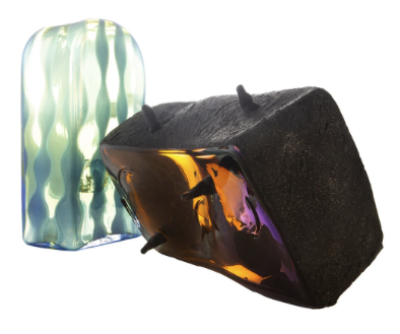
Main image: Glass work by Theo Brooks.

Doodle into glass children’s competition

All UK school-age children are invited to draw a doodle in a free competition that will see the winning entry transformed into a glass artwork.

This year’s theme is ‘wild UK plant life and fungi’. The winning picture will be recreated in glass by renowned artist Allister Malcolm, in a live event at Stourbridge Glass Museum on 23 August 2025.

The competition is a partnership between The Worshipful Company of Glass Sellers, Allister Malcolm Glass and Stourbridge Glass Museum.

The Museum states, “Last year’s entries were truly inspiring, and we look forward to seeing even more brilliant designs this year.”

The deadline for submissions is 5pm on Monday 21 July 2025.

The winner and runner-up artworks will be displayed at Stourbridge Glass Museum before the winning piece is sent to the child’s school for display.

Full details of how to apply via this link.

Glass exhibition featuring Elliot Walker and Bethany Wood

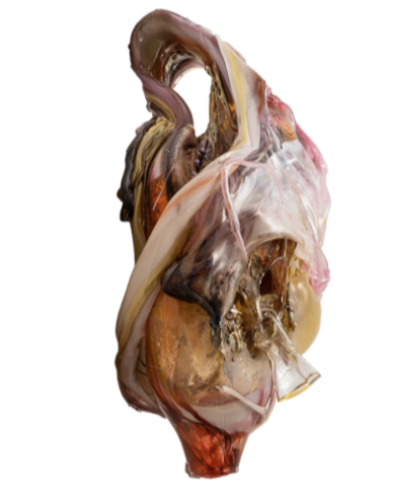
Stourbridge Glass Museum’s new exhibition, ‘Strike a Match’, celebrates the dynamic collaboration and individual expressions of glassblowing artists Elliot Walker and Bethany Wood. With nearly three decades of combined experience, the pair began their shared journey nearly 10 years ago in a Stourbridge studio. Their partnership has since taken them across various locations, ultimately returning to the iconic Red House Glass Cone in the heart of the Black Country – a site rich in glassmaking history.

This exhibition is both a tribute to their shared practice and an exploration of their distinctive artistic voices. From early collaborations to evolved solo works, Strike a Match showcases a broad spectrum of glassmaking techniques, including intricately sculpted still lifes, conceptual installations, and luminous molten paintings. The result is a vibrant reflection of two artists united by craft, vision, and a deep respect for material.

The exhibition is on from 21 June – 8 November 2025.

Stourbridge Glass Museum is at Stuart Works, High Street, Wordsley, DY8 4FB, UK.

Image: Simon Mackney Fine Art.