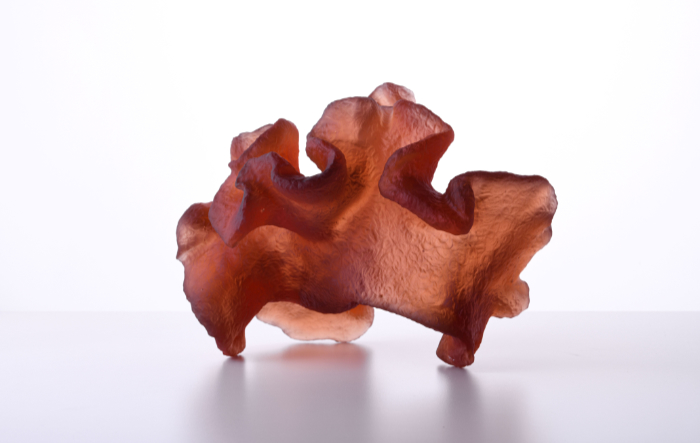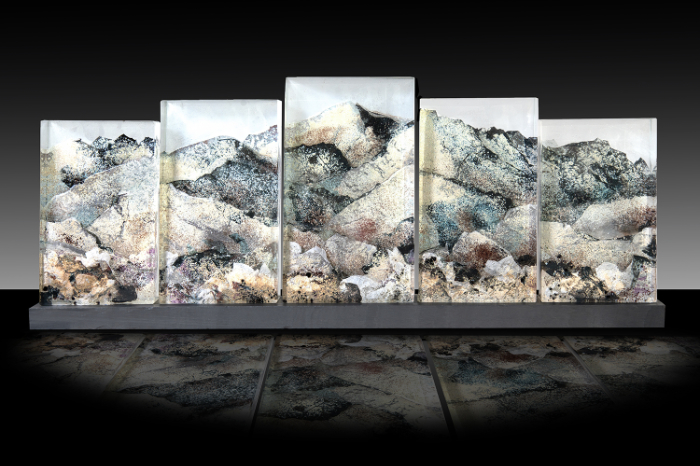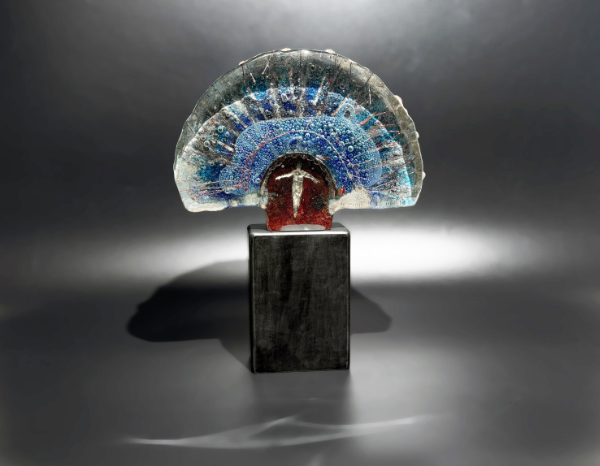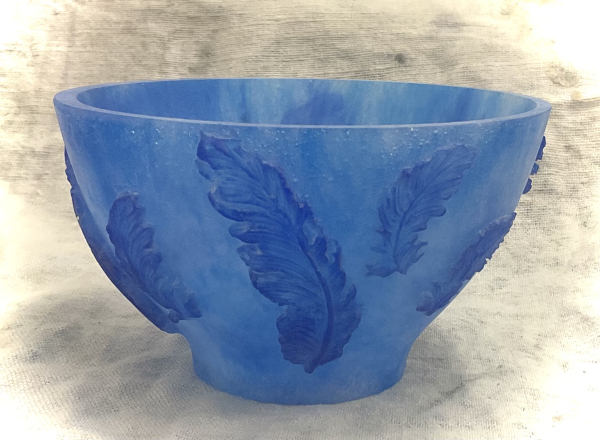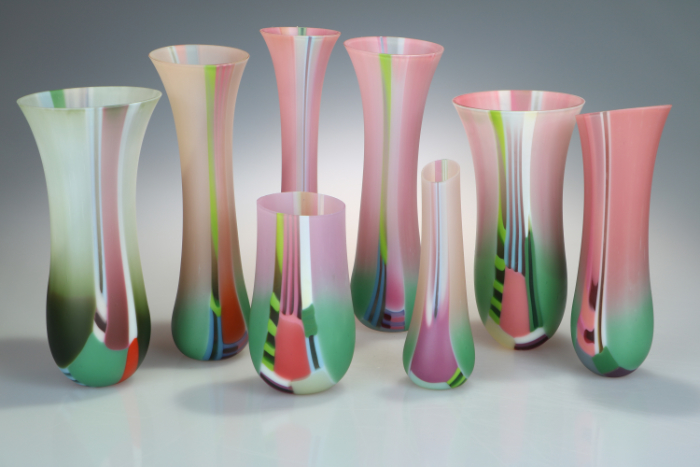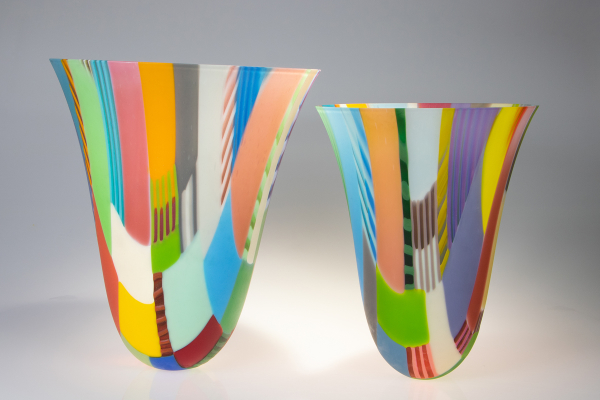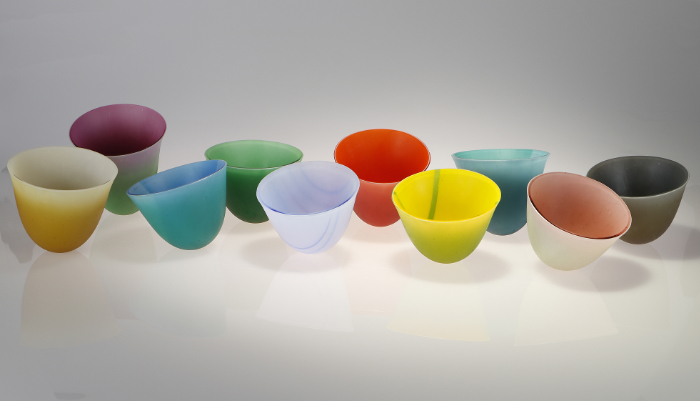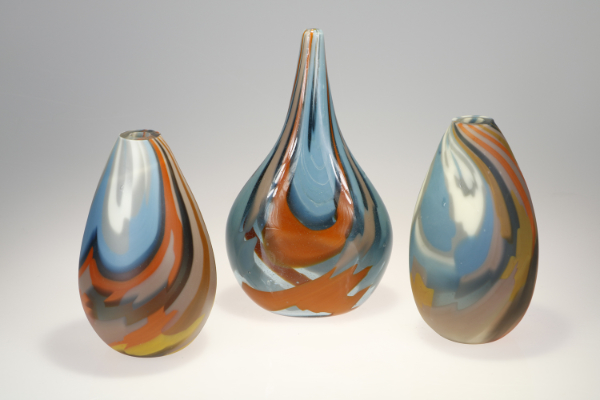
The theme for the Institute of Conservation (ICON) Stained Glass Group’s 2025 conference is ‘Removed, Remodelled, Relocated: The movement of stained glass from its original setting to places new’.
Scheduled for Friday 3 and Saturday 4 October 2025, at Cantebury Catherdral Lodge in the UK, the meeting comprises two days of lectures and discussions on this theme, plus a guided tour of the Cathedral and conservation studios. Members and non-members are welcome to attend.
The movement of stained glass from its original setting to places new is not a recent phenomenon. Stained glass windows have been bought, sold, shipped, traded, copied, and counterfeited for centuries. However, the upswing in the closure of historic buildings and places of worship has led to an increased risk to stained glass both in the UK and worldwide. Where windows are not lost entirely, they are being dismantled, reworked, resold, and relocated. Though often ensuring their continued existence, these interventions have far-reaching implications for the stained glass pieces involved. Their condition, context, historical significance, and inherent meaning are all susceptible to change.
Esteemed professionals from all over the world – including the UK, Europe, America and Japan – will discuss the challenges, solutions, and opportunities presented by these situations for medieval, modern, and composite stained glass in a series of lectures.
Early bird tickets are available now until 18 July 2025 at 5pm. Ticket price includes the £18 entrance fee to the Cathedral Precincts and Cathedral building.
There is also a Stained Glass Group Buffet Dinner and Quiz on the Friday night for £30 extra, providing a fun evening and chance to network.
Recent finalist in the prestigious Loewe Foundation Craft Prize 2025, Australian contemporary glass master Scott Chaseling explains his process and inspirations.
My path into the world of glass began unexpectedly. Fresh out of art school with a sculpture degree, I found myself unemployed. It was during this period of uncertainty that a chance encounter with a fellow graduate changed everything. He mentioned securing a traineeship at Adelaide’s Jam Factory Craft and Design Centre. Intrigued, yet operating in a pre-internet era with little concrete knowledge of the medium, I applied. It was a leap into the unknown. What started as a practical response to unemployment became a profound, lifelong engagement with a material possessing unique properties of light, form, and transformation.
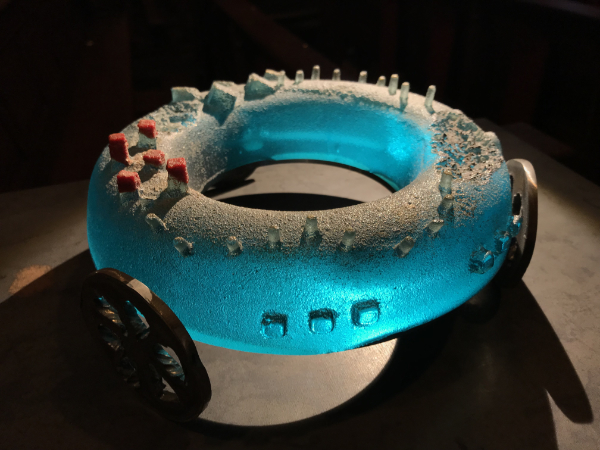
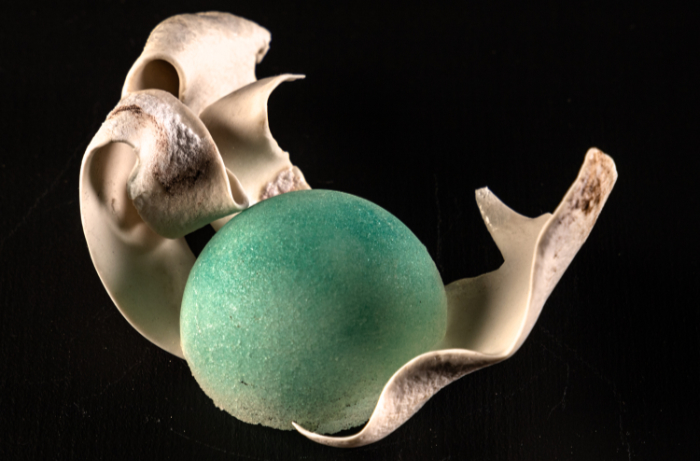
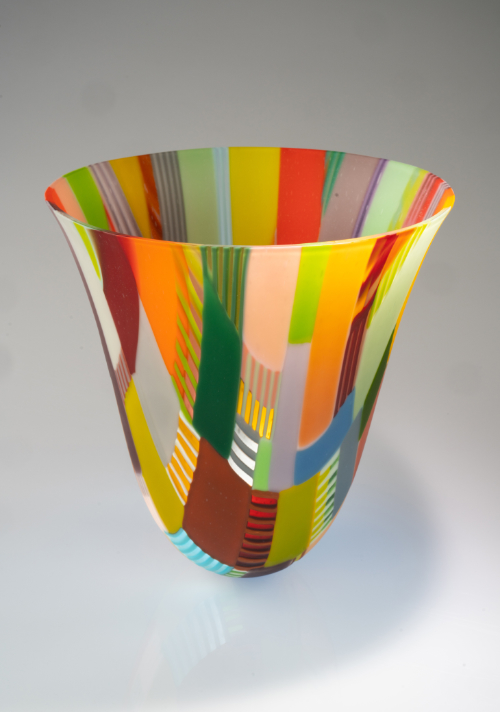
‘Delicate Delicious’ features a range of glass techniques.
My practice has never settled on a single technique. I’ve explored the painterly discipline of reverse glass painting, the layered construction of fusing, the dynamic physicality of glassblowing, and the precise refinement of cold work. Each offers distinct possibilities. My current work synthesises these methods: reverse paintings form the conceptual and visual core; fused layers build the structural and narrative foundation; blown elements introduce volume and presence; cold work provides the final articulation. An area yet unexplored is lead lighting – its interplay of structure and coloured light holds significant appeal and is a planned focus for the coming year.
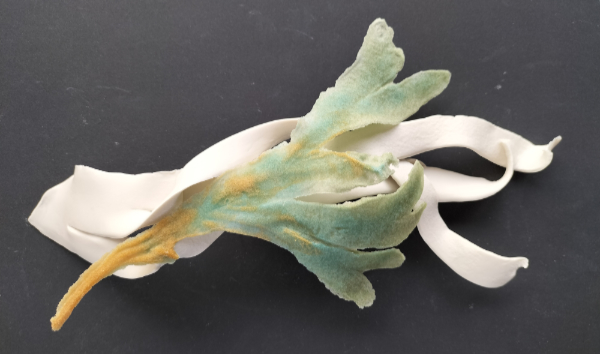
Overhanging glass strips have a feel of modelling clay on this piece, ‘Dance Like All’s Watching’.
My creative process is methodical, beginning with drawing for the reverse glass painting. This phase demands careful planning, as the image must be conceived and executed in reverse – a necessary mental and technical discipline. Once the painted narrative is complete and sealed beneath the glass, the physical construction of the supporting tile begins. This stage builds upon the initial imagery, adding layers of meaning and form. Finally, to emphasise the overall composition and narrative, I incorporate sculpted additions. These elements are applied towards the end, serving as deliberate counterpoints and accents to the primary form.
A series of reverse-painted glass tiles with patterned additions on top, ready for forming into 3D vessels.
Above all, I aim to convey ‘joy’. If a piece elicits a smile, a moment of delight, or a sense of uncomplicated pleasure in the viewer, I consider it successful. In a complex world, the capacity of crafted objects to evoke simple, positive emotion feels increasingly significant. My work is an invitation to experience that lightness and visual pleasure.
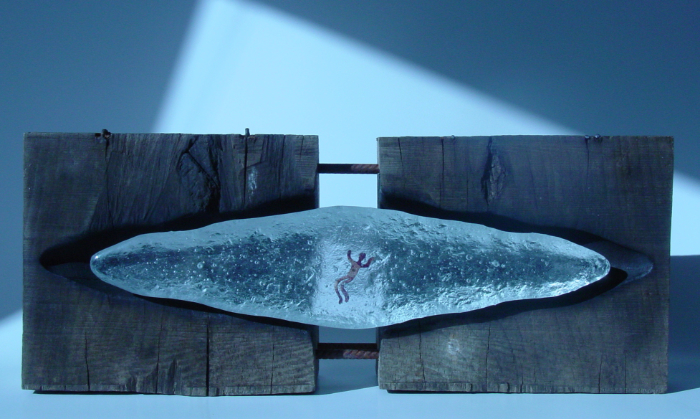
‘The Thinker Over-thinking’ features a reverse-painted figure and sculptural addition.
Tools are extensions of intent. When blowing glass directly from the furnace, a pad of wet newspaper remains indispensable. Its humble nature belies its remarkable versatility: it shapes, cools, and protects the molten material with immediate responsiveness. Conversely, when initiating a piece through reverse painting, the paintbrush becomes paramount. It is the primary instrument for translating the initial vision onto the glass surface, each stroke laying the groundwork for the entire piece.
‘Wavy Gravy Train’ stands about 20cm high.
Favourite pieces are often tied to moments of discovery. Currently, that distinction belongs to a small pot, the first successful outcome in developing a new series. Its emergence felt less like a predetermined result and more like a rewarding convergence of intention, material, and process. It embodies the satisfaction of finding a solution through making and retains the spark of its unexpected success.
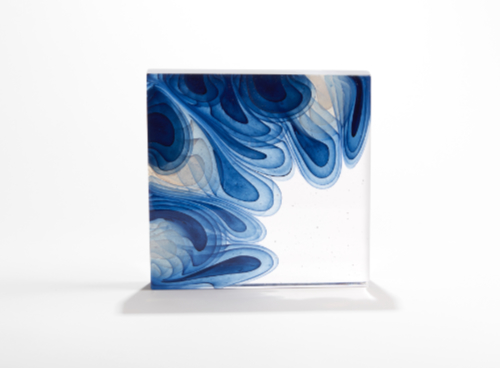
‘Lush Lingers Longer’ is a combination of reverse painting and added sculptural elements.
My work primarily reaches audiences through artist-run exhibitions and selected competitions. These platforms foster direct engagement and dialogue within the craft community. While I am currently unrepresented by a commercial gallery, these avenues provide vital visibility and connection.
‘Black Teeth Smile’ features sandwiched fused glass additions.
A recent significant milestone was participation in the Loewe Foundation Craft Prize in Madrid. The experience stands out due to the Foundation’s profound respect for the makers. The organisers’ deep understanding of craft as a rigorous, professional discipline, and the exceptional level of curation, made it deeply validating. It was a meaningful recognition on an international stage.
Looking forward, the core of my practice remains constant: to keep making. This is the essential priority. The studio is where exploration happens – whether integrating lead lighting, refining existing techniques or discovering new combinations. The direction emerges organically from the process itself, driven by continuous engagement with the material and the evolving ideas it inspires. The work continues.
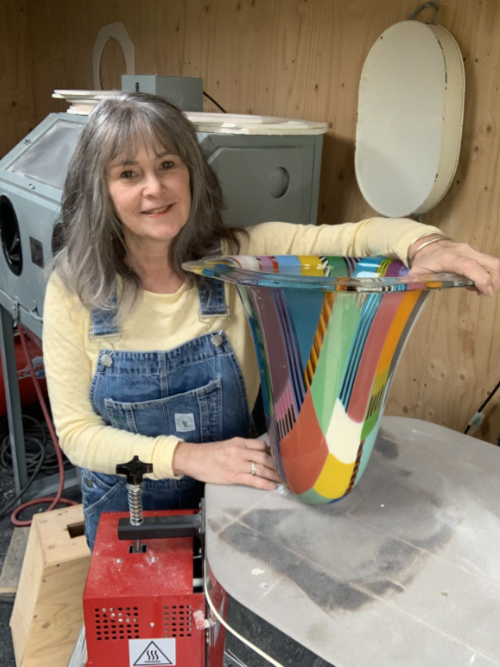
Scott Chaseling working in the studio.
Find out more and follow Scott Chaseling via Instagram: @scottchaseling
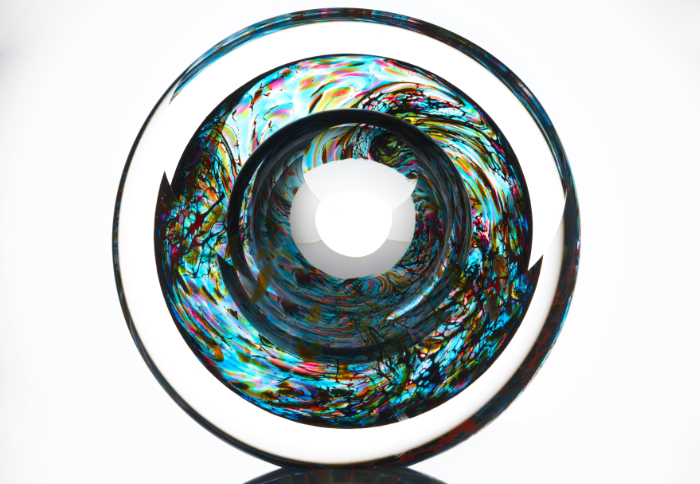
Main feature image: ‘Cost Curl’ features reverse painting and fused, blown and etched glass. All photos courtesy of the artist.
Katharine Coleman MBE, revered glass engraver and member of the Contemporary Glass Society’s (CGS) board, shows us how much the art world has changed since the organisation was established and puts the case for greater collaboration with glass artists from across the European continent.
Hooray! This year the CGS New Graduate Review magazine will invite applications from glass course graduates at colleges throughout Europe for the first time. As a CGS board member I am delighted that CGS is now looking farther afield for members and participants in its many activities – maybe soon even beyond the constraints of geographical Europe.
Looking back
When CGS was founded 28 years ago, mobile phones were in their infancy and if one submitted an image to a gallery or exhibition, it had to be as a 35mm slide or transparency (see the picture, for the very young!)
Photographic slides were once the only way to submit work to a gallery or exhibition. Photo: Katharine Coleman.
Seeing others’ work was limited to visiting exhibitions and obtaining access to printed material. A duplicate slide cost some £10 to £15. Galleries seldom returned them. Conferences were particularly popular as it gave so many of us a chance to see a wider range of other artists’ work. Conference talks were peppered with interruptions caused by clattering slides falling out of the projector, or slides accidentally being placed in the carousel upside down – the subject of great frustration and much merriment.
It was hard to show work in galleries if one didn’t have a degree from a university glass course or images to show the gallery. It was expensive to send galleries slides speculatively, so first I would ring them to ask if they would like to see my glass. The conversation would go as follows: “Oh hello, I wonder if you would be interested in showing or selling my work?”; “Well, possibly, who are you?”; “Katharine Coleman”; “Never heard of you or seen your work. Were you at the Royal College?”; “No.”; “Any other glass courses? Which college?”; “Morley College.”; “Never heard of it – what sort of work do you do?”; “I’m a glass engraver.” At that point the phone went down – EVERYWHERE – except at Art in Action, near Waterperry, Oxfordshire. My lucky break came when I was shortlisted for the 2003 Jerwood Prize for Glass. Few of us had such lucky breaks.
Without Facebook or Instagram to promote our work, and without online banking, it was very tough selling work too! Hiring a MEPOS ‘card swiper’ cost over £500 for a week at Chelsea Craft Fair or Art in Action. Banking was a headache and insurance was expensive.
Now, in 2025, we have more of a chance with our images – wonderful, digital imagery, with the concomitant joys of Adobe for cropping, correcting blur, contrast and faulty focus, superb camera lighting and easy, free internet for sending images all over the world. There is now such a gulf between that age of slides and print and our age of digital images, PowerPoint, the internet, Facebook, Instagram and Zoom.
This gulf is occasionally apparent when work alarmingly like that of the 1990s appears in international exhibitions (as happened at the last Coburg Prize for Contemporary Glass), with jurists sufficiently young that they are not familiar with pre-digital images and reference books on glass from the previous two decades are seldom consulted. Helen Maurer won the Jerwood Prize: Glass in 2003 with glass objects placed on an overhead projector to produce magical scenes above them. Then the Third Prize at Coburg in 2022 went to an artist placing glass on overhead projectors with the images thrown onto the wall behind them. But we should agree that all things are cyclical.
Back in the day, the printed CGS Glass Network journals and the chance to attend conferences made the world of contemporary glass accessible to us new faces. At its first conference at Wolverhampton University, there was a debate about whom the CGS would be for. A well-established glass artist stood up and declared, “We want this society to be for professionals and not all these aspiring artists who are such a pain!” This comment made me shrink with shame as an aspiring artist myself. Thankfully that idea was not taken up. These early conferences were held alongside selected exhibitions and were very well attended.
Now, the expense of taking part in CGS activities is spread more lightly and fairly, with digital imagery, online exhibitions and talks. The double whammy of CGS losing its Arts Council grant in 2012, together with the ever-increasing postage rates, undermined the frequent production of the printed catalogues and membership growth slowed. However, we were saved by the CGS website and, later, the wonderful CGS Zooms that kept us in touch and diverted with regular talks through the miserable years of COVID-19, that helped raise membership numbers. With access to Zoom, meetings no longer require committee members to travel to London at great time and expense. In addition, members can submit images for most exhibitions at no expense, making participation in CGS affordable for all, and the internet has opened up a wider world generally.
Collaboration across Europe
Contact with other European glass artists is vital for the exchange of ideas and technical advice. Many CGS members have attended courses at the Summer Academies at Bild-Werk Frauenau in Bavaria, either as teachers or as students and, through this melting pot, we have made many contacts and firm friends outside the UK. Other CGS members have participated in the Coburg, and other, glass prizes, or shown their work in galleries in the Netherlands and France, though these are fewer in number. Each of these brings the opportunity to extend the network that CGS provides. There is a Dutch glass society, but here in the UK I believe we are the envy of most European artists for the support and stimulation that come from membership of CGS.
Bild-Werk Frauenau Summer Academy 2012, celebrating 25 years of the school. Photo: Katharine Coleman.
The decline in numbers of glass courses at universities here in the UK over the last 15 years alongside the decline of student numbers at glass colleges in mainland Europe is becoming seriously worrying. Minority crafts, such as glass engraving, are shrinking so fast that wheel engraving is now on the Heritage Crafts Red List of Endangered Crafts.
Main door of the Escuela de Los Vidrios de San Ildefonso de la Granja, Segovia, a photo taken in 2007 when teaching a summer school. Photo: Katharine Coleman.
I teach short courses occasionally at Corning Museum of Glass in the US, at Bild-Werk Frauenau and at the glass school at La Granja, near Segovia in Spain. It helps to speak both languages well enough to teach, especially in Spain, where the students have little to no English.
The Museum of Glass at San Ildefonso de La Granja, Segovia, was built as the original La Granja Glass Factory in the 18th century to provide window, table and chandelier glass for the new royal summer palace up in the Guadalajara Mountains, as the location was too high to transport glass to by mule. The factory was disguised as a monastery, with the furnaces under the ‘chapel’ dome. Photo: Katharine Coleman (2007).
In 2013 three of us glass engravers met at Bild-Werk Frauenau (Wilhelm Vernim, Norbert Kalthoff and I) and we were bemoaning the shrinking number of engraving students and classes in glass colleges throughout Europe. We decided to do something about it and invited engravers, teachers and gallerists from Germany, Czechia, the Netherlands, Belgium, France, UK, Poland, Estonia, Romania and Finland to a meeting at Bild-Werk that same autumn. This resulted in the formation of a Facebook-based international collective, called the Glass Engraving Network.
September 2013 – the beginnings of the Glass Engraving Network. Photo: Katharine Coleman.
Without a committee, anyone in the network can organise an exhibition. Our first, in 2015, was ‘Gravur on Tour’, a selected touring exhibition of glass museums, which was small enough to pack into a large white hire van that was unpacked and supervised by a group of the participating engravers in each host country: UK (Stourbridge), Belgium (Lommel), Netherlands (Epe), Germany (Rheinbach Glasfachschule, where we held a week-long workshop with the top year in all aspects of cutting and engraving), Czechia (Kamenicky Senov), Estonia (Talinn, hosted by Mare Saare, Professor of Glass at the university), Finland (Riihimaki) and back to Germany’s Bild-Werk Frauenau, with an exhibition and conference at the museum there. The museum directors supervised the selection of the work so the exhibition avoided being dominated by a particular group. The museums were delighted that we produced a high quality bi-lingual (German and English) catalogue, sponsored by advertising, which they could sell alongside our work, and that their galleries were filled with an excellent, ready-made show for two or three months, allowing their staff a break. Sold work was replaced between stages.
Uta Lauren, the curator of the Finnish National Glass Museum just north of Helsinki at Riihimaki, was very supportive, saying she was keen to show Finnish glass students that “Glass engraving wasn’t just something nasty that the Swedes do!” (sic), so, before our show, we were sponsored to give 10 students several months’ intensive glass engraving tuition. They took to it like proverbial ducks to water. We also have contact with many international artists in South America, Australia, New Zealand, Japan – almost every country where contemporary glass engraving is known.
The Glass Engravers Network group who set up the show at Riihimaki and attended the opening in 2019. Photo: Katharine Coleman.
In 2019 we returned to Riihimaki with another ‘Back on Tour’ show. Dr Sven Hauschke , Director of the Veste Coburg in Germany had been so impressed by the quality and energy of our show that in early 2020 he shipped the entire exhibition of 150 pieces to the European Museum of Contemporary Glass at Roedenthal. The show opened in mid-March 2020, just one day before COVID-19 forced the museum to close for over a year, so nobody ever saw our show. A touring show of Spain and France was similarly abandoned the following year and it has taken time to get things going again. Planning and organising these shows takes a good year, so our next exhibition opened in 2023 in the North-Rhine Westphalian Industrial Glass Museum at Gernheim on the River Weser (famous for the Pied Piper and nearby Hamelin). With a glass cone, built as a copy of the Stourbridge cones in 1826 with a surrounding village, Gernheim still makes glass in the cone and runs courses alongside the museum. Our exhibition filled the ‘Old Master’s House’.
The glass cone at Gernheim is still used for making glass. Photo: Katharine Coleman.
We are struggling to show work beyond Germany but, as we regain our post-COVID-19 momentum, our current exhibition is being hosted by the beautiful glass museum at Coesfeld-Lette, not far from Hannover. If you are not familiar with the Ernsting Stiftung Museum at Coesfeld, it is well worth a visit as it hosts the best (and best displayed) collection of Middle and West European studio glass in Europe. The Ernsting family made their fortune in affordable clothing and spent their fortune since 1945 – and continue to do so – on modern glass.
Google Translate is our great communication tool. Despite Brexit, English has replaced French as the lingua franca of modern Europe and European glass and I hope that Brexit and our separation from Europe will soon be a regrettable few years in the past. In 2002, before Czechia became part of the European Union, it was possible to attend symposia to show work and meet engravers from all over Europe, including Russia; my poor, but just adequate, Russian (learned to welcome my son-in-law’s family to his wedding in 2000) allowed us to chat and make good friends. There are some astonishingly gifted artists there, including portrait artist Alexander Fokin, grandson of the famous ballet choreographer. My contact with them continues, despite recent history, and in May 2020 I was invited to a conference at St Petersburg hosted by the State Glass Museum and the Hermitage to give a talk about West European contemporary glass – sadly another event cancelled by COVID-19.
The Russian delegation to the Glass Engraving Symposium at Kamenicky Senov, Czechia in 2002. Alexander Fokin lies front centre and, on his left, Vladimir Makhovetsky, who is based in St Petersburg. Photo: Katharine Coleman.
I hope the invitation to European graduates in the next CGS New Graduate Review will encourage CGS to consider following the Glass Engraving Network’s example and start exhibiting pan-European work in significant museums. Online exhibitions are great, but nothing beats real exhibitions and real exhibitions lead to sales and contact with the outside world. There are more collectors in Europe than the UK.
Sarah Brown, Chair of CGS, concurs with this idea, and the CGS Team aims to push the exhibition possibilities into Europe and beyond. Sarah says, “Our main aim is to elevate and promote the amazing glass produced by our members, building new networks across the world and educating the next generation of glass makers in the infinite creative possibilities that this incredible medium offers.”
This year, I hope there will be graduates from Ukraine, Moscow and St Petersburg joining in with applications for the New Graduate Review, and just as many graduates from Romania, Bulgaria, Slovenia, and of course all the more familiar European countries with glass courses, now that applications via the internet can fly above and beyond political barriers. Good luck to you all! It’s the chance to build a new generation of friends.
Find out more about Katharine Coleman MBE and her work here.
Portrait of Katharine Coleman at her studio (2019) in front of a poster of her piece ‘Goldfishbowls II’. Photo: D. Coleman.‘Canary Wharf Vase’ (2013) features grey over green glass overlaid on clear lead crystal blown to my design by Andy Potter, and wheel engraved by Katharine Coleman. Photo: Ester Segarra.
Main feature image: Degree students – surprisingly happy – at the end of my intensive month’s course in cutting and engraving, part of their first degree. Taken in 2009 at Escuela de los Vidrios, San Ildefonso de La Granja, Spain.
This year’s winner of the Contemporary Glass Society’s (CGS) Amanda Moriarty prize is Kerry Collison, a stained glass artist and traditional glass painter who is currently interning at The Glass Hub. Kerry has recently started lampworking and wants to use the five-day residency with Laura Quinn to develop lampworked elements, including sculpted limbs and other appendages, that can be incorporated into stained glass panels.
Kerry stated, “I began my art practice with a BA in Sculpture from Carmarthen School of Art, where I specialised in hot metal casting and foundry work. I later earned an MA in Fine Art from Swansea College of Art (2023), focusing on stained glass. During my time in Swansea, I apprenticed with the Architectural Glass Centre and later worked a temporary contract with The Cathedral Studios in Canterbury on both commercial and heritage glazing projects.
“Currently, alongside interning, I am focusing on developing my creative practice and teaching stained glass. My practice blends traditional stained glass techniques with contemporary conceptual fine art. I create intricate, small-scale panels that incorporate humour, mischief, and subverted religious iconography to explore complex themes surrounding sex, gender, pleasure, and violence. Through sacred geometry and hidden symbolism, I aim to invite viewers into intimate visual dialogues that challenge conventional boundaries.
Stained glass panel, ‘Somewhere Between the Devil and the Deep Blue Sea’.
“Fire has always been central to my practice and finding my way back to using hot processes in making is important to me. After focusing on stained glass, I have felt disconnected from the heat and sculpture in my work. Since joining The Glass Hub, I’ve become increasingly fascinated by the intersections between warm, hot, and cold glass techniques. I see enormous potential in combining these often separate disciplines and this feels like an organic avenue to reconnect with fire.
“Though I am relatively new to lampworking, I feel this cross-disciplinary approach has the potential to push the boundaries of lampworking and stained glass in a contemporary way, whilst celebrating the ancient glass-making techniques.”
Some of Kerry’s lampwork experiments with hands and feet that will be developed as part of the residency.
Commenting on her selection of winner, Laura Quinn, said, “Kerry’s work stood out to me immediately, with its strong illustrative approach and humorous, and sometimes dark content that forces you to look closer. I thought, this is an artist who really owns their own style. Their proposal for the project was successful because of its clarity, Kerry knew what they wanted to achieve, and I knew I could help them do it! Their proposal to include three dimensional limbs, coming out from stained glass panels really excited me, I have never seen the two processes combining in such a way. I am very excited to facilitate Kerry’s residency, and support them in the creation of this new and ambitious project. Congratulations Kerry!”
A sketch illustrating the type of lampworked piece that Kerry wants to develop to feature in a stained glass panel.
The Amanda Moriarty Prize was set up in 2017 to commemorate Amanda Moriarty, a long-serving Board member and Honorary Treasurer of the CGS, who passed away. To celebrate her enthusiasm and encouragement of glassmaking, CGS offers this annual prize in her memory, which features several days of practical experience with a glass mentor and a contribution towards accommodation and travel during the residency. In this case, Laura Quinn will host five days of practical training at her home studio in Reading. CGS thanks Laura for providing this fabulous opportunity.
Main image: Kerry Collison practising lampworking.
The National Glass Centre (NGC) in Sunderland is celebrating the achievements of its graduates over the years with a final exhibition of work before it closes at the end of July 2026.
Anyone who has graduated from the University of Sunderland’s BA(Hons), MA or PhD programmes at the NGC can apply to show work in the exhibition, which will be entitled ‘The Graduates’.
The NGS will highlight the artists who have studied at the iconic building and developed careers working with glass and ceramics. The exhibition will run from 31 January to 31 July 2026.
Selection of works will be made by a panel including Reino Liefkes (Senior Curator, Ceramics and Glass at the Victoria & Albert Museum), Helen Ritchie (Senior Curator of Modern & Contemporary Applied Arts at the Fitzwilliam Museum, University of Cambridge) and Julia Stephenson (Head of Arts at NGC).
Artists should submit one artwork (this could comprise a number of parts). In certain circumstances photographs of artwork will be included in the display, such as public art, site-specific installations and stained glass included within the structure of a building.
Work can have been created at any time between graduation and the present day.
NGC is keen to receive work from outside the UK but is unable to cover international shipping and import and export charges.
Work will not be for sale during the exhibition but a website address can be included on the object label for visitors to contact artists directly and NGC will not take commission for any sales.
The deadline for applications is Sunday 14 September 2025.
Further details and the application form are available here.
Read more about the background to the closure of the iconic building here and the new Glassworks: Sunderland venture here that aims to continue the long tradition of glassmaking in the region.
NGC is located at Liberty Way, Roker, Sunderland SR6 0GL.
Sandra Young is an expert in lampworking borosilicate glass, which she uses to create her signature dragons and other creatures from her studio near Stone Henge in Wiltshire. Here she explains how her practice began and has developed over almost 40 years.
I had always enjoyed art as a child and teenager and studied Scientific Illustration at art college in Southampton. In 1985 I was told about Lymington Glass Mystiques and visited to see what they made, which included quality glass ships in bottles and other glass novelties. I was immediately fascinated and, when a trial period for a job came up, I jumped at the chance. In November of that year, I lit my torch for the first time and – despite singeing my hair three times in as many weeks – I loved it and have not looked back.
A fairy with a cornflower created using borosilicate glass. Photo: Simon Bruntnell Photography.
As the company made glass ships in bottles, I spent several weeks pulling rigging – long, thin strips of glass otherwise known as ‘stringers’ – and tagging the corners of sails to fix them onto the ship’s masts. Even though this was repetitive, I loved the feel of the glass, and I was hooked. I stayed on when invited after my 6-week trial period. 18 months later the owner Jack announced that he was retiring and closing the business. Mandy, another employee, and I decided to carry on, making our own ideas, and in 1987 New Forest Glass Sculpture was formed in my dad’s garage. We made wildlife, fantasy and dragon sculptures right from the start but on a much smaller and simpler scale and design.
Wren amongst cherry blossoms. Photo: Simon Bruntnell Photography.
My dad helped get us a stand at the New Forest Show and we were thrilled with our very modest sales and subsequently booked more, larger ‘craft’ shows in Bournemouth and at Wilton House in Salisbury. We were soon travelling around the country exhibiting and selling our work. We also designed and created awards for British Gas and Holiday Inns as well as others. Making the ‘House of Glass’ for a TVS Television ghost story drama was a highlight of that time. My bees, hedgehogs, birds and seahorses were a favourite at the exhibitions – as they still are today. Dragons have always been signature pieces.
The ‘House of Glass’ made for a TV show.
In 1993 our lives went in different directions and I began working alone. I moved to Wiltshire in 1995, where – although I missed the New Forest – the chalk hill landscape and ancient history gave new inspiration. I continued exhibiting at the large design and craft shows, taking my young boys with me whenever I could.
Througout my career I have specialised in working with solid borosilicate glass in the flame. I have found ways to increase the size and detail I can obtain with this glass. Its properties allow me to work with it longer than the softer glasses, and I can create a lot of detail, which is my idiosyncrasy. However, this can lead to overcomplicated and overly fragile pieces! I use both coloured glass and lustres that fire on in the kiln to create my finished pieces.
Regarding the creative process, for the fantasy pieces I predominantly create directly in the flame by working the glass from ideas I have in my mind. Occasionally I will sketch something to give me an outline of how pieces will fit together if I am creating a diorama, or to work out correct posture and alignment. I also use photographs and occasionally videos, both from online and books, to create realistic sculptures of the wildlife I make. I try to convey my love of the fantastic and mythological world and where it meets reality in the amazing wildlife around us.
My torch is the main tool I create with, and I have a few tweezers and hand tools I have used throughout my working life. I recently bought a new torch, which, after using the same one for over 35 years, was quite a change, but I have grown to love it equally.
My favourite piece changes regularly. I love my dragons, but sometimes the challenge of creating a bird, for example, and giving it the impression of flight and movement is very compelling. If I can convey movement in a sculpture, I am always happy, as is the case with my dancers.
‘Puffin Taking Off’. Photo: Simon Bruntnell Photography.
I still sell my work predominantly to the public at large craft, art and design exhibitions. For example, those organised by Craft in Focus and Living Crafts. Some shops and galleries also sell my work. I have collectors too, some of whom have been collecting since my early days of glass working and still come back regularly for more pieces.
I get commissions through online media and via exhibitions. I was particularly pleased to win the Young Collectors’ Award at the 2022 British Glass Biennale.
‘World Dragon’, which won the Young Collectors’ Award at the 2022 British Glass Biennale.
In the past couple of years, I have been commissioned to make a couple of pieces for TV; one was a small crystal bird in flight for Dr Who and another was a Victorian stork-like bird for a period drama.
I moved home and workshop in 2023 for a fresh start and I am developing more sculptures where I combine bronze and glass. This allows me to introduce more detail, and I love the contrast between the solid, opaque bronze and the fragile glass. This works well with the dragons, but I have many ideas for wildlife creations and other mythological creatures.
A bronze and glass dragon wall art sculpture. Photo: Simon Bruntnell.
I am also working on more diorama pieces. I love combining groups of wildflowers and insects, for example, or different birds around a birdfeeder or branch. I am also creating sculptures featuring water, like my ‘Kingfisher and Splash’ and ‘Puffin Taking Off’. There are many more ideas where those came from that I have yet to create. Underwater scenes and creatures also inspire me.
‘Kingfisher and Splash’ shows my development of movement and water in glass. Photo: Simon Bruntnell Photography.
I demonstrate at some exhibitions, and I also give a few classes per year to give people a taster of lampworking. I hope to inspire more people to take up this very rewarding art.
The complexity of the process is shown in these photographs of the making of a Long-tailed Tit.
My sculpting, though not having made me wealthy financially, has given me so much more in other forms. It has introduced me to other creatives who are now fast friends, and it has helped me through some rough times. The effort of making my creations, although very intense with deep concentration for sometimes a prolonged period of time, brings calm and satisfaction at the completion of a piece. I find it almost meditative – if exhausting!
I am glad to have been able to continue creating – I mark 40 years in November 2025! I am always developing my own techniques and trying to stretch boundaries in my work and in myself. I do not intend to stop any time soon!
Sandra Young creating a glass dragon at the torch.
Find out more about Sandra Young and her work via her website.
Main feature image: Sandra Young with one of her trademark dragon sculptures.
Extraordinary glass artworks by 70 selected members of the Contemporary Glass Society (CGS) will be shown at the influential London Glassblowing Gallery in London in the new exhibition ‘Mirage: An Exhibition Celebrating Glass’ 4th Dimension’ this June.
This exhibition explores the optical illusions possible in contemporary glass. The show celebrates how glass artists manipulate form, colour and light to create amazing effects, ranging from the subtle to the complex.
CGS is delighted to be collaborating with the prestigious London Glassblowing once more on ‘Mirage’ because London Glassblowing’s founder Peter Layton was also one of the founders of our organisation 28 years ago.
From 6-29 June 2025, Peter will be showcasing his masterful work alongside pieces by the following artists: Alexander Pearce; Alison Jardine; Alison Stott; Ana Laura Quintana; Anna Alsina Bardagí; Annica Sandström & David Kaplan; Beth Colledge; Bethan Yates; Bruce Marks; Brynn Hill; Catherine Forsyth; Cathryn Shilling; Caz Hildebrand; Charlotte Wilkinson; Claire Hall; Daisy Parkinson; Deborah Timperley; Dovile Grigaliunaite; Elin Isaksson; Elizabeth Šinková; Gail Turbutt; Georgia Redpath; Graeme Hawes; Harriet Thorne; Helen Brough; Helen Carr; Helen Restorick; Helen Slater Stokes; Iain Smith; Ian Chadwick; Jade Pinnell; James Maskrey; Jane Reeves; Jane Yarnall; Jeff Zimmer; Jianyong Guo; Jiayun Ding; Jo Guile; Jo Mitchell; Jon Lewis; Joshua Kerley and Guy Marshall Brown; Julie Coakley; Katharine Coleman MBE; Katharine Dowson; Kerry Collison; Layne Rowe; Lisa Pettibone; Louise Hawkins; Malvinka Bitelli; Maria Zulueta; Mils Bridgewater; Morag Reekie; Nancy Farrington; Nancy Sutcliffe; Opal Seabrook; Philippa Beveridge; Phillipa Candy; Pratibha Mistry; Richard Roberts; Ruth Shelley; Sam Sweet; Scott Benefield; Stacey Poultney; Steve Robinson; Stevie Davies; Tim Rawlinson; Tracy Nicholls; Tulin Bedri; Verity Pulford; Vicky Higginson, and Wang Ziyan.
Will Budgett, Gallery Assistant at London Glassblowing, who suggested the theme for this exhibition, commented, “The more I see what people do with glass the more amazing I find it. What constantly amazes me is how glass can deceive and delight – the way it creates refractions, reflections, and illusions that draw people in as they explore the gallery. Looking beyond the surface at all of these qualities, and other illusions the glass creates, is astonishing. It is always these extra tricks that constantly draw people’s eyes. Having artists specifically focus on these magical properties promises to create something truly spectacular.”
London Glassblowing is at 62-66 Bermondsey Street, London SE1 3UD. Find out more on the website. Gallery opening hours: Tuesday-Saturday 10am-5pm; Sunday 11am-5pm.
Image: An exploration of flow patterns in kiln-formed glass by Helen Restorick.
The eighth edition of the prestigious John Ruskin Prize award invites entries from artists, designers and makers worldwide, on the theme, ‘Patience in Looking, Truth in Making’. Selected artists’ work will be exhibited at Trinity Buoy Wharf in London from 29 January – 8 February 2026.
Celebrating the legacy of John Ruskin, the Prize champions work that reflects his enduring belief in careful observation, skilled making, and social engagement.
Glass artists working in all glass techniques are invited to apply.
A total of £9,500 in prize money will be awarded, including two new prizes generously supported by The Chelsea Arts Club Trust and The Ruskin Mill Trust.
Up to 50 artists will be shortlisted by a panel of industry experts including sculptor Julian Wild, artist and Director of the Slade School of Fine Art, Mary Evans, architecture and design historian, Neal Shasore, and CEO of The Box, Plymouth, Victoria Pomery OBE.
Versatile glass artist Julia Gonyou explains her process, passion and craft, backed by her environmentally conscious approach.
I am a British/Canadian stained glass artist based in London, England; passionately committed to producing original, environmentally conscious stained glass art. In my adolescence my Mum first introduced me to stained glass as a hobby and it’s been an interest we’ve shared ever since. In 2011, I completed a Bachelor’s degree at Ontario College of Art & Design University in Toronto, Canada. However, it wasn’t until after I graduated from university that I turned my brush to glass, which was when I truly found my passion (see main feature image).
Julia Gonyou painting in the studio.
For the past 12 years, to broaden my material experience, I continued working and training in a variety of hot and cold glass techniques, while living and travelling in more than seven countries. I’ve received grants and awards from the Worshipful Company of Glaziers and Painters of Glass, American Glass Guild and the Reflections of the Lord Mayor – where I continue to contribute as a SEND Arts Award Advisor, facilitating youth outreach. I also enjoy volunteering for the British Society of Master Glass Painters (BSMGP), as a member of its Council and Artists Working Group lead.
2024 BSMGP Discussion Day Q&A at Glaziers Hall, featuring (left to right) Bethany Wood, Amber Hiscott and Julia Gonyou.
The processes I use and specialise in on a regular basis are glass painting, etching and kiln forming. When time or facilities allow, I also like to incorporate alternative processes, such as antique silvering, flameworking and glass casting. For a number of reasons, when I’m in the studio, I enjoy bouncing between my favourite techniques or active projects. I find technical variety tends to be a source of sustenance and creative inspiration. Another reason for variety is that, while some techniques in glass are inherently slow, others can be streamlined in a way that doesn’t compromise quality, providing a welcome change of pace.
When I set out to create new work, usually I start with quite a rough sketch. Then, I’ll either refine this sketch through finding or taking reference photographs, or life drawing. Sometimes I’ll compile these references into a composition building on a previous idea, or I’ll jump straight onto the glass without having a clear vision of how it may come together compositionally. I find the latter approach to be the most inspiring, as I’m responding directly to the evolving surface treatments and narratives. I’ll then continue to practise and create more samples until I’m happy with the effect; these act as catalysts, informing future and more complex works.
Samples in progress, made from etched, mouth-blown flashed glass, during Judith Schaechter’s advanced workshop in 2024.
My conceptual approach to stained glass is based on philosophical views of awareness; our soulful and intellectual responsibilities to nature and to one another. Each painting generally focuses on one subject, emotion, or state of consciousness. Together, they act as elaborate reflections of our multifaceted whole. I like to use art as a platform for thought, meditation and revelation; as a visual communication system, capable of engaging our global community on complex environmental and humanitarian issues.
Tangled-up in Blue’ tote, originally painted grisaille fired on float glass, made for a Shark Allies collaboration, 2021.‘Manta Ray’ (painted grisaille fired on float glass), made for a Shark Allies collaboration, 2021.
My favourite tool is my collection of paint brushes. I have, over time, collected these brushes from many places that I’ve travelled to, and some were even traded or gifted by other painters. They are significant to me, as these specialised glass painting tools are essential and unique to my most treasured technique; they represent educational milestones, professional relationships, or merely the adventures I’ve experienced in the pursuit of my beloved art and craft.
Pieces that I have particularly enjoyed creating are those where I felt I had successfully expressed the feelings I wanted to convey, executed a high level of craftsmanship, or where I developed a more direct/unique form of visual communication.
‘Bottles Deconstructed/Beer in the Making’, uses kiln-formed recycled beer bottles and is located at the Kernel taproom.
To be more specific, the 2025 commission designed and recently installed at The Kernel craft brewery taproom in London, ‘Bottles Deconstructed/Beer in the Making’, fits these criteria. It is made from kiln-formed, recycled beer bottles and is significant to me as I developed a custom, textural relief that meaningfully referenced the beermaking process, used materials that reinforced our environmental ethics, while complementing the interior of the establishment.
Detail of ‘Bottles Deconstructed/Beer in the Making’.
‘Nature Unsettled’ (2024), part of the current ‘Inspired by William Morris’ BSMGP touring exhibition, etched on mouth-blown flashed glass, is again special to me, because I used the opportunity to progress my etching style and demonstrate my recently advanced etching skills learnt during my American Glass Guild Scholarship with Judith Schaechter.
‘Nature Unsettled’ features etched and glazed mouth-blown flashed glass.
‘Stricken’, exhibited in the Contemporary Glass Society’s online exhibition ‘Light & Dark’ (2023), is painted with lead oxide, fired on opal white glass. It evolved quite a lot compositionally during its creation; I eventually chose not to incorporate the shoulders of the subject, which I felt enhanced the emotional state of the figure, reinforcing their individual/collective isolation and anxiety.
‘Stricken’ features painted grisaille fired on opal white glass.
I love making and trading a wide range of work, such as my more affordable glass series, available online and at markets, autonomous fine art panels and bespoke commissions. I usually like to design commissions for residential homes, public spaces and small businesses/establishments, using whichever glass technique best suits the location, brief and budget. I keep busy creating new work, advancing my skill set, freelancing for other stained glass studios, exhibiting, volunteering, teaching, facilitating, all while collaborating with individuals, organisations and conservation non-for-profits around the globe.
‘Knotted’ (2017) is made from painted grisaille and enamel fired on machine-made glass.
Over the years, and after working for many wonderful glass studios, I came to realise that what I truly want is to establish my own full-time, independent stained glass practice. In the future, I hope to continue investing in and growing my studio facilities, pursue gallery representation and to start exhibiting at art fairs. Lastly, I hope to continue combining my passions for art and environmentalism in a way that promotes awareness and proactive change.
The Contemporary Glass Society (CGS) is excited to launch the 2025 Graduate Prize and New Graduate Review magazine competition for graduates from across the UK and, for the first time, from European courses, too.
This prestigious competition is designed to support graduates as they embark on their exciting journey in the world of glassmaking, with a package of prizes including cash, CGS memberships, books, vouchers and inclusion in the New Graduate Review publication and Neues Glas – New Glass: Art & Architecture magazine. Full details of prizes are given below.
This exciting opportunity, which allows graduates to showcase their glass work on a global stage, is made available thanks to the continued generosity of the Worshipful Company of Glass Sellers of London Charity Fund, Professor Michael Barnes MC FRCP, Alan J. Poole and our esteemed sponsors: Creative Glass, Pearsons Glass, Warm Glass, and Neues Glas – New Glass: Art & Architecture magazine.
Why enter?
Selected graduates will receive:
Worldwide exposure: Your work will be featured in the Glass Sellers’/CGS New Graduate Review magazine, reaching a global audience of industry professionals and enthusiasts. This 16-page publication will be circulated extensively to colleges, museums, and CGS members, as well as appearing in Neues Glas – New Glass: Art & Architecture (circulated worldwide). Both publications will be distributed in November 2025.
Prizes: There will be a First Prize, Second Prize, two Runners-up Prizes, and several Commendations.
Career Support:New Graduate Review provides an excellent platform to kick-start your career, as many previous winners have gone on to become respected professional glassmakers.
Prizes:
Winner/First prize: £500 cash £150 vouchers from Creative Glass UK A promotional package, including cover and feature in the New Graduate Review Two years’ CGS membership A year’s subscription to Neues Glas – New Glass: Art & Architecture magazine Alan J Poole will provide a selection of glass-related books.
Second prize: £150 cash £100 voucher from Warm Glass A year’s subscription to Neues Glas – New Glass: Art & Architecture magazine One year’s CGS Membership.
Two Runners-up will each receive: £50 vouchers from Pearsons Glass A Year’s subscription to Neues Glas – New Glass: Art & Architecture magazine One year’s CGS membership.
There will also be an online exhibition on the CGS website. This will show all work featured in New Graduate Review 2025.
How to enter
Graduates are invited to submit their best work via the Graduate Review 2025 digital form on CuratorSpace. A panel of experts will select the prize winners based on quality and concept. Winning entries will be announced in mid-late August 2025.
Eligibility
You must be graduating from a European* accredited course in 2025. Work must consist of at least 50 per cent glass. You must have completed your degree or training within the past year. You must be a CGS Member (you may join with a student membership).
*Note: European-accredited courses are courses based in any of the following countries listed below, recognised by the United Nations as European. Please note that applicants from courses based outside of these countries will not be considered.
Albania, Andorra, Austria, Belarus, Belgium, Bosnia & Herzegovina, Bulgaria, Croatia, Czechia, Denmark, Estonia, Finland, France, Germany, Greece, Hungary, Iceland, Ireland, Italy, Latvia, Liechtenstein, Lithuania, Luxembourg, Malta, Moldova, Monaco, Montenegro, Netherlands, North Macedonia, Norway, Poland, Portugal, Romania, Russia, San Marino, Serbia, Slovakia, Slovenia, Spain, Sweden, Switzerland, UK, Ukraine, Vatican City.
If you’re not already a member of CGS, you can join to take part in this competition via this link. In addition, you’ll become part of a dynamic contemporary glass community and receive valuable membership benefits.
This website uses cookies to improve your experience while you navigate through the website. Out of these cookies, the cookies that are categorized as necessary are stored on your browser as they are essential for the working of basic functionalities of the website. We also use third-party cookies that help us analyze and understand how you use this website. These cookies will be stored in your browser only with your consent. You also have the option to opt-out of these cookies. But opting out of some of these cookies may have an effect on your browsing experience.
Necessary cookies are absolutely essential for the website to function properly. This category only includes cookies that ensures basic functionalities and security features of the website. These cookies do not store any personal information.
Any cookies that may not be particularly necessary for the website to function and is used specifically to collect user personal data via analytics, ads, other embedded contents are termed as non-necessary cookies. It is mandatory to procure user consent prior to running these cookies on your website.